
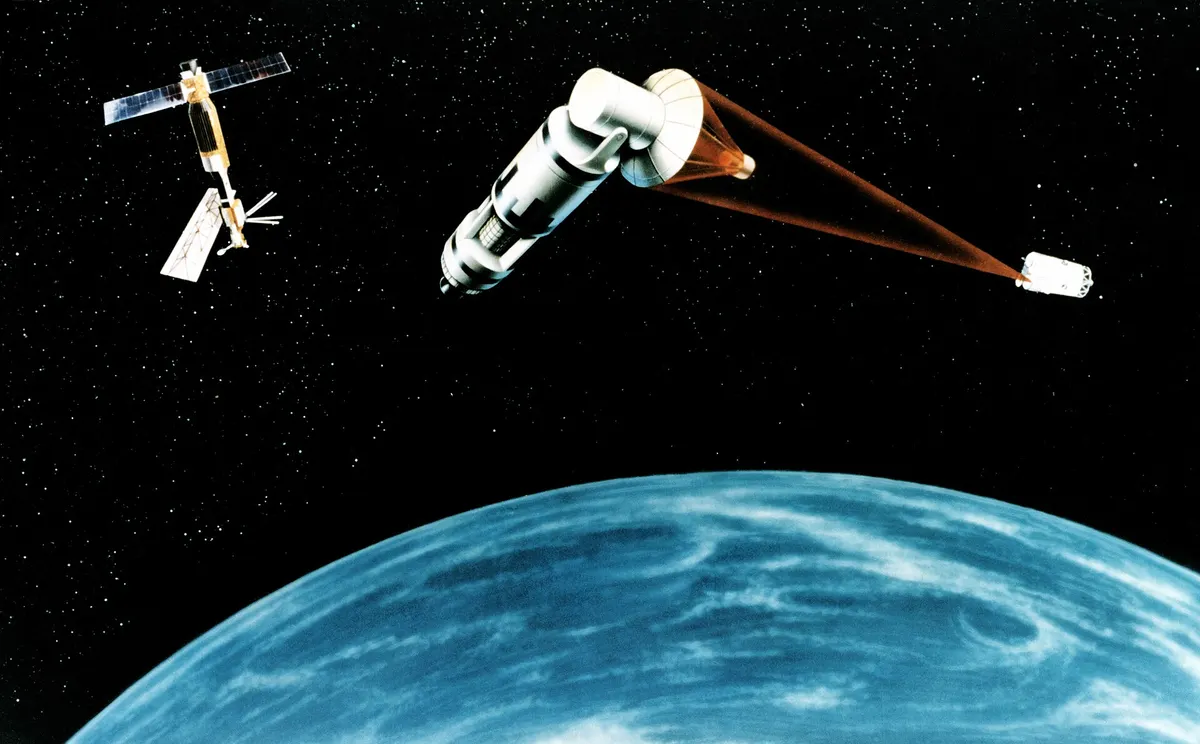
Ukrainian forces have shot down a Russian jet-powered attack drone using an air defense laser system for the first time in the conflict. The deployment marks a milestone for battlefield laser technology as militaries search for cheaper alternatives to traditional interceptor missiles.
The milestone was announced by Serhii Beskrestnov, a defense tech adviser to Ukrainian President Volodymyr Zelensky. The laser system involved, called 'Blysk', was developed by the Ukrainian defense company Carmine Sky and deployed in active duty to protect a critical infrastructure site.
What happened
The Blysk laser system was deployed on November 19 to help protect an unnamed critical infrastructure facility in Ukraine. During its active-duty testing phase, the system successfully intercepted and destroyed a Russian jet-powered attack drone. The target was a Geran drone, which is a Russian adaptation of the Iranian-designed Shahed unmanned aerial vehicle. Russia has increasingly deployed these upgraded jet-powered models, which travel faster than older propeller-driven versions and give defenders less time to react. The Ukrainian laser works by homing in on a fixed point on a target, causing its internal components to overheat mid-flight. A representative for Carmine Sky stated that the Blysk can take out targets up to one kilometer away.
Why it matters
Air defense lasers offer a dramatic reduction in cost per engagement compared to conventional missiles. While developing and building laser weapons is capital-intensive and complex, firing them requires only energy consumption that can cost as little as $13 per shot. This low operating cost is vital for Ukraine, whose traditional air defense missile stockpiles have faced heavy depletion amid ongoing bombardment and delivery delays for U.S.-made Patriot systems. However, laser weapons face environmental limitations; heavy cloud cover and fog can seriously weaken a laser beam, meaning they are designed to augment existing kinetic air defenses rather than replace them.
The background
Russia has relied heavily on Iranian-designed Shahed drones, producing domestic versions under the Geran designation, since launching its full-scale invasion of Ukraine in February 2022. In response to the persistent threat posed by cheap aerial attacks, military researchers worldwide have turned to directed-energy weapons as a sustainable intercept solution. Carmine Sky is a Ukrainian defense company specializing in unmanned systems and anti-drone defenses. Several other Ukrainian companies are also working on similar complex air defense laser technologies, reflecting a broader push for indigenous defense solutions.
What happens next
Despite the success of the initial combat intercept, deployment on a broader scale remains uncertain. Beskrestnov cautioned on social media that it is still too early to discuss serial production of the Blysk laser system. The technology remains in testing, and developers must navigate both financial hurdles and the physical limitations imposed by adverse weather conditions before wider adoption can be considered.
Key takeaways
- Ukraine used a laser weapon called Blysk to destroy a Russian jet-powered attack drone for the first time.
- The Blysk system was developed by the Ukrainian defense company Carmine Sky and deployed on November 19.
- Laser defense shots consume energy costing roughly $10 to $13, offering a cheap alternative to expensive interceptor missiles.
- Weather phenomena such as persistent cloud cover and fog can significantly weaken laser beams, limiting their reliability.