
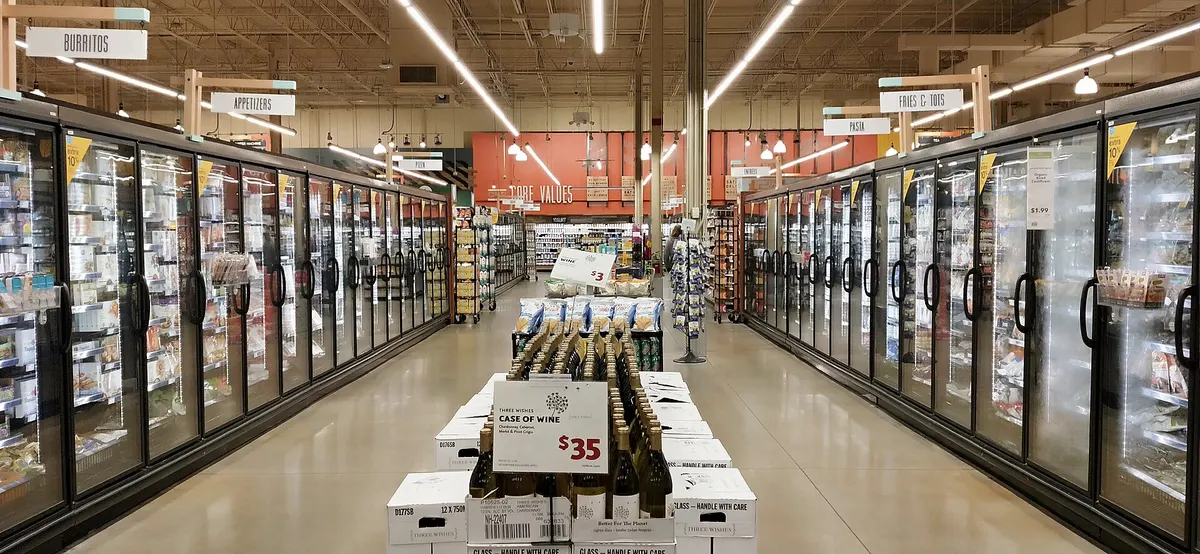
A secret government cybersecurity operation recently warded off the risk of a cyber-attack targeting commercial fridges and freezers across UK supermarkets, warehouses, restaurants, petrol stations, and stadiums. The intervention follows a wave of foreign digital attacks that caused millions of euros in damage across continental Europe.
While major retailers have largely been protected by the coordinated emergency response, cybersecurity researchers have warned that thousands of smaller devices remain vulnerable to remote interference.
What happened
The vulnerability was first discovered in devices manufactured by Resource Data Management (RDM) by Neil McCourt, an employee at refrigeration consultancy Omega Solutions. Omega enlisted cybersecurity consultants Pen Test Partners to investigate the flaw. Recognizing the extreme urgency, Pen Test Partners' managing partner Ken Munro shared the intelligence directly with representatives from the National Cyber Security Centre (NCSC) while attending a retail industry cyber event.
This intelligence sharing triggered a series of rapid briefing calls involving retailers, the NCSC, the Department for Environment, Food and Rural Affairs, and the Food Standards Agency. Officials worked through the night to alert exposed organizations. Dr Richard Horne, the chief executive of the NCSC, confirmed that vulnerable technology had already been exploited in a couple of instances in the UK.
The UK intervention follows coordinated cyber-attacks targeting supermarket chains in at least seven European countries, including Ireland, Sweden, Belgium, Luxembourg, the Netherlands, and Estonia. In Ireland, 13 SuperValu stores were affected, while IKEA reported an impacted outlet in Belgium. These incidents left stores with empty shelves after chilled and frozen products had to be removed from sale. They occurred less than a month after a massive attack on hundreds of French supermarkets—which Paris publicly blamed on Iran—where fridge temperatures rose to 50 degrees Celsius and sparked fires.
RDM's chief executive, Ged Evans, stated that the vulnerability was identified in a test environment that went beyond normal exercises by dismantling their hardware. Evans noted that RDM has acted at pace to deploy first patch releases and contact customers with mitigatory steps.
Why it matters
The incident exposes a major soft underbelly in modern critical infrastructure: the internet-connected operational technology that runs everyday supply chains. Had malicious actors gained full control of vulnerable RDM data managers, they could have interfered with refrigeration systems across multiple sites simultaneously, spoiling food supplies and disrupting the entire food supply chain.
Cyber minister Baroness Lloyd of Effra described the earlier French supermarket incidents as an exploitation of known vulnerabilities. Dr Richard Horne emphasized that the threat spans the entire food supply chain and urged businesses to invest in renewing vulnerable technology, warning organizations that personal and corporate responsibility is essential.
The background
Commercial refrigeration systems increasingly rely on internet-connected data managers to monitor temperatures, run diagnostics, and allow remote adjustments. While this automation improves efficiency, it also exposes physical industrial machinery to digital threats from global hackers and hostile nation-states.
In recent months, this digital exposure has translated into physical disruption. In August, the Pentagon launched an investigation into a suspected hack after fridge malfunctions hit at least six US military bases. By October and November, widespread attacks struck retailers in France, followed by simultaneous disruptions across numerous European nations.
What happens next
While major retailers and key facilities have received security updates, thousands of controllers at smaller stores remain exposed on the public internet. Security experts note that while the specific exploitation method has not been published, it is easily recreated once known, giving small operators a narrow window to take their controllers off the public internet or apply updated firmware.
Dr Horne stated that the full impact in the UK remains unknown, and authorities continue to advise businesses to audit their networks, apply patches, and stockpile essential supplies if necessary.
Key takeaways
- A secret government cybersecurity operation successfully warded off a potential cyber-attack on commercial fridges and freezers across UK supermarkets, warehouses, and stadiums.
- The UK intervention follows a wave of similar digital attacks across at least seven European countries, which left supermarket shelves empty and forced food to be discarded.
- Security consultants discovered a critical vulnerability in data managers manufactured by Resource Data Management, prompting emergency briefings with the National Cyber Security Centre.
- Thousands of controllers at smaller stores remain potentially exposed, and authorities have urged operators to remove vulnerable devices from the public internet and apply security patches.