
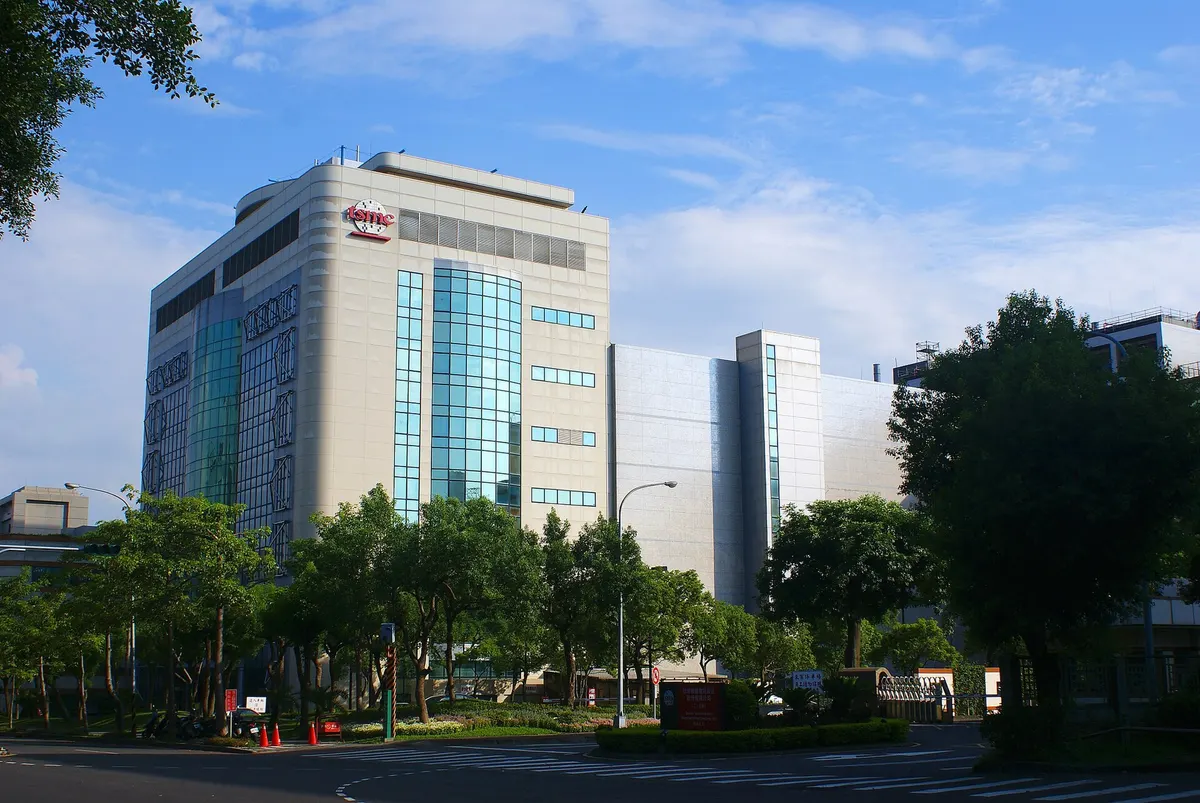
Taiwan Semiconductor Manufacturing Company is evaluating a $22.6 billion proposal to build a new semiconductor manufacturing campus in Texas. The plan would mark the company's second major advanced manufacturing hub in the United States, following its ongoing expansion in Arizona.
While a local tax application has been recommended for approval, the project remains uncommitted. Construction would not begin until 2027, and commercial chip production would not start until 2031.
What happened
The application for the proposed Texas project was submitted by TSMC Arizona Corporation, a subsidiary of the Taiwan Semiconductor Manufacturing Company. The filing has received a recommendation for approval from the Texas Comptroller, though it still requires final authorization from the local school district and the governor. The proposal outlines a $22.6 billion budget for a new campus in Brazos County, which would feature at least one advanced manufacturing facility, known as a fab, alongside a co-located mask shop.
The project's financial breakdown allocates $8.60 billion for real property and buildings, with construction slated for 2027, 2028, and 2029. The remaining 62% of the budget—totaling $14.02 billion—is designated for machinery, tooling, cleanrooms, and utility systems including water-reclaim and wastewater treatment. Spending on equipment is scheduled to begin in 2029 and peak at $9.05 billion in 2030 before concluding in 2032. Despite these detailed schedules, the filing does not legally bind TSMC to purchase the land or move forward with construction.
Why it matters
This potential expansion highlights the ongoing push to bring advanced semiconductor manufacturing onto U.S. soil, driven by the concentration of TSMC's largest customers in the country and supportive government policies. However, the proposed Texas timeline means the site would produce 2-nanometer chips at a time when TSMC's cutting-edge production will have moved significantly further ahead. By 2031, more advanced nodes like the A14 are projected to have been in high-volume production for about three years. This leaves the Texas fab operating at least a generation behind the company's global technological frontier.
The background
Taiwan Semiconductor Manufacturing Company is the world's largest contract chipmaker, producing semiconductors designed by firms like Apple, Nvidia, and AMD. The company relies on massive, highly specialized facilities equipped with lithography systems that use extreme ultraviolet light to print microscopic circuit patterns onto silicon wafers. TSMC currently operates nearly 20 fabs in progress globally, with the vast majority located in Taiwan, alongside expanding operations in Arizona where volume production for 3-nanometer chips is anticipated in 2027.
What happens next
The Texas project remains under evaluation, and TSMC has not committed to building on the site. If the project proceeds, construction is projected to begin in 2027, with commercial operations starting in 2031 and full operations anticipated in 2032. The company's final decision will depend on site readiness, utility capacity, workforce availability, and the local tax environment.
Key takeaways
- TSMC is evaluating a $22.6 billion proposal to build a new advanced semiconductor manufacturing campus in Brazos County, Texas.
- The Texas filing estimates that commercial chip production would not begin until 2031, with full operations reached in 2032.
- The project budget allocates $14.02 billion for specialized tooling and equipment, with spending projected to peak at $9.05 billion in 2030.
- The proposed Texas facility would produce 2-nanometer chips, placing the site at least a generation behind TSMC's leading-edge manufacturing capabilities.