
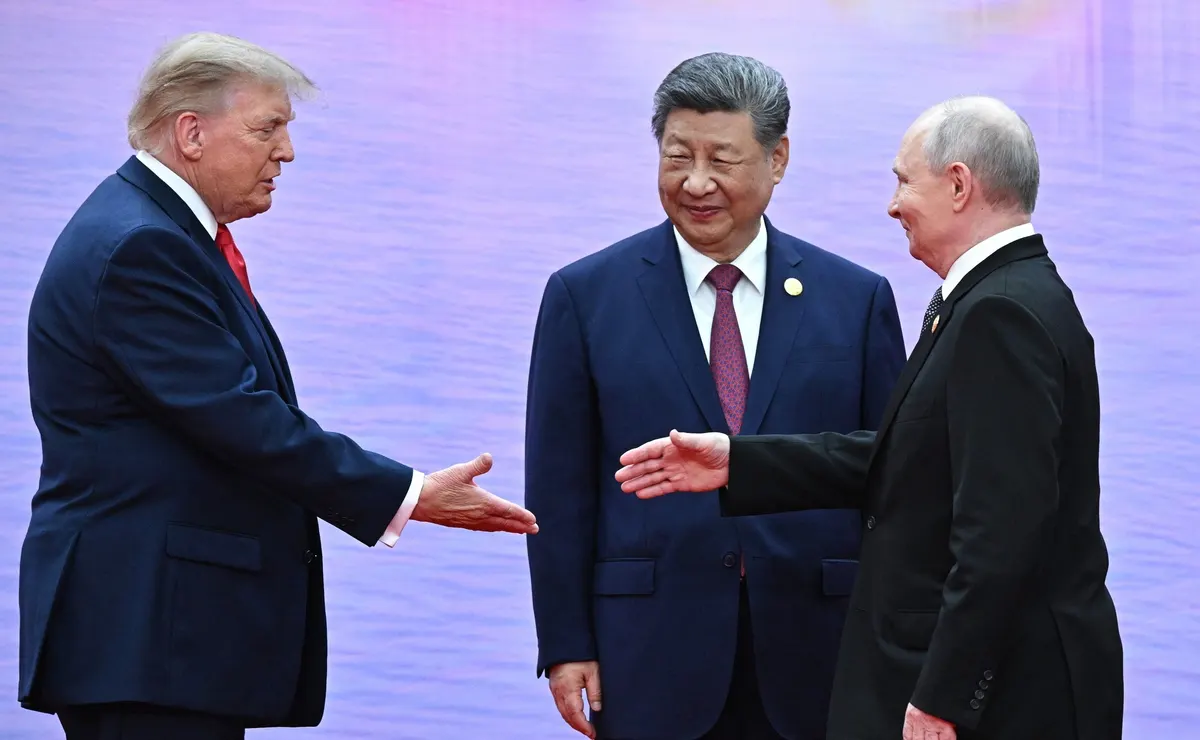
President Donald Trump, Russian President Vladimir Putin, and Chinese President Xi Jinping met for a high-profile trilateral summit in Asia. The meeting, which was framed by some as a modern-day "Yalta 2.0" gathering of great powers, focused heavily on the visual optics of the three leaders together rather than concrete policy breakthroughs.
While the meeting generated a joint peace declaration, it lacked specific commitments or clear actionable goals. The event served as a significant global stage for the American president following a difficult midterm election cycle at home, though the lack of tangible results has drawn immediate scrutiny from lawmakers in Washington.
What happened
The three leaders convened for a three-day summit in Asia to discuss international security and global stability. Following the discussions, a joint communique was released that endorsed general efforts to maintain peace, specifically noting that nuclear war should never be fought. The document also included a brief mention regarding the production and supply of refined petroleum products, a point likely aimed at Russia’s status as a major energy exporter.
Notably, the joint statement included a condemnation of the International Criminal Court. This aligns with a shared interest among the three nations to resist the authority of multilateral organizations that seek to enforce international law. While Putin held an hour-long press conference to discuss the summit and China released a detailed summary of the talks, the White House has remained largely silent, promising a formal news conference upon the president's return to Washington.
Why it matters
The summit is significant because it brings together the leaders of the world's three most powerful nations in a format that suggests a baseline of diplomatic communication. By appearing together, the leaders signaled a desire to avoid catastrophic conflict. However, critics argue that the meeting provided a platform for adversaries to gain legitimacy without making concessions that benefit American interests.
For the United States, the meeting has become a point of domestic political contention. Some Republican lawmakers have expressed concern that the administration is blurring the lines between allies and geopolitical adversaries. Meanwhile, a group of Democratic senators has criticized the summit as a distraction, arguing that national security priorities should not be traded for photo opportunities.
The background
This summit follows a pattern of American presidents seeking high-profile international diplomatic achievements following domestic political setbacks, such as midterm election losses. Similar strategies were employed by Bill Clinton and Barack Obama, though observers note that such diplomatic boosts are often short-lived. The International Criminal Court, mentioned in the communique, is an intergovernmental organization that prosecutes individuals for genocide, crimes against humanity, and war crimes; it has frequently been a target of criticism by the current U.S. administration.
What happens next
President Trump is scheduled to hold a press conference at the White House on Friday to address the summit. It remains unclear if any further negotiations will stem from the "peace declaration" or if the meeting will remain largely symbolic. The long-term impact on U.S. foreign policy and the specific nature of the "dialogue" promised by the leaders have yet to be defined.
Key takeaways
- The trilateral summit between the U.S., Russia, and China concluded with a vague statement on global security and a shared rejection of the International Criminal Court.
- The meeting was characterized by high-level pageantry, but there were no significant policy agreements or clear asks reported by the participating nations.
- Lawmakers in the United States have expressed bipartisan concern over the optics of the meeting and the potential for the president to prioritize personal branding over national security.
- Future outcomes remain uncertain as the White House has yet to provide a detailed explanation of the summit’s substantive achievements.