
President Donald Trump has suggested preventing U.S. companies from constructing data centers in foreign countries or else charging them a heavy tax. The unexpected proposal, which Trump admitted he has not yet discussed with his cabinet or advisors, arrives as domestic data center developments face mounting local resistance and hundreds of moratoriums across the United States. The move is partly aimed at stopping Chinese AI labs from exploiting technical loopholes to access restricted American semiconductor technology. ## What happened President Trump announced his intention to halt U.S. companies from building overseas data centers, warning that without such a ban, foreign competitors would capture the market. A key driver behind this proposal is the exploitation of a U.S. legal loophole by Chinese AI labs. These entities have allegedly been exporting data to foreign data centers utilizing advanced AI chips that are banned for export to China, such as Nvidia's Blackwell and upcoming Vera Rubin chips. Domestically, the rapid expansion of artificial intelligence infrastructure has hit major roadblocks. Data center moratoriums have surged past 500 across the U.S., making it increasingly difficult for developers to push projects forward, while measures supporting data center expansion were recently defeated in mid-term elections. To counter local opposition, Trump suggested that Americans should negotiate financial benefits directly with AI hyperscalers seeking to build in their communities. Several jurisdictions are already taking matters into their own hands; a Pennsylvania town has listed 43 specific demands for a data center approval, New York State recommended a $1 million community investment per megawatt, and SpaceX is reportedly buying out 418 homes near its flagship AI facility. ## Why it matters A federal ban on overseas data centers would present significant strategic and commercial dilemmas for American tech companies. Many U.S. firms construct facilities abroad precisely because foreign governments mandate that local data must remain within their sovereign territory. A strict ban could force American tech giants to forfeit these valuable international markets. Furthermore, keeping all data centers within the United States would increase latency and slow response times for users located globally. Domestically, forcing operators to pay host communities or face strict local moratoriums alters the economic landscape of AI infrastructure development. While companies have vast financial reserves—prompting Trump to remark that they have more money than they know what to do with—the friction between local resource demands, such as massive electricity and water consumption, and rapid tech expansion continues to escalate. ## The background Data centers are massive physical facilities used to house computer systems and associated components, such as telecommunications and storage systems, which are essential for powering modern cloud computing and artificial intelligence. The current AI boom has created an unprecedented demand for computational power, driving tech companies to seek vast amounts of land, water, and electrical power. Regulatory bodies and lawmakers have previously attempted to plug loopholes regarding foreign access to American technology. The U.S. House of Representatives passed the Remote Access Security Act in January 2026 to address remote workarounds, though the legislation has stalled in the Senate. Additionally, the U.S. Bureau of Industry and Security has taken steps to tighten restrictions, with chipmaker Nvidia warning its clients to ensure their customers are at least 51 percent non-Chinese to avoid legal exposure. ## What happens next It remains unclear how the Trump administration intends to legally enforce a heavy tax on overseas construction without congressional approval. Because the U.S. Constitution grants Congress the sole power to impose taxes, and with the opposing political party controlling both the House and the Senate, enacting such a legislative priority faces steep political hurdles. Additionally, the administration has yet to formally draft or debate the policy with cabinet officials, leaving the timeline and specifics of any potential ban completely open. ## Key takeaways - President Donald Trump proposed banning U.S. companies from building data centers overseas or imposing a heavy tax on them. - Chinese AI labs have reportedly exploited a loophole to use restricted Nvidia chips via foreign-hosted data centers. - Data center moratoriums have surged past 500 across the United States due to mounting local opposition over resource consumption. - The U.S. House of Representatives passed the Remote Access Security Act in January 2026 to curb remote technology workarounds.
Technology
Trump Floats Overseas Data Center Ban to Curb Foreign AI Workarounds
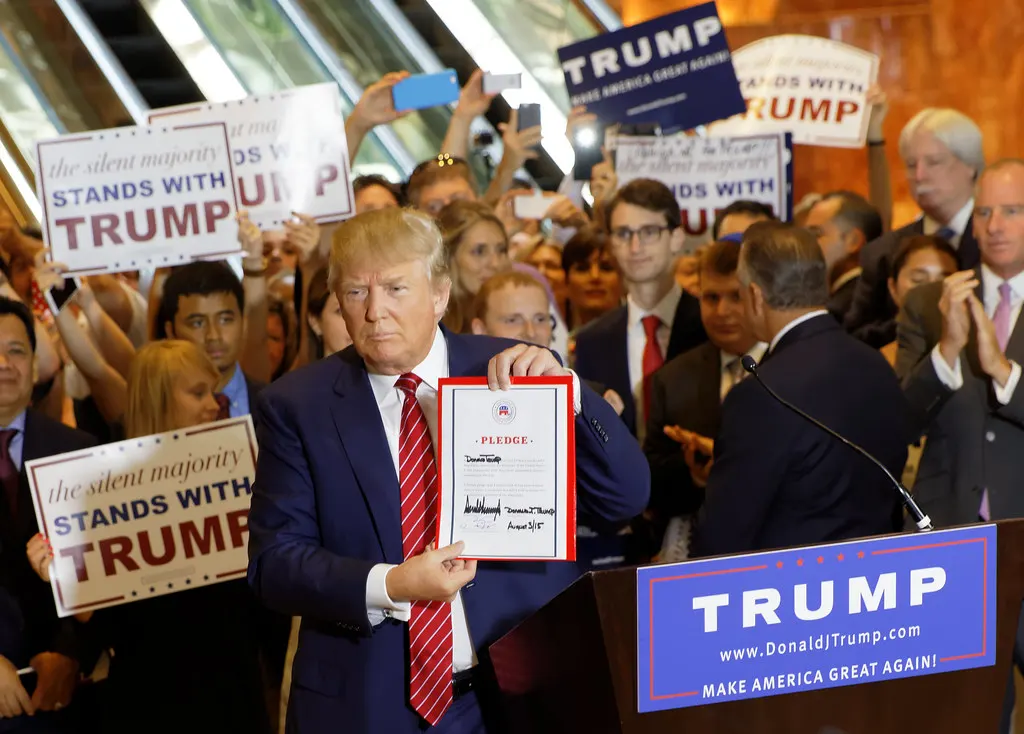
Photo: Michael Vadon, CC BY-SA 2.0 / flickr
President Donald Trump has proposed banning U.S. companies from building data centers abroad or slapping them with a heavy tax, citing concerns over Chinese AI workarounds.
Go deeper
Want more on this story? Our research assistant searches the latest reports across the web and explains what it finds, so you get the fuller picture in one place.