
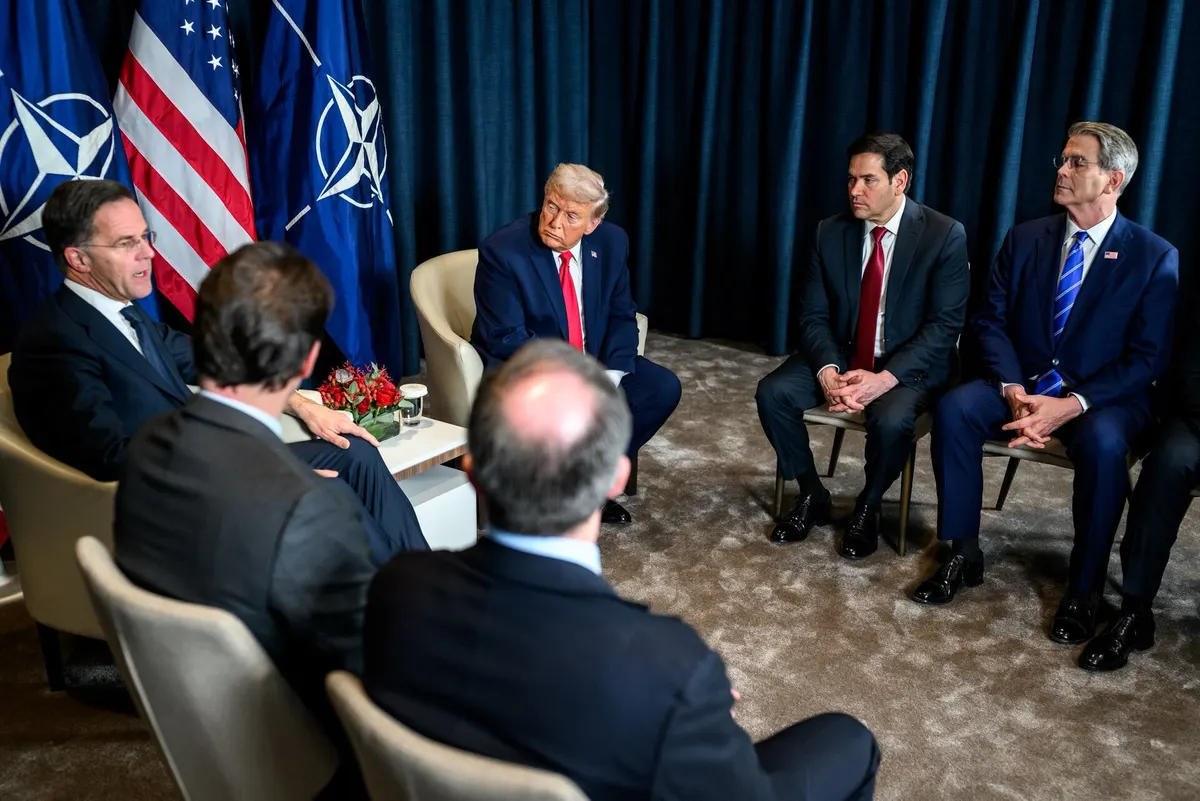
U.S. President Donald Trump and NATO Secretary General Mark Rutte have issued a joint statement urging Russia to refrain from any actions that could intentionally or unintentionally expand the war in Ukraine. The appeal comes as Russian forces intensify missile and drone strikes against Ukraine's power grid during freezing winter conditions.
The warning follows a meeting between Trump and Rutte at the Mar-a-Lago club in Palm Beach, Florida. Both leaders emphasized the urgency of reaching a peaceful resolution to the conflict as rapidly as possible.
What happened
Trump and Rutte described their Wednesday meeting in Florida as very impactful. Discussions centered on the nearly five-year-long war in Ukraine as well as the ongoing conflict involving Iran. In their joint statement, the two leaders stressed the necessity of obtaining a peaceful resolution quickly and warned the Kremlin against widening the hostilities. The diplomatic push coincides with a sharp escalation in Russian military operations targeting Ukraine's energy infrastructure. Overnight strikes on the central Ukrainian city of Kryvyi Rih damaged power supplies and brought municipal electric public transport to a complete standstill, according to Oleksandr Vilkul, head of the city's defense council. Ukrainian officials reported that separate attacks damaged power sector infrastructure and caused widespread outages across five regions. German Chancellor Friedrich Merz accused the Kremlin of escalating threats to European security through actions in the Baltic region, Poland, and the Black Sea, stating that Russia wants more than just Ukraine. A spokesperson for the Russian Foreign Ministry did not immediately respond to requests for comment, though the Kremlin has repeatedly denied seeking military confrontation with NATO nations.
Why it matters
The intensification of attacks on Ukraine's power grid directly threatens the survival of the civilian population as cold winter weather sets in. For European security, the situation highlights deepening anxieties regarding Russian intentions along NATO's eastern flank. European lawmakers have expressed alarm over Washington's commitment to transatlantic security, particularly following Trump's recent trilateral meeting in Asia with Russian President Vladimir Putin and Chinese President Xi Jinping, during which Trump referred to Putin as his friend. NATO chief Mark Rutte, a seasoned diplomat and former Dutch prime minister, has sought to maintain alliance cohesion and manage relations with the U.S. president through diplomatic engagement, though critics debate whether this approach yields concrete security benefits.
The background
Mark Rutte serves as the Secretary General of NATO, the North Atlantic Treaty Organization, a political and military alliance of North American and European nations. Rutte spent nearly 14 years as the prime minister of the Netherlands before taking the helm at NATO, building a reputation as a consensus builder. The current conflict in Ukraine is approaching its fifth year, marked by relentless Russian military campaigns against Ukrainian territory and infrastructure. Tensions between Moscow and Western powers have remained high throughout the conflict, with European leaders voicing continuous concern over broader regional stability.
What happens next
It remains unconfirmed whether Moscow will alter its military strategy or respond directly to the joint warning issued by Washington and NATO. Russian state representatives have not provided immediate public commentary on the Mar-a-Lago statement. Meanwhile, Ukrainian municipal and national authorities continue emergency repair work to restore damaged energy infrastructure amid ongoing freezing weather conditions.
- U.S. President Donald Trump and NATO Secretary General Mark Rutte issued a joint statement urging Russia to avoid expanding the war.
- Overnight strikes on the central Ukrainian city of Kryvyi Rih disrupted power supplies and halted municipal electric public transport.
- Ukrainian officials reported that Russian attacks on the power sector damaged energy infrastructure and caused outages across five regions.
- German Chancellor Friedrich Merz accused the Kremlin of escalating threats to European security across the Baltic region, Poland, and the Black Sea.