
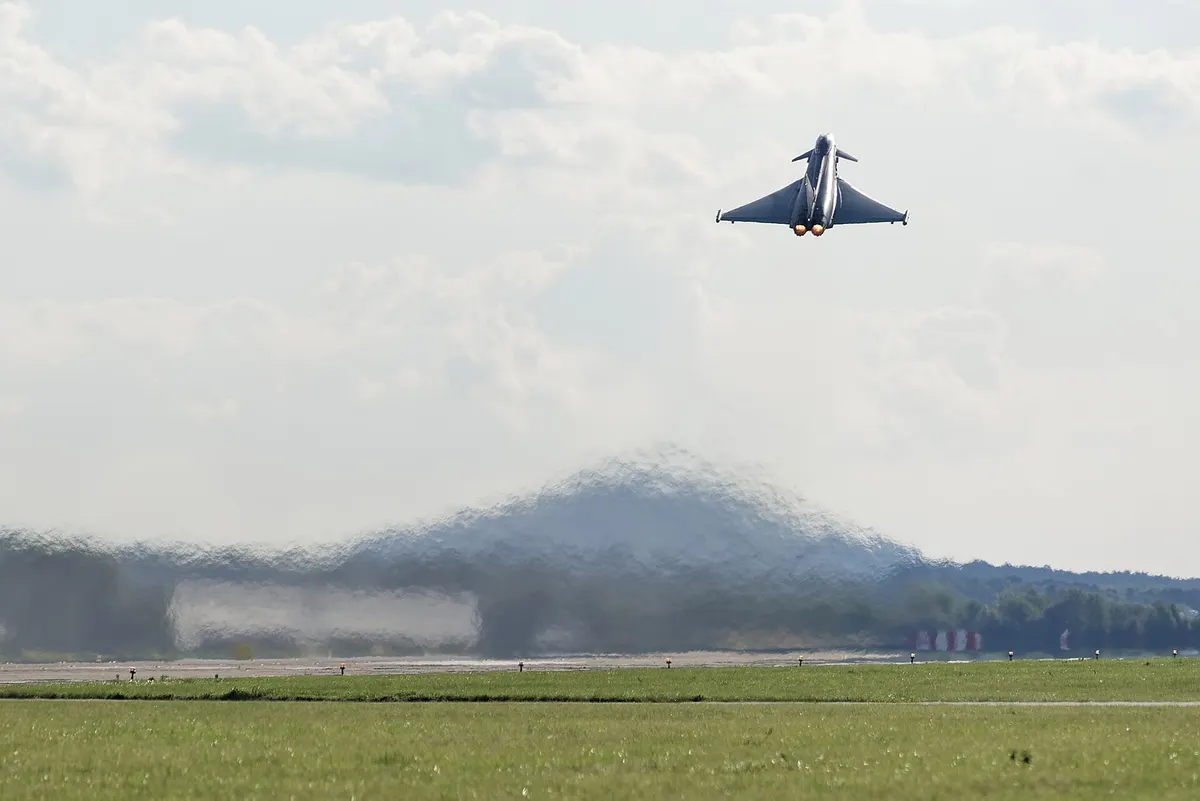
The head of the Royal Air Force has stated that Britain's next-generation fighter aircraft could be the final crewed combat plane the nation ever builds. Air Chief Marshal Sir Harv Smyth pointed to the rapid advancement of artificial intelligence and autonomous systems as the driving force behind a fundamental transformation in military aviation. This shift will see uncrewed machines take on the most perilous combat duties while operating alongside traditional aircraft.
The remarks center on the Global Combat Air Programme, a joint international initiative to field a sixth-generation stealth fighter by 2035. While the new aircraft is designed to feature advanced sensors and artificial intelligence to assist human pilots under extreme stress, military planners foresee a future where human presence in the cockpit is no longer necessary for high-risk missions.
What happened
Writing in the press, Air Chief Marshal Sir Harv Smyth detailed the future trajectory of British air combat capabilities, focusing on the Global Combat Air Programme, which is a trilateral development effort involving the UK, Italy, and Japan. The sixth-generation fighter jet produced by this partnership is commonly known as Tempest. It is expected to combine high speed, advanced stealth capabilities, sophisticated data processing, and artificial intelligence designed to aid human pilots when they become overwhelmed or face extreme operational pressure.
Despite noting that Tempest could be the last crewed fighter the UK builds, Sir Harv emphasized that this evolution does not diminish the importance of personnel. Instead, he argued that technology should enhance human judgment rather than replace accountability, with autonomous machines taking over the most dangerous tasks in the theater of operations. As part of this transition, uncrewed fighter jets are scheduled to begin flying in UK airspace the following year.
The broader modernization effort will initially see the Royal Air Force combine its existing fleets of Typhoons and F-35 fighter jets with new autonomous systems. The development partnership reached a major milestone when the participating nations signed a £4.6bn contract covering the next phase of design through Edgewing, an industry joint venture. According to government figures, the overarching project currently supports 3,500 jobs and 1,000 apprenticeships across the industrial base.
International interest in the program has also expanded. Canada was granted observer-nation status, giving it privileged access without formal decision-making powers. Meanwhile, Prime Minister Andy Burnham stated that the UK government would seek to progress Germany joining the partnership, noting that such cooperation could extend to countering hybrid attacks and foreign interference in democratic processes.
Why it matters
The transition toward autonomous and AI-driven military hardware represents a generational shift in defense strategy and national security doctrine. By removing human pilots from the most hazardous combat environments, air forces can project power while drastically reducing personnel risks during high-intensity conflict. At the same time, the massive industrial investments tied to sixth-generation aircraft development sustain thousands of highly skilled engineering jobs and manufacturing apprenticeships.
Geopolitically, expanding international partnerships around projects like the Global Combat Air Programme strengthens alliances and shares the immense financial burden required to field cutting-edge military technology. By integrating nations like Canada and potentially Germany, the coalition aims to bolster collective security measures against modern hybrid threats and cyber interference, turning defense procurement into a tool for broader strategic alignment.
The background
The Global Combat Air Programme was formally announced in 2022 as a joint endeavor between the United Kingdom, Italy, and Japan to field a dominant air combat capability by the middle of the next decade. The project merges several national technology initiatives into a single sixth-generation fighter design, intended to replace aircraft like the Eurofighter Typhoon. Sixth-generation fighter jets represent the pinnacle of military aviation, incorporating quantum sensors, directed-energy weapons, advanced stealth materials, and deep artificial intelligence integration.
Artificial intelligence has advanced rapidly in military simulations, with defense trials demonstrating that machine systems can process tactical scenarios at unprecedented speeds. Concurrently, the Royal Air Force has begun utilizing uncrewed platforms, such as Protector drones, for operational monitoring missions over waterways like the English Channel, laying the operational groundwork for a fully integrated fleet of crewed and autonomous aircraft.
What happens next
Uncrewed fighter jets are expected to begin test flights in UK airspace next year as the military accelerates its integration of autonomous technology. The industrial joint venture Edgewing will continue executing the £4.6bn design phase contract agreed upon by the UK, Italy, and Japan. Additionally, the British government will pursue discussions regarding Germany's potential entry into the partnership, while monitoring the ongoing contributions of observer nations like Canada as the 2035 target date for operational service approaches.
Key takeaways
- Air Chief Marshal Sir Harv Smyth stated that Britain's next-generation fighter jet could be the final crewed combat aircraft built by the UK.
- The Global Combat Air Programme is a trilateral partnership between the UK, Italy, and Japan to develop a sixth-generation fighter jet by 2035.
- Uncrewed fighter jets are scheduled to start flying in UK airspace next year as part of the military's ongoing technological transition.
- The development partnership signed a £4.6bn contract for the next design phase through the industry joint venture Edgewing.
- Prime Minister Andy Burnham announced that the UK government would seek to progress Germany joining the Global Combat Air Programme.