
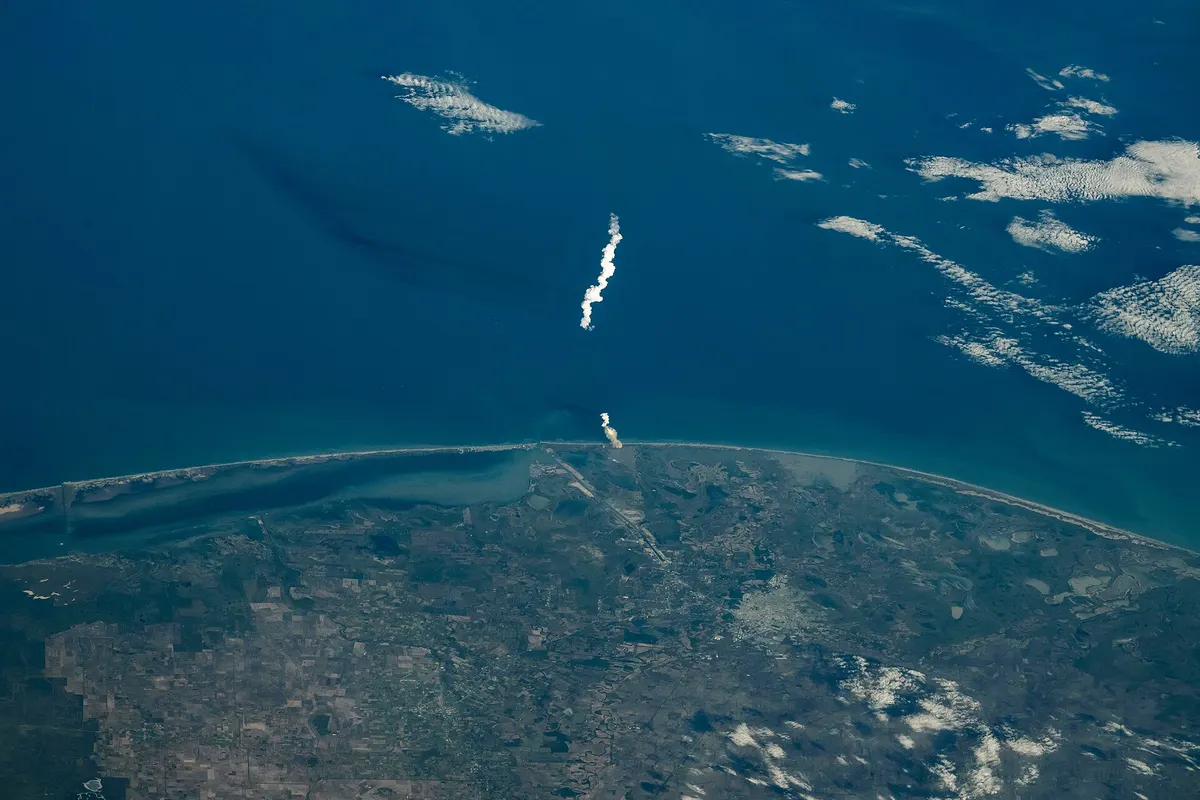
The global aerospace sector experienced a flurry of major developments across commercial and defense domains last weekend and during the week. While private rocket companies achieved significant technical milestones and suffered unexpected setbacks, international defense organizations and startups made bold moves to secure future access to space.
SpaceX successfully completed a midair catch of its massive Starship upper stage at its launch pad in Texas after spending nearly a day in orbit, though the Super Heavy booster was lost at sea. Meanwhile, United Launch Alliance suffered its first-ever total launch failure with the Vulcan rocket, dealing a blow to major customers including the US Space Force and Amazon.
What happened
In corporate developments, Finnish satellite developer ICEYE announced that it is seeking to buy Italian rocket-maker Avio for more than $2.2 billion. The transaction aims to create Europe’s first true vertically integrated end-to-end space company. Avio builds the solid-fueled Vega C rocket, which carries up to 3.3 metric tons to low-Earth orbit. At the same time, rocket startup Stoke Space announced it has completed development of its methane-fueled Zenith engine, which will power the company’s medium-class Nova rocket.
In defense news, the North Atlantic Treaty Organization launched two initiatives to grow its satellite launch network and neutralize risks to space systems. NATO introduced Starlift, allowing participating countries to pool military launch requirements and secure slots on commercial rockets, alongside the Global Data Marketplace to bolster military operations with commercial data.
Why it matters
The actions of these private companies and international bodies directly impact global defense capabilities, commercial internet deployment, and satellite surveillance. The US Space Force and Amazon rely heavily on reliable heavy-lift rockets like the troubled Vulcan for upcoming missions, making the recent launch failure a critical hurdle. For Europe, the proposed acquisition of Avio by ICEYE addresses a vital regional need for sovereign space and defense capabilities, especially as companies look ahead to the eventual retirement of workhorse launchers like the SpaceX Falcon 9.
The background
SpaceX has steadily advanced toward fully reusable rocket systems by mastering booster and upper-stage recoveries. Conversely, United Launch Alliance is a major joint venture providing heavy-lift launch services to the US government and commercial clients. Avio is an established Italian aerospace manufacturer responsible for the Vega rocket family, while ICEYE is a prominent European satellite startup specializing in radar surveillance. NATO is an intergovernmental military alliance consisting of 32 member states across Europe and North America.
What happens next
NATO’s tech agency will offer about $2.7 billion in contracts over the next two years to commercial space companies, artificial intelligence firms, and cyber networks to support its new launch initiatives. Meanwhile, Stoke Space is shipping cleared Zenith engines down to Cape Canaveral every week for integration with the Nova rocket's first stage. ICEYE's proposed buyout of Avio remains subject to corporate and regulatory developments.
Key takeaways
- Finnish satellite developer ICEYE announced a bid to buy Italian rocket-maker Avio for more than $2.2 billion.
- SpaceX completed a successful midair catch of its Starship upper stage at its launch pad in Texas.
- United Launch Alliance suffered its first-ever total launch failure with the newly introduced Vulcan rocket.
- NATO unveiled the Starlift initiative, backed by approximately $2.7 billion in contracts, to pool military launch requirements among member states.
- Stoke Space finished developing its Zenith engine to power the upcoming medium-class Nova rocket.