
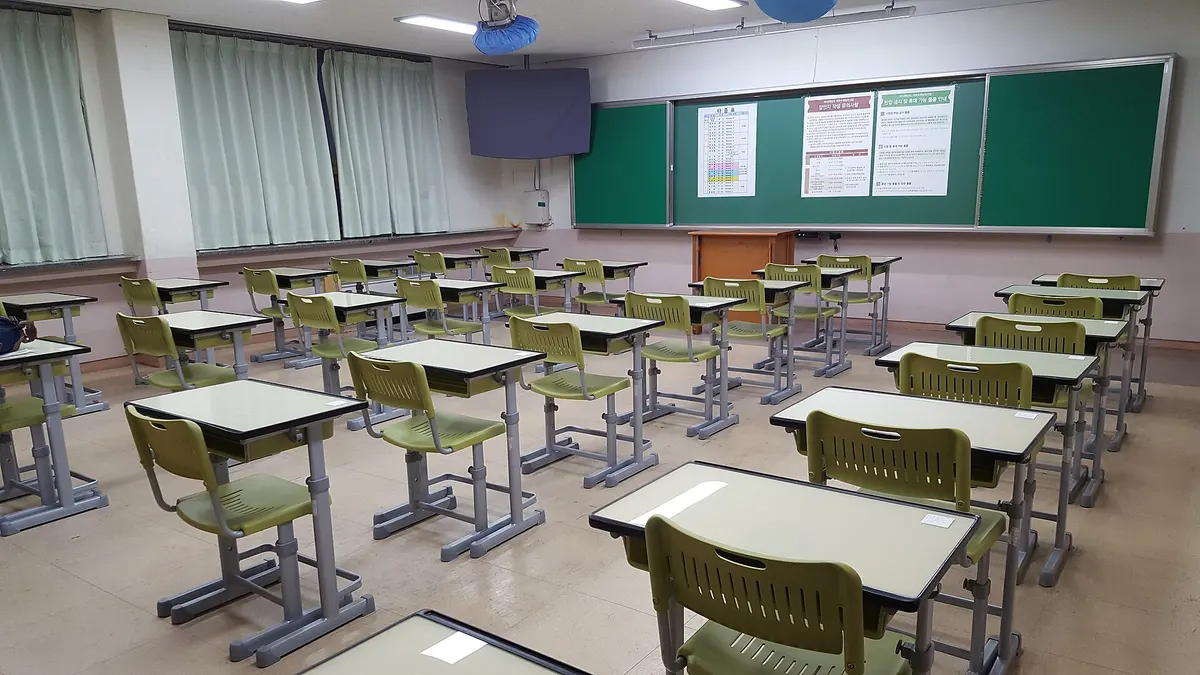
South Korea deployed emergency disaster alerts during its grueling national college admission test to catch students using prohibited electronic devices. The sudden alerts caught 54 candidates, contributing to a total of 111 students caught with unauthorized devices through various inspection methods.
The crackdown follows a high-profile confession by a tax accountant exam cheater who used artificial intelligence and a micro-camera. The resulting scandal prompted immediate government action to protect the integrity of the nation's most pivotal testing events.
What happened
The College Scholastic Ability Test, widely known as the Suneung, is an eight-hour exam held every third Thursday of November. Weeks before the exam, a candidate named Han Won-seok confessed on a lawyer's YouTube channel to cheating on the Certified Tax Accountant exam. Han admitted to using a micro-camera that fed test images to an AI on his smartphone. His confession revealed an unprecedented surge of 66 high scorers in introductory accounting compared to only two the previous year, sparking widespread concern over AI-assisted academic fraud.
In response to the confession, Prime Minister Lee Jae Myung called for an overhaul of public examination security to counter AI abuse. During the Suneung, the government deployed emergency disaster alerts to disrupt unauthorized electronics. The first alert rang at 8:30 AM, ten minutes before the exam started, catching 31 students whose scores were immediately invalidated. Two subsequent alerts at 2:21 PM and 2:57 PM caught 23 more students. Combined with metal detectors, WiFi signal detection, and physical inspections, authorities ultimately caught 111 students with unauthorized devices.
Why it matters
The Suneung is an intensely significant cultural and societal event in South Korea, acting as a major deciding factor for the trajectory of students' lives. The entire country pauses for the day: police escort late students, construction and maintenance are halted, aircraft are grounded, military exercises are paused, and the stock market opens an hour later to ensure test-takers arrive unimpeded. Because public examinations heavily dictate the distribution of opportunities and resources in South Korea, cheating fundamentally undermines fairness and trust in societal order.
The background
High-stakes testing in South Korea carries immense societal pressure, creating a competitive environment where cheating methods have evolved alongside technology. The recent scrutiny over AI cheating also cast suspicion on other recent high achievers. A law school entrance exam candidate, Lee Jin-woo, who achieved a rare perfect score on the Legal Education Eligibility Test in July, faced online accusations and legal complaints accusing him of obstruction of official duties following Han's confession. Lee was found dead of cardiac arrest in a motel on the day of the Suneung after failing to show up for a scheduled YouTube interview.
What happens next
The South Korean government is expected to pursue an overhaul of examination security systems to address the rising threat of AI-assisted cheating. Investigations into the legal complaints and broader cheating networks remain ongoing.
Key takeaways
- South Korea deployed emergency disaster alerts during the Suneung exam to catch students using prohibited electronic devices.
- Prime Minister Lee Jae Myung called for an overhaul of public examination security after a candidate confessed to using AI and a micro-camera to cheat.
- The emergency alerts successfully caught 54 candidates, while traditional inspection methods brought the total number of caught students to 111.
- The strict security measures follow a high-profile tax accountant exam scandal involving an unprecedented number of high scores driven by AI cheating.