
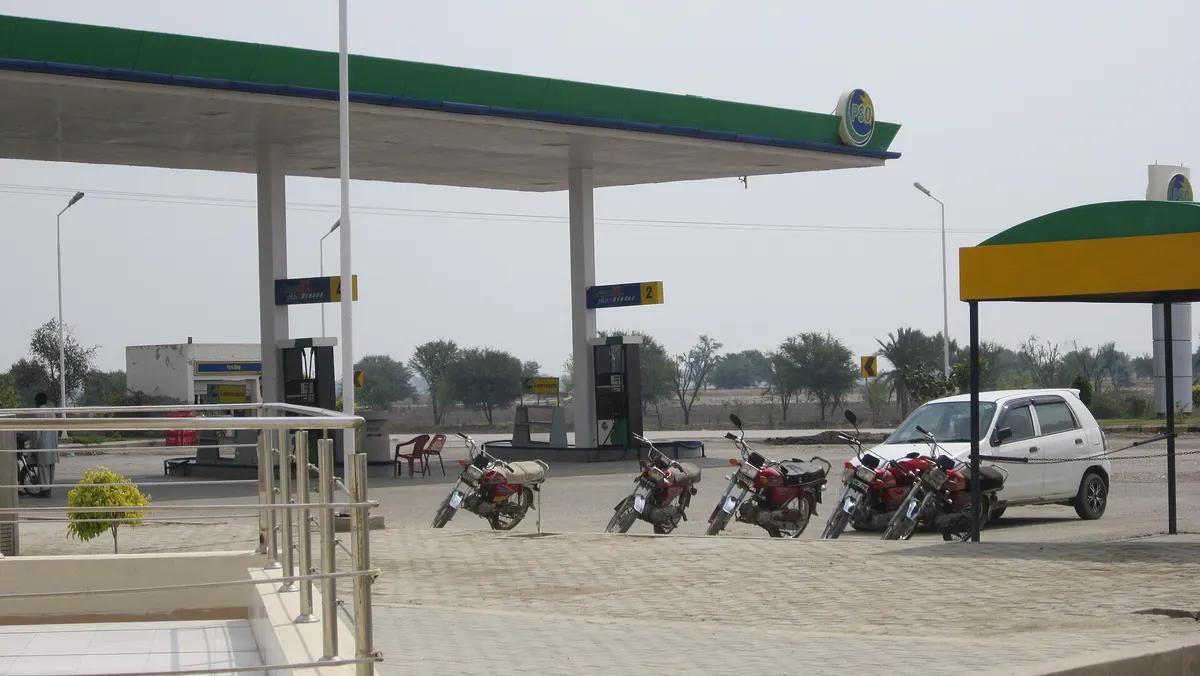
Pakistan's government has slightly reduced the retail price of petrol by Re1 per litre, bringing it down to Rs312. Meanwhile, the price of high-speed diesel has been kept unchanged at Rs346 per litre under a notification issued by the Oil and Gas Regulatory Authority.
This adjustment forms part of a series of near-daily pricing reviews implemented by authorities as international oil markets fluctuate. Despite recent global recoveries in crude prices, domestic figures continue to reflect earlier downward trends due to the regulatory pricing mechanism in place.
What happened
The Oil and Gas Regulatory Authority announced the revised ex-depot prices, which took effect immediately and are scheduled to remain in place through Monday. Following the latest revision, petrol retails at Rs312 per litre and high-speed diesel remains at Rs346 per litre. This marks a continuation of a downward trajectory that has seen consecutive price cuts over recent weeks, bringing rates well below their April peaks when petrol reached Rs458.41 per litre and diesel hit Rs520.35 per litre.
The ongoing price adjustments are calculated using a seven-working-day rolling average of international petroleum product prices. This technical lag explains why domestic rates have continued to drop even as global benchmarks experienced a rebound. On the global stage, Brent crude climbed toward $95.44 to $96.60 a barrel, pushed upward by supply concerns stemming from attacks on tankers in the Strait of Hormuz and Saudi energy infrastructure, as well as the reopening of a Libyan oil pipeline.
To cushion the impact of high energy costs on consumers, a temporary financial arrangement involving local oil refineries remains active. Under this mechanism, refineries contribute directly to the petroleum levy, bearing a cumulative financial impact of billions of rupees over a 30-day period. This refinery contribution allows for a direct price reduction at the consumer end without completely stripping away government revenue from fuel taxes and duties.
Why it matters
Fuel prices directly impact daily life and the broader economy in Pakistan. Petrol is heavily utilized in private transport, small vehicles, rickshaws, and two-wheelers, making price fluctuations a major concern for the middle and lower-middle classes. High-speed diesel powers the heavy transport sector, power plants, and large industrial generators, meaning its cost influences the price of goods and services throughout the country.
While consumers have experienced substantial relief throughout November following weeks of high costs, the delicate balance of government levies, refinery contributions, and volatile international markets dictates how much households and businesses ultimately pay at the pump.
The background
Domestic fuel pricing dynamics in Pakistan have been volatile following renewed hostilities between Iran and the US that began earlier in the year. The conflict caused international oil prices to spike dramatically, prompting the federal government to shift from weekly price reviews to near-daily revisions managed by the Oil and Gas Regulatory Authority to better reflect global market trends.
In response to the crisis, the government also introduced various conservation and relief efforts. These have included a targeted Prime Minister’s Fuel Relief Scheme providing subsidized fuel to owners of motorcycles, rickshaws, and small vehicles up to 800cc, alongside broader austerity measures such as early market closures and reduced fuel allocations for official government vehicles.
What happens next
Further price reductions remain possible if lower international petroleum product prices continue feeding into the regulatory authority's rolling averages. However, recovering global crude prices, persistent tensions in the Middle East, and upcoming meetings by producer groups like OPEC+ could slow or reverse the downward trend heading into December. Additionally, the future of the temporary refinery contribution arrangement remains open as its initial 30-day implementation period approaches completion.
- The Oil and Gas Regulatory Authority reduced the price of petrol by Re1 per litre while leaving diesel unchanged.
- Petrol now retails at Rs312 per litre and high-speed diesel sits at Rs346 per litre under the latest notification.
- Domestic prices are calculated using a seven-working-day rolling average of international petroleum product prices.
- Local oil refineries continue to contribute financially to ease pressure on consumers through a temporary 30-day arrangement.