
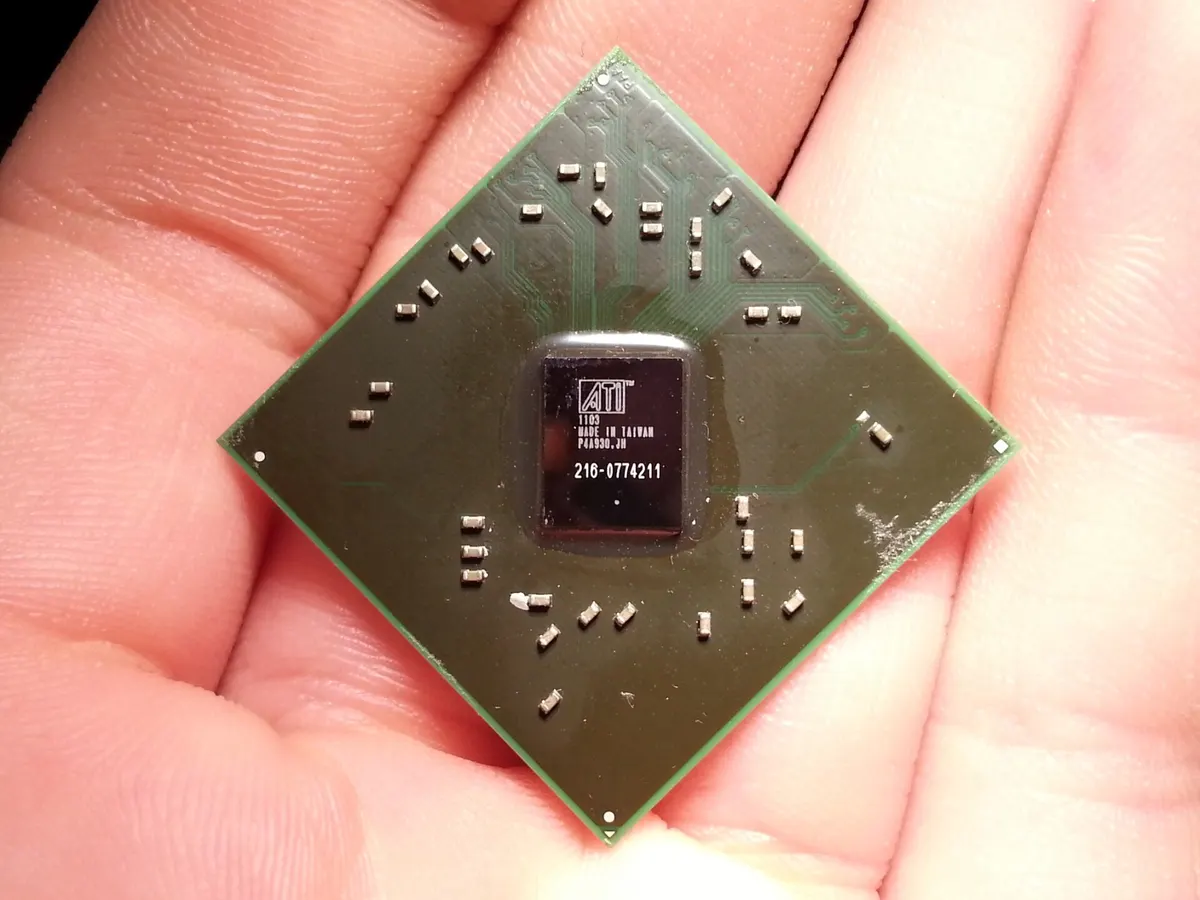
OpenAI has revealed new details of an ongoing partnership with chipmaker AMD, disclosing that its artificial intelligence models were used to help optimize upcoming flagship graphics processing unit (GPU) and central processing unit (CPU) designs. According to the reports, the collaboration yielded up to a 14% improvement in power, performance, and area metrics for the GPU circuitry.
The breakthrough marks a significant push by OpenAI deeper into hardware engineering. By using advanced language models to rewrite the code describing the chip circuits, the company claims it compressed what would normally be a year of conventional semiconductor design work into less than five months.
What happened
OpenAI reported that its models achieved up to a 14% improvement in power, performance, and area relative to heavily optimized baselines on AMD flagship GPU intellectual property. Some of these circuit rewrites have already been included in a design sent for manufacturing. AMD also verified single-digit percentage PPA gains across key blocks of an upcoming next-generation flagship CPU using model-written designs.
The performance gains were achieved by rewriting SystemVerilog RTL, the hardware description language commonly used to define high-end chip circuits. The AI model reasoned on the Register Transfer Level at the level of an expert microarchitect, using Synopsys tools to verify that each code rewrite preserved block behavior while assessing trade-offs. The models explored alternative logic implementations, ways to divide computations across pipeline stages, and opportunities to share hardware.
Prior to the AMD partnership, OpenAI utilized its models to help design its first custom inference chip, named Jalapeño, developed alongside Broadcom and Celestica. That project saw AI models help reduce standard-cell area by about 13% in the vector unit and 10% in the matrix unit. OpenAI stated that model-assisted optimizations helped Jalapeño move from initial design to manufacturing tape-out in nine months.
To measure how its chip-design capabilities evolved, OpenAI tested various generations of its large language models on open-source 32-bit RISC-V cores. The tests revealed that models like GPT-6.2 Astra provided the best optimization scores, and that models delivered superior results when redesigning chips from initial specifications rather than optimizing existing code.
Why it matters
With model-running costs soaring across the technology sector, smarter silicon matters just as much as smarter software. The success of AI-assisted chip design could dramatically accelerate the hardware development cycles required to build the infrastructure powering next-generation artificial intelligence.
The collaboration signals a blurring of lines between AI software creators and hardware manufacturers. By demonstrating that large language models can autonomously reason about microarchitecture and rewrite complex circuit descriptions, OpenAI is positioning itself as a core engineering force in the semiconductor industry.
The background
Semiconductor design is traditionally an arduous, highly manual process requiring years of specialized engineering to optimize power consumption, processing speed, and physical footprint. These metrics are collectively known as PPA.
OpenAI's hardware ambitions have expanded significantly alongside the generative AI boom. Beyond its partnership with AMD, the company collaborated with Broadcom on Jalapeño, an inference-targeted chip running actual workloads in engineering samples. OpenAI also announced a partnership with Synopsys to develop GPT-Synopsys, a specialized model designed to work with electronic design automation tools used by semiconductor engineers.
What happens next
OpenAI expects to squeeze further PPA improvements in both GPU and CPU designs, building up from the newly established baseline. Initial small deployments of the Jalapeño chip are expected around late 2026, with a broader rollout pinned to 2027.
It remains unconfirmed whether scientists used unmodified versions of GPT for all of the recent AMD optimizations, or if task-specific high-end models were deployed. Furthermore, while AMD has incorporated some AI-generated changes into recent manufacturing designs, the long-term extent of automated chip design in commercial production remains to be fully realized.
Key takeaways
- OpenAI revealed that its AI models helped optimize AMD flagship GPU and CPU designs, yielding up to a 14% improvement in power, performance, and area metrics.
- The performance gains were achieved by rewriting SystemVerilog RTL, the specialized code used to describe high-end chip circuits.
- OpenAI estimated that its model's optimization efforts compressed a year's worth of conventional chip design work into under five months.
- The company's models also previously assisted in designing its custom Jalapeño inference chip, which moved from initial design to manufacturing tape-out in nine months.