
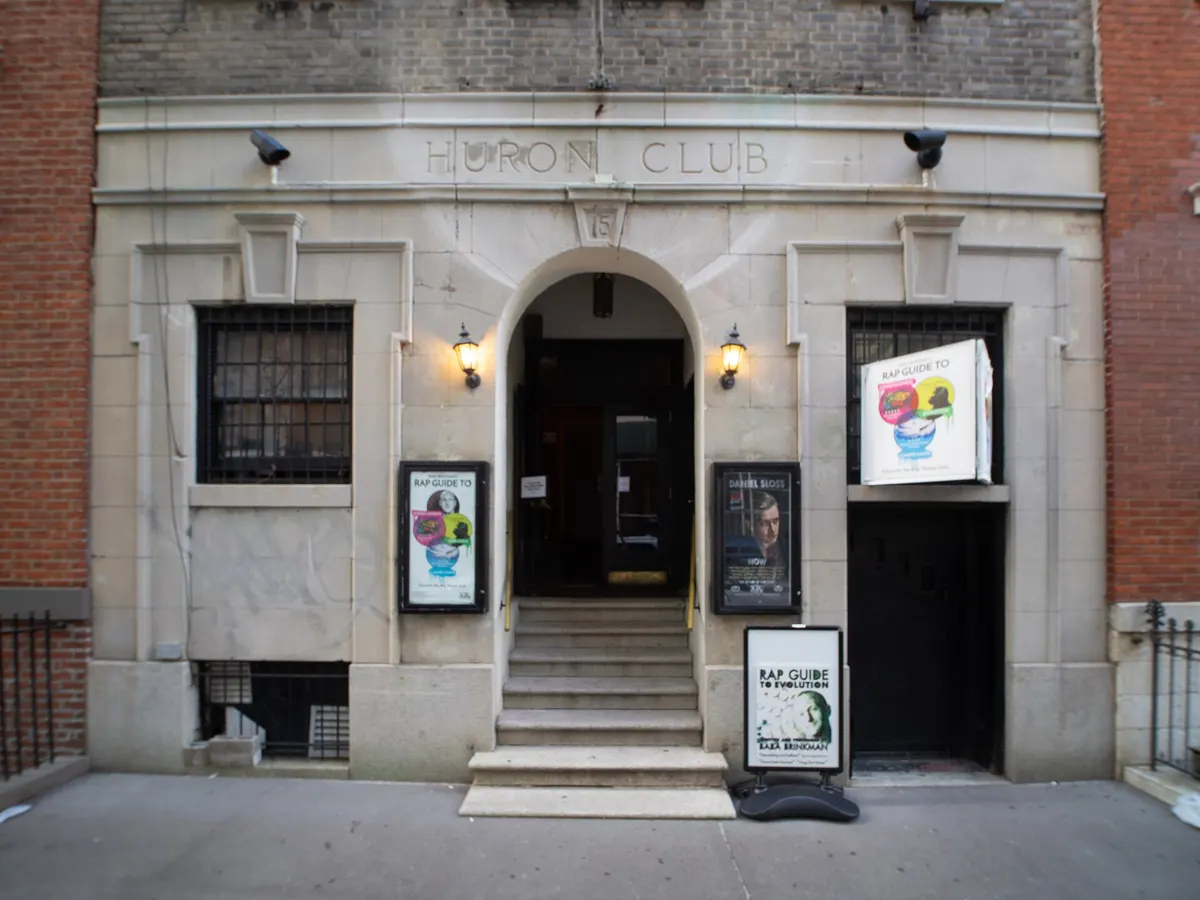
Up a few concrete steps and through the front door of a 200-year-old row house in New York City, audiences attending the off-Broadway show Love Me are handed a pair of wired headphones connected to a small receiver. This setup is not just for accessibility, but acts as a central storytelling tool for the 178-seat SoHo Playhouse production.
The one-man show, created by stand-up comedian and former Saturday Night Live writer Drew Michael and directed by Prashanth Venkataramanujam, explores love, relationships, and Michael's personal experience with hearing loss and self-discovery across five chapters.
What happened
As the play begins, ushers hand each theatergoer a black drawstring bag containing headphones and a small receiver that receives Auracast broadcasts. Auracast is a Bluetooth-based technology capable of broadcasting high-quality audio streams to multiple nearby devices simultaneously. Throughout the performance, sound designer Daniel Kluger uses these headphones alongside traditional theater speakers to build an experimental sound design that guides the audience through Michael's life from childhood to adulthood.
Interspersed in the music between sections are tinnitus ringing and hearing test tones that serve as subtle clues building toward Michael's eventual epiphany about his hearing loss. Kluger manipulates sonic clarity by intentionally muffling audio playing through the theater speakers and further dulling it through the headphones to replicate what Michael hears. Conversely, Michael's inner monologue remains consistently clear and pristine in the headphones, featuring both prerecorded tracks and a live microphone feed from the stage as he converses with himself.
This layering creates intentionally confusing scenes, such as a stand-up comedy sequence where the theater speakers project crowd reactions and a heckler, the headphones play the prerecorded inner monologue, and the stage microphone is muffled. The design culminates in a scene where Michael experiences a breakthrough regarding the cognitive labor of his hearing loss, prompting the audience to physically remove the headphones they have worn for nearly the entire show. The performance concludes with a final act exploring Michael's growing understanding of his own Deaf identity.
Why it matters
This production demonstrates a novel artistic application of modern accessibility technology within live theater. By forcing audience members to wear headphones that replicate muffled hearing alongside crystal-clear inner monologues, the show creates a physical and sensory experience of the cognitive labor required to navigate hearing loss. It turns a utility tool, typically used strictly for assistive listening, into an immersive narrative device that alters how storytelling and sound design interact in a live venue.
The background
Love Me is written and performed by Drew Michael, a stand-up comedian and former Saturday Night Live writer, and directed by Prashanth Venkataramanujam. The technical foundation relies on Auracast, an audio-broadcasting technology built on Bluetooth standards that allows a single audio source to stream high-fidelity sound to an unlimited number of compatible receivers or personal devices nearby. Sound designer Daniel Kluger utilized this capability to blend traditional theatrical speaker arrays with direct-to-ear headphone feeds at the SoHo Playhouse in New York City.
What happens next
Specific details regarding future touring schedules or extended runs for Love Me beyond its current off-Broadway engagement at the SoHo Playhouse were not detailed in the reports.
Key takeaways
- The off-Broadway production Love Me uses Auracast broadcasts to blend accessibility features directly into its sound design.
- Sound designer Daniel Kluger combined theater speakers and headphone feeds to simulate various levels of sonic clarity and tinnitus.
- Audience members wear headphones for nearly the entire show to experience the pristine clarity of the performer's inner monologue compared to muffled external sounds.
- The performance reaches a climactic moment when the audience is instructed to physically remove the headphones as the protagonist confronts his hearing loss.