
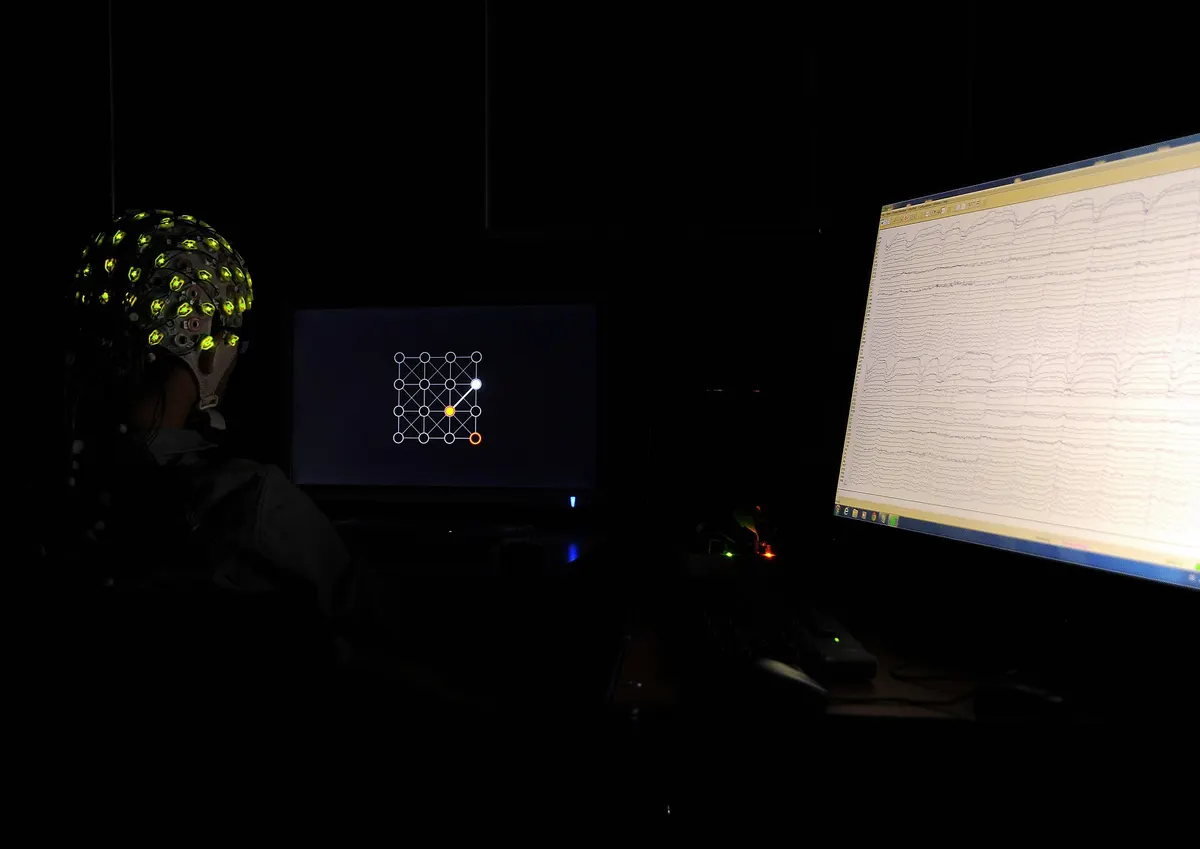
Brain-computer interface company Paradromics has announced a partnership with Nvidia to process neural data using the chipmaker's hardware and software. The collaboration aims to convert heavy, wall-powered equipment into portable devices that allow patients with speech and motor impairments to communicate anywhere.
By moving data processing directly onto compact hardware attached to wheelchairs or mobile devices, the companies plan to eliminate the need for fixed computer carts and internet connectivity. The key takeaway for readers is that advanced edge computing hardware is now being deployed to make direct brain-to-computer communication mobile, responsive, and practical for daily patient use.
What happened
Austin-based Paradromics announced that it is integrating Nvidia's technology to handle the massive amounts of data generated by its brain implants. Currently, patients using the technology rely on a cart filled with electronics plugged directly into a wall outlet, restricting their movement while communicating.
The implant itself, such as the dime-sized chip tested by a Michigan woman named Mary who suffers from motor neuron disease, uses more than 400 embedded electrodes. These electrodes capture neural signals when a user attempts to speak. Artificial intelligence algorithms then infer the intended words, display them on a screen, and generate a synthesized voice.
Under the new agreement, Paradromics will adopt Nvidia's Jetson low-power computing module to process neural signals close to the user rather than relying on heavy stationary equipment. Paradromics will also use Nvidia's Holoscan software, an artificial intelligence sensor processing framework designed to combine brain data with input from external sensors like cameras and microphones with minimal delay.
Additionally, Paradromics plans to run Nvidia foundation models directly on the hardware. According to Vikash Gilja, chief scientific officer at Paradromics, running these artificial intelligence models locally will allow synthesized voices to sound more expressive and human-like without requiring an active internet connection.
Why it matters
Brain-computer interfaces produce vast quantities of data that must be decoded in real time. For patients who rely on neural implants to speak, even minor processing delays disrupt the flow of natural conversation. Using local hardware to handle processing—an architecture known as edge computing—ensures that neural signals translate into speech instantly without sending sensitive data to distant cloud data centers.
Making processing hardware small and energy-efficient allows patients to regain mobility. Instead of remaining tethered to a cart plugged into a wall, users will be able to travel with processing units mounted on wheelchairs or, eventually, carried in smartphones.
The partnership also addresses data privacy concerns. David Niewolny, Nvidia's director of business development for health care and medical, confirmed that Nvidia will not have access to patients' brain data through its hardware and software partnerships.
The background
Brain-computer interfaces have evolved from early academic lab experiments into clinical trials, but shrinking the supporting electronics has remained a major hurdle. Paradromics founder and chief executive officer Matt Angle describes brain-computer interfaces as the ultimate use case for edge computing, where computational tasks occur right where data is generated.
Paradromics is not the only company working with Nvidia in this sector. The chipmaker is also collaborating with other brain-computer interface developers, including Synchron, to provide hardware and software infrastructure for neural signal processing.
The chipmaker is currently facing a major leadership shakeup and federal scrutiny following the resignation of its longtime chief executive officer, Jensen Huang, over an affair with an alleged Chinese spy.
What happens next
Paradromics plans to transition its current computer cart setup into a small, wheelchair-mounted box powered by Nvidia technology within a year. In the longer term, the company aims to shrink the required electronics further until they can fit inside a standard smartphone.
Development will focus on refining real-time adaptation. Because neural signals change over time, Nvidia's processing software will need to continuously adjust its artificial intelligence models to individual users. Further testing will also examine how Holoscan integrates ambient context from microphones and cameras alongside neural signals to improve communication responsiveness.
Key takeaways
- Paradromics is partnering with Nvidia to process brain-computer interface data using compact hardware and specialized software.
- The partnership aims to replace wall-powered equipment carts with wheelchair-mounted devices within a year and phone-sized hardware in the future.
- Paradromics uses implants with over 400 electrodes to translate neural firing into synthesized speech for patients with motor neuron disease.
- Processing brain data locally using edge computing eliminates the need for an internet connection and prevents processing lags.
- Nvidia confirmed it will not receive access to user brain data through its technical partnerships with interface developers.