
Elon Musk's neurotechnology startup Neuralink has secured permission from the U.S. Food and Drug Administration to launch what it calls the nation's first pivotal trial for an implantable brain-computer interface. The clearance marks a major regulatory shift for the company, moving it out of early feasibility testing and into late-stage clinical evaluation for its system.
The upcoming study is designed to evaluate both the safety and effectiveness of the company's hardware in patients suffering from amyotrophic lateral sclerosis. If the trial yields successful results, it could eventually pave the way for commercial approval and broader market release.
What happened
The newly approved trial focuses on patients with ALS, a progressive neurodegenerative disorder that damages nerve cells controlling voluntary muscle movement, leading to severe paralysis. Neuralink announced the milestone on the social platform X, noting that the authorization builds directly on prior work involving more than 30 participants who have used the company's devices.
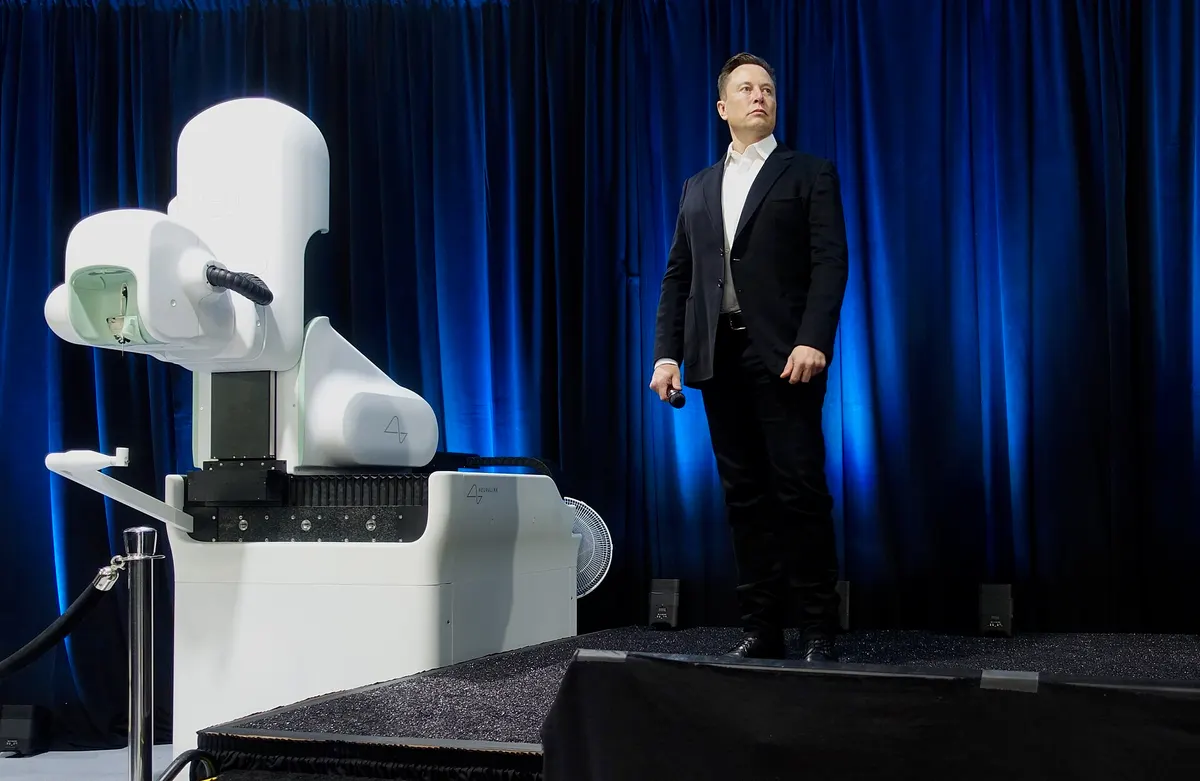
Neuralink's system relies on the N1 implant, a coin-sized device that is surgically placed into the skull. The company utilizes a specialized surgical robot known as the R1 to insert flexible microscopic threads or electrodes directly into the region of the brain responsible for hand movement.
Once implanted, the hardware records neural activity associated with imagined physical motions. Software then translates those brain signals into digital commands, enabling users to execute standard computer mouse functions such as cursor navigation and clicking solely through thought.
While the company has begun recruiting participants for the trial, it has not yet specified exact enrollment numbers or additional eligibility criteria beyond the diagnosis of ALS. The study will assess long-term safety, reliability, and functional outcomes intended to improve independence in daily life.
Why it matters
For individuals living with severe paralysis or speech loss, brain-computer interface technology offers the potential to restore digital autonomy and communication with the outside world. Past participants have used the technology to perform tasks ranging from basic messaging to web browsing, gaming, and software coding.
For the neurotechnology industry, advancing to a pivotal trial represents a crucial threshold in proving that experimental medical devices are reliable enough for broader patient populations. Success in these late-stage evaluations is typically required before a medical device manufacturer can seek full commercial marketing authorization from federal regulators.
The background
Founded by billionaire entrepreneur Elon Musk, Neuralink has been developing brain-computer interfaces designed to bridge the gap between biological neural networks and external digital devices. The company initially secured authorization from the Food and Drug Administration to begin human clinical testing in May 2023, performing its first human implantation in January 2024 on a patient named Noland Arbaugh under an earlier feasibility initiative called the PRIME Study.
Subsequent milestones included demonstrating that patients with ALS could communicate using brain signals alone, with participants reporting significant improvements in personal independence and freedom. The field itself has experienced rapid growth and intensifying competition, as several rival firms also race to develop and commercialize assistive medical implants.
What happens next
Neuralink must complete patient recruitment, enroll participants, and execute the clinical trial under an approved protocol to gather comprehensive safety and efficacy data. Investors, researchers, and regulatory bodies will closely watch trial enrollment figures and clinical outcomes.
If the technology successfully demonstrates safety and efficacy during this pivotal evaluation phase, Neuralink may apply for more advanced regulatory approvals to bring the LINK system to market.
Key takeaways
- Neuralink secured Food and Drug Administration clearance to launch the United States' first pivotal clinical trial for an implantable brain-computer interface.
- The study will evaluate the safety and efficacy of the company's N1 implant and R1 surgical robot in patients with amyotrophic lateral sclerosis.
- The technology translates imagined physical movements into digital commands, enabling users to control computers using thought alone.
- The milestone advances Neuralink from early feasibility testing into late-stage clinical evaluation as the company pursues eventual commercial approval.