
Nato chief Mark Rutte has stated that the military alliance will defend against any threats in space following intelligence reports that Russia is preparing to launch a nuclear-armed satellite. The reports, which surfaced in German media, point to a potential launch within the next 60 days. The developments have drawn sharp reactions from European leaders and sharp denials from Moscow, raising fresh concerns over security in orbit. ## What happened Intelligence reports regarding a possible Russian space launch were shared among Nato countries this month. The reports originate from anonymous German military and intelligence sources cited by broadcasters NDR and WDR, and the newspaper Sueddeutsche Zeitung. It remains unclear which specific country authored the initial intelligence assessments. The reports claim that the satellite, dubbed "Sputnik-S", is equipped with a nuclear warhead. This device could potentially be used to disrupt or destroy critical communication and observation satellites vital for navigation and military operations. At a press conference in Berlin, Nato Secretary General Mark Rutte addressed the reports directly. He affirmed that the alliance will protect every inch of its territory, including the space domain. Rutte noted that Nato possesses a variety of response options and will continuously update its deterrence and defence strategies as necessary. Standing alongside Rutte, German Chancellor Friedrich Merz did not confirm or deny the plans, but remarked that the reports reveal the level of escalation Russia is prepared to pursue. A German government spokesman warned against excessive nervousness regarding hypothetical dangers while confirming the situation is taken very seriously. Josef Aschbacher, head of the European Space Agency, described having nuclear weapons in space as the ultimate nightmare scenario. The Kremlin and Russian officials have firmly dismissed the allegations. Kremlin spokesman Dmitry Peskov stated he had not seen the latest reports and dismissed information from unknown sources as unworthy of serious consideration. The Russian embassy in Berlin rejected the claims as unfounded and part of a propaganda campaign. ## Why it matters The prospect of nuclear weaponry in orbit threatens global communication, navigation, and surveillance networks relied upon by military forces and civilian infrastructure alike. Because modern societies depend heavily on satellites for everything from weather forecasting to financial transactions, the deployment of anti-satellite weapons represents a profound escalation in geopolitical tensions. Rutte's pledge underscores Nato's expanding focus on protecting space assets, treating orbit as an operational domain equal to land, sea, and air. ## The background Russia is a signatory to the 1967 Outer Space Treaty, a foundational international agreement that explicitly bans weapons of mass destruction from being placed into Earth orbit. In 2024, the United States similarly claimed that Moscow was developing a space-based, nuclear-armed anti-satellite weapon, an accusation that President Vladimir Putin firmly denied at the time, insisting Russia remains categorically opposed to nuclear weapons in space. Beyond nuclear systems, major space-faring nations including the US and China have explored other orbital capabilities outside the treaty, such as conventional anti-satellite technologies. In September, the US Secretary of the Air Force acknowledged that America has circling space-control weapons, prompting the Kremlin to reiterate that space must remain free of all weapons. ## What happens next It remains to be seen whether the reported launch of the Sputnik-S satellite will materialize within the 60-day window indicated by the intelligence reports. Nato has stated it will continue to assess its deterrence posture, while international bodies and member states monitor orbital activities closely for any further verification of the claims. - Nato chief Mark Rutte vowed that the alliance will defend against any threats in space following new intelligence reports. - Reports cited by German media indicate that Russia could launch a nuclear-armed satellite named Sputnik-S within the next 60 days. - Kremlin spokesman Dmitry Peskov dismissed the reports, which relied on anonymous sources, as not worth taking seriously.
World
Nato pledges space defence after Russian nuclear satellite reports
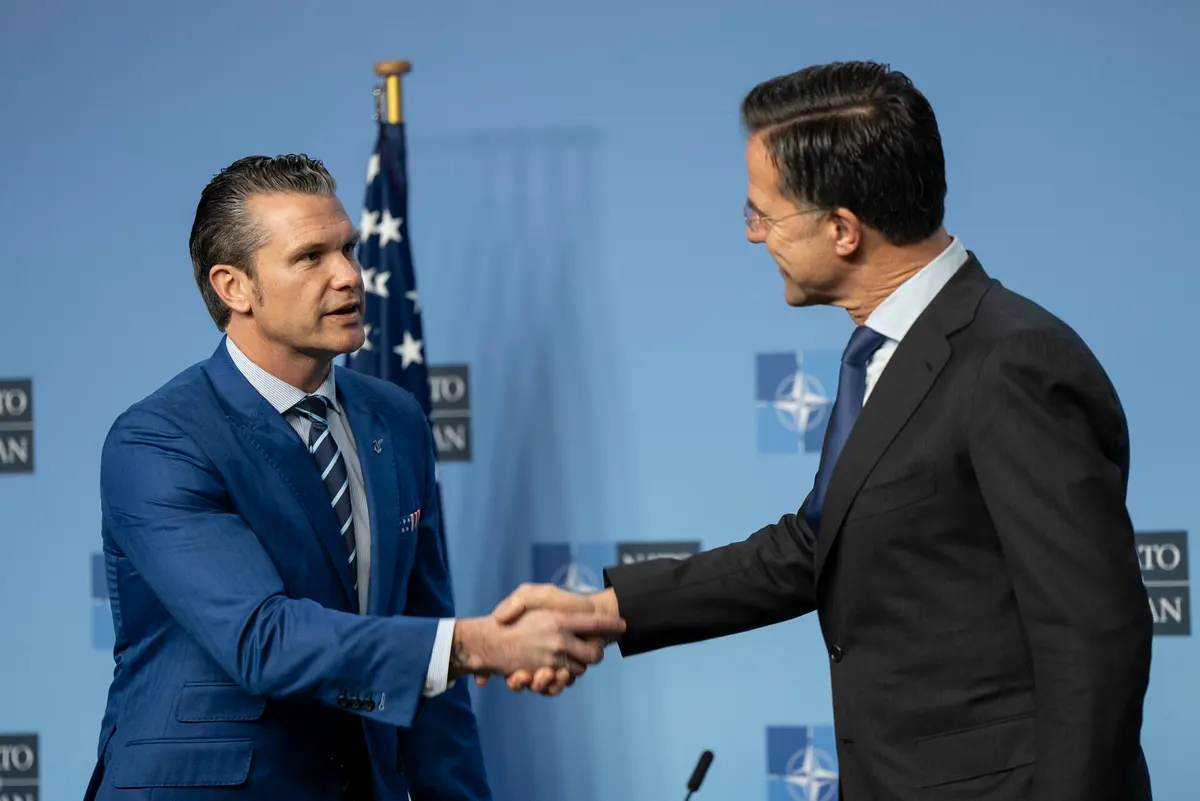
Photo: U.S. Department of Defense, Public domain / Wikimedia Commons
Nato chief Mark Rutte has vowed to defend the alliance against space threats following intelligence reports that Russia is preparing to launch a nuclear-armed satellite.
Go deeper
Want more on this story? Our research assistant searches the latest reports across the web and explains what it finds, so you get the fuller picture in one place.