
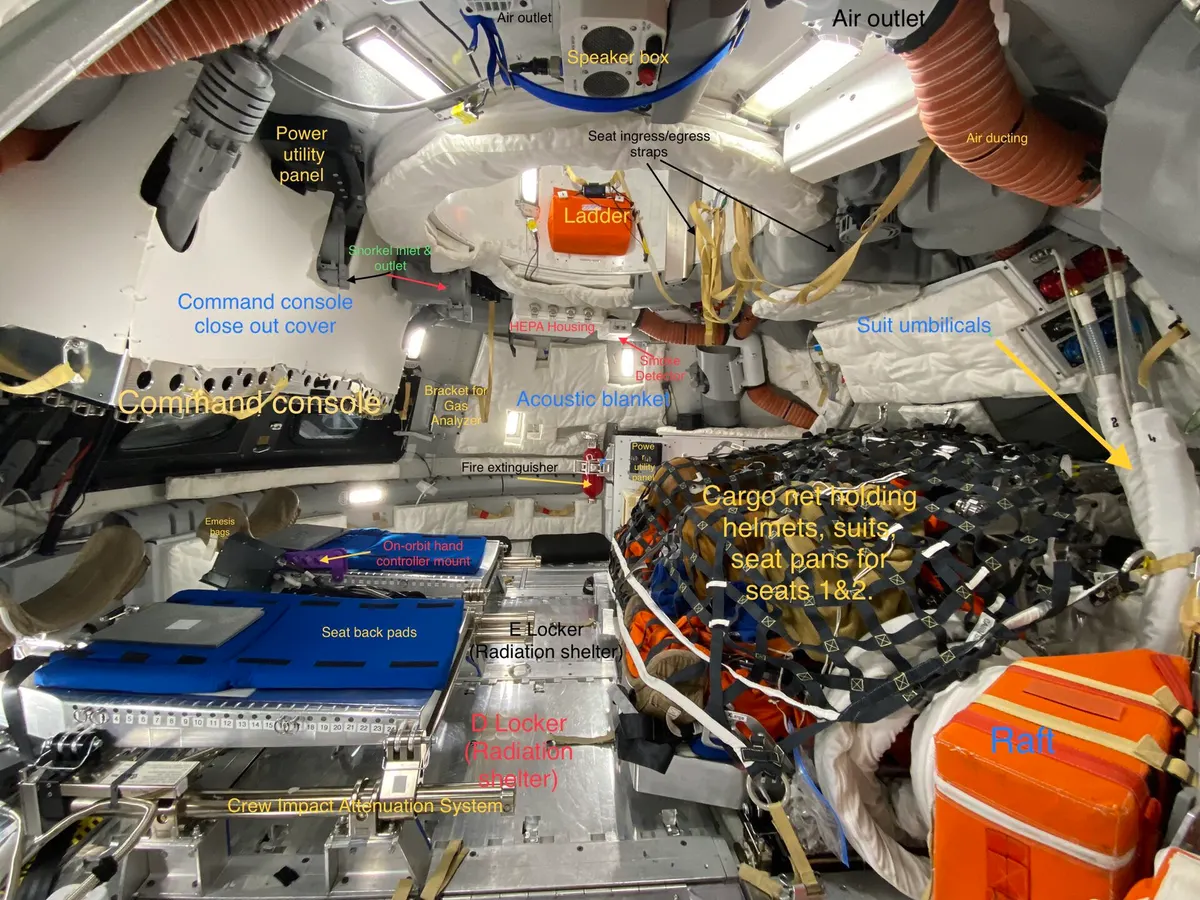
NASA's recent overhaul of its Artemis lunar program aimed to provide more operational flexibility to its human landing providers, SpaceX and Blue Origin. However, shifting how these vehicles rendezvous and dock has transferred significant engineering burdens onto the Lockheed Martin-built Orion spacecraft.
Because Orion was built for deep space and traditional mission profiles, the new trajectories and mission requirements force the vehicle into configurations it was never engineered to handle. Addressing these problems requires design modifications, software adjustments, and extensive re-evaluations of safety risks.
What happened
NASA modified the Artemis mission architecture to help lunar landers reach the Moon more easily. For SpaceX's Starship vehicle, this involves docking with Orion in high-Earth orbit after Starship is fueled in low-Earth orbit. This docking configuration forces Orion to fly backward to the Moon, with its Service Module at the front of the stack. Because this reverses the direction of thrust, liquid propellant in the Service Module would flow toward the gas inlet side of the tanks instead of settling normally. To prevent potential engine failures, the European Space Agency and its main contractor, Airbus, are modifying the vehicle's propellant tanks. Additionally, having Starship provide the thrust increases acceleration on Orion from its original design range of 0.1 to 0.15 g up to approximately 0.8 to 1 g, requiring structural recertification. NASA also moved the Artemis III mission to a low-Earth orbit rehearsal test, scheduled for around 2027. This change forces Orion to spend roughly two weeks in low-Earth orbit, an environment much warmer than deep space. To prevent overheating, engineers must remove exterior silver-like thermal tape, manage electrical loads, and assess the heightened risk of orbital debris. Meanwhile, SpaceX's Starship faces its own mechanical hurdles, including a recent Raptor engine malfunction during an uncrewed test flight that highlights ongoing propulsion reliability questions.
Why it matters
The technical mismatches between NASA's updated mission plans and the Orion spacecraft threaten the timeline and safety of human spaceflight return missions to the Moon. The Orion spacecraft is built to protect astronauts, but pushing it into unanticipated flight postures, thermal environments, and debris-heavy orbits creates severe hazards for crew and equipment. For SpaceX and NASA, engine glitches and structural modifications eat into a heavily compressed schedule. Any delay in resolving these spacecraft vulnerabilities directly jeopardizes the target windows for America's first crewed lunar landings since the Apollo era.
The background
The Artemis program is NASA's international human spaceflight campaign to return astronauts to the lunar surface for the first time since Apollo 17 in 1972. Orion serves as the crew transport vehicle, propelled by a Service Module supplied by the European Space Agency. To actually land astronauts on the Moon, NASA contracted private aerospace companies: SpaceX using its massive Starship vehicle, and Blue Origin using its Blue Moon lander. Starship relies on methane-fueled Raptor engines and is designed to carry large payloads to space while serving a dual purpose for SpaceX's commercial Starlink satellite network.
What happens next
NASA and Lockheed Martin are scheduled to complete their assessment of low-Earth orbital debris risks by January, which could potentially force modifications to Orion's orbit if hazards are deemed too high. SpaceX must determine whether its recent Raptor engine shutdown was a one-off part failure or a fleet-wide design flaw requiring upgrades. NASA is targeting 2027 for the Artemis III low-Earth orbit demonstration mission, leaving a tight schedule for engineers to complete all necessary spacecraft modifications and safety certifications.
- NASA's updated Artemis plan requires the Orion spacecraft to fly backward to the Moon during missions utilizing SpaceX's Starship.
- The European Space Agency and Airbus are modifying Orion's Service Module propellant tanks to handle reversed fuel flow caused by backward thrust.
- Spending two weeks in low-Earth orbit for the Artemis III rehearsal exposes Orion to warmer temperatures and a higher density of orbital debris.
- SpaceX faces scrutiny over its methane-fueled Raptor engines following a propulsion system malfunction during an uncrewed test flight.