
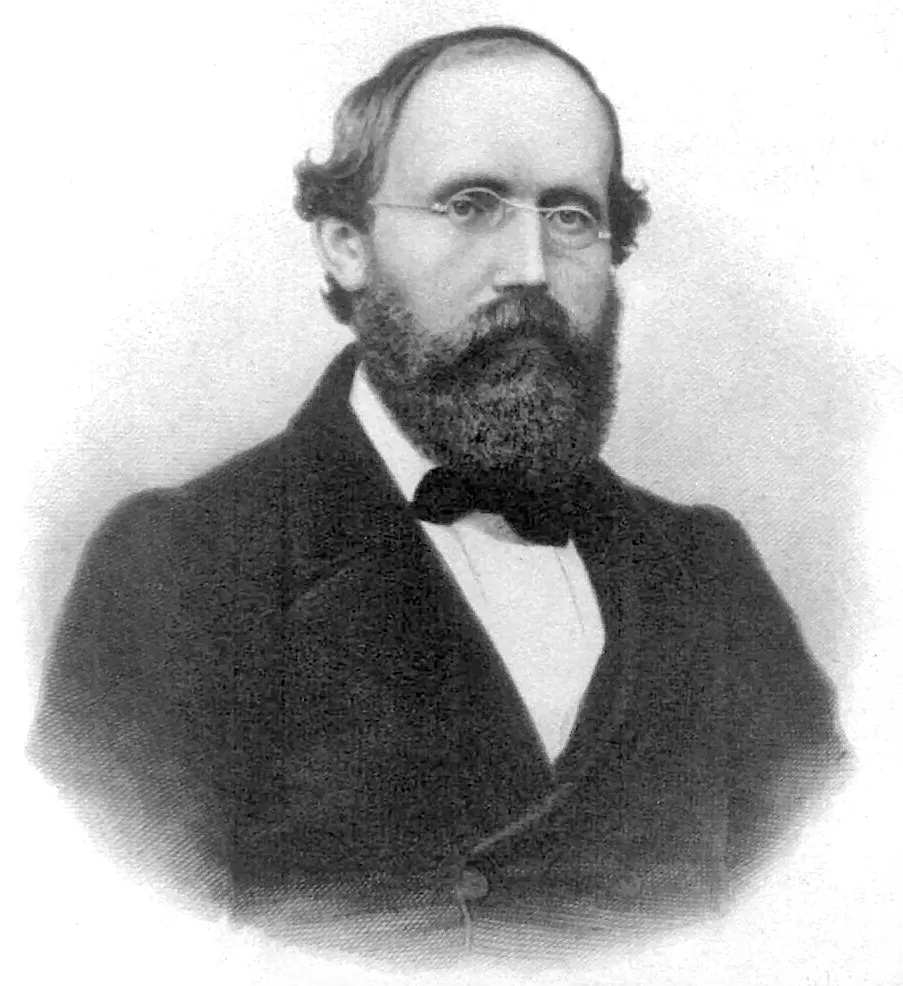
Mathematician Levent Alpöge, an employee at frontier AI lab Anthropic, has announced a claimed solution to the 167-year-old Riemann Hypothesis using the AI model Claude. At the same time, Stanford postdoctoral researcher Alessandro Masullo released an entirely human-crafted proof of the General Riemann Hypothesis.
The developments mark a massive milestone for mathematics and artificial intelligence, arriving alongside separate progress on related problems like the Navier-Stokes equations. While experts are still working to verify the validity of these complex proofs, the announcements have triggered immense excitement across the mathematical community.
What happened
Levent Alpöge used the AI model Claude to develop a Lean-compilable solution to the Riemann Hypothesis, a famous mathematical problem dating back to 1859. Lean is an open source language used to verify mathematical proofs. Alpöge described his experience working with the AI as a stream-of-consciousness process where the model helped him find the pieces of the argument through incredible confusion. He released his findings despite not yet having a truly human-intelligible explanation, driven by a childhood obsession with the problem.
Simultaneously, Stanford professor and American Mathematics Association president Ravi Vakil shared a proof of the General Riemann Hypothesis written by Stanford postdoc Alessandro Masullo. Vakil noted that Masullo's proof was all human with no AI involved, representing the culmination of 12 years of work. Masullo stated that his work was meant to send a message to mathematicians feeling discouraged by the current climate that human researchers are still very much alive and active.
Why it matters
The Riemann Hypothesis is considered one of the most important and difficult unsolved problems in mathematics, with implications touching on the hidden structure underlying prime numbers. Resolving it would unlock profound insights into number theory and mathematics as a whole. The simultaneous emergence of AI-assisted and human-only proofs highlights a shifting landscape in mathematical research, raising questions about how proofs are generated, verified, and understood by human minds.
The background
Formulated in 1859, the Riemann Hypothesis is among the Millennium Prize problems established by the Clay Mathematics Institute to recognize fundamental breakthroughs in mathematics. It concerns the behavior of a specific mathematical function and its connection to prime numbers. The recent flurry of breakthroughs follows earlier AI achievements in related mathematical spaces, such as OpenAI's announcement of a proof for the quasi-Riemann hypothesis, a weaker version of the main problem.
What happens next
It will take a significant amount of time for the mathematics community to fully understand and verify the new proofs. While experts have expressed confidence that the formalized Lean result for Alpöge's AI-assisted proof will hold, human mathematicians still need to comprehend the underlying arguments and explain them to each other. Alpöge has committed to pursuing a human-intelligible explanation for his findings.
Key takeaways
- Levent Alpöge claimed a solution to the 167-year-old Riemann Hypothesis using Anthropic's AI model Claude.
- Stanford postdoc Alessandro Masullo released a separate, entirely human-authored proof of the General Riemann Hypothesis after 12 years of work.
- Alpöge's proof utilized Lean, an open source language designed to verify mathematical proofs.
- Experts within the mathematical community are actively reviewing the complex proofs to determine their validity.