
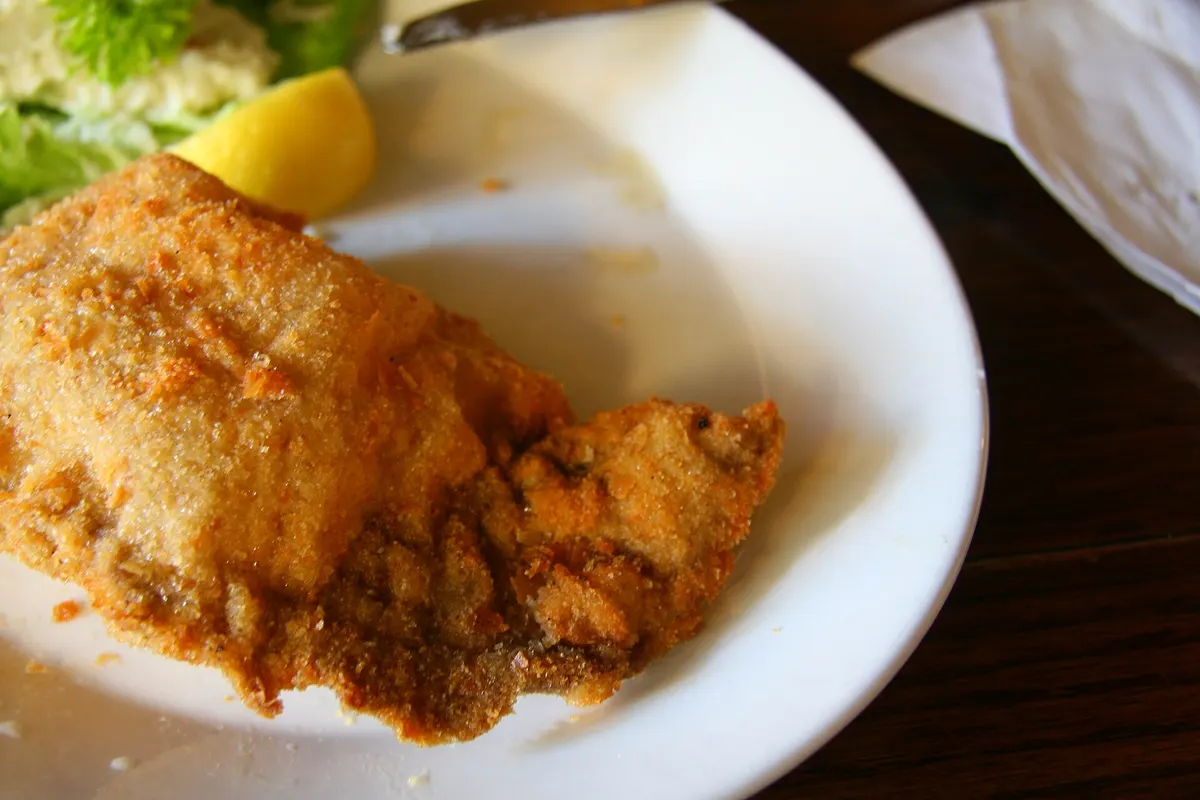
Making a traditional crispy fried cutlet at home is achievable in under an hour, relying on straightforward ingredients and precise preparation techniques. While strict Austrian standards require veal for an authentic dish, pork serves as an accessible alternative.
Culinary experts emphasize that home cooks can easily recreate the famous restaurant texture with a few steps. The method yields a savory cutlet that is crispy on the outside while remaining juicy and tender inside.
What happened
Preparing a proper schnitzel involves working with thinly pounded cutlets, usually about a quarter-inch thick, made from pork or veal. The process begins by setting up a dredging station with all-purpose flour. Next, a mixture is created by whisking large eggs together with fresh lemon juice and cream. The acidity from the lemon juice is an ingenious technique that helps cut through the natural richness of the meat. After passing through the flour and the egg mixture, the cutlets are coated thoroughly with breadcrumbs. They are then shallow-fried in a neutral oil, such as vegetable oil, until golden brown. Leftovers can be safely stored in an airtight refrigerator container for up to four days.
Why it matters
Recreating restaurant-quality dishes at home changes how people approach weeknight cooking, proving that complex-sounding dishes like national staples are accessible. Using pork instead of veal significantly lowers the cost, making the meal practical for everyday cooking without sacrificing flavor or texture. The dish pairs flexibly with various sides, including roasted vegetables, simple salads, sandwiches, or sharp slaws, fitting diverse dietary and meal-planning needs.
The background
Wiener schnitzel holds the status of being the national dish of Austria, celebrated globally for its golden, crispy exterior and tender interior. Renowned establishments like Meissl & Schadn in Vienna and Salzburg dedicate themselves entirely to upholding the precise preparation standards of the classic dish. Under strict Austrian culinary law, a genuine wiener schnitzel must be prepared exclusively using kalbfleisch, or veal. When restaurants or home cooks use pork instead, the resulting dish is traditionally referred to as schnitzel Wiener Art to denote the substitution.
What happens next
Culinary platforms and recipe developers continue to update guidance for home kitchens, ensuring step-by-step instructions are easy to follow. Local restaurants across different cities, from Vienna to Cologne, remain popular destinations for diners seeking traditional preparation, with establishments like Oma Kleinmann and Gruber's Restaurant frequently cited by local food enthusiasts for their regional cooking.
Key takeaways
- A true Austrian wiener schnitzel requires veal by local law, though pork is a widely accepted alternative for home cooking.
- Whisking fresh lemon juice directly into the egg dredge cuts through the richness of the fried meat.
- The thinly pounded cutlets are dredged in flour, eggs, and breadcrumbs before being shallow-fried in neutral oil.
- Properly stored leftovers can be kept in an airtight container in the refrigerator for up to four days.