
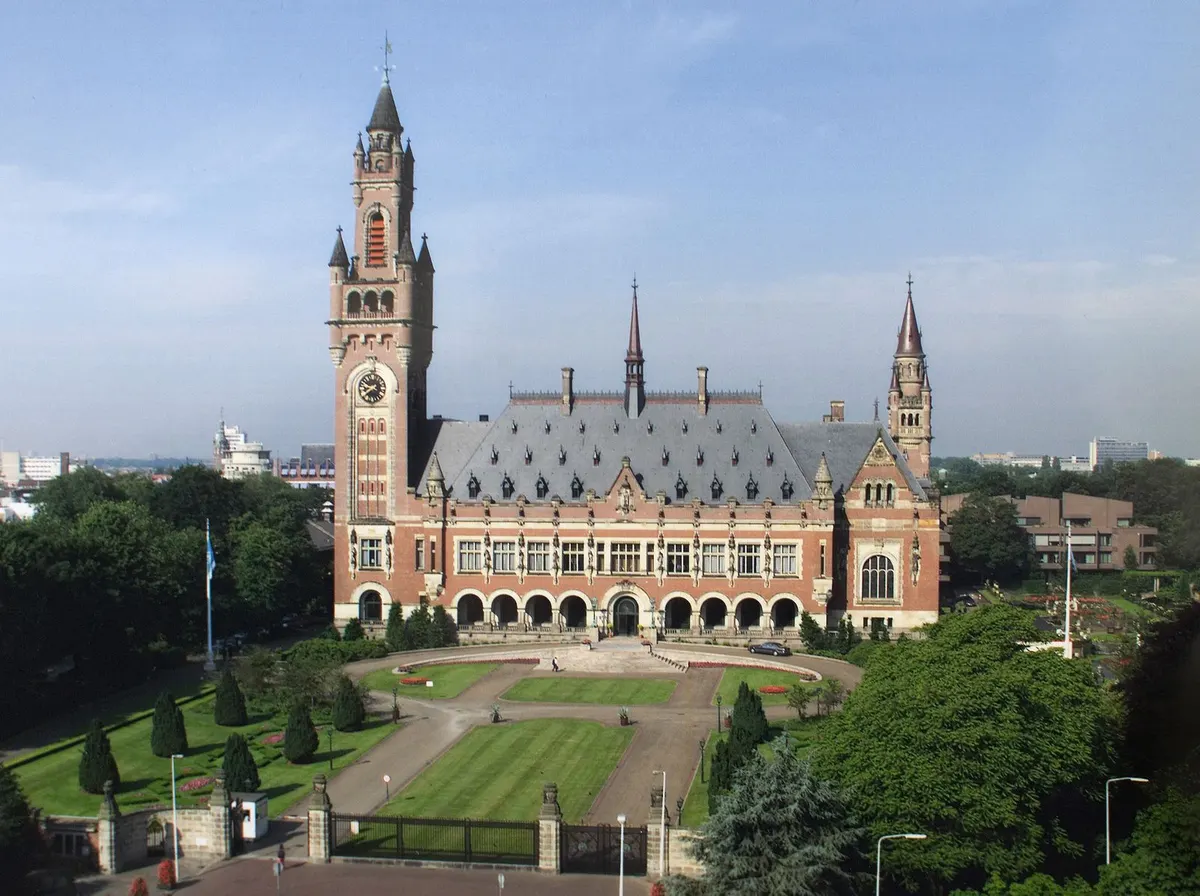
The International Court of Justice (ICJ) has delivered a historic verdict, officially finding Myanmar responsible for genocide against its Rohingya minority. This ruling marks the first time in history that the court has held a state directly accountable for committing genocide under the 1948 UN Genocide Convention.
While the ICJ lacks the power to enforce its own decisions, the ruling serves as a major assertion of international law. Legal experts suggest the judgment provides a crucial roadmap for assessing intent in similar cases, including ongoing proceedings involving Israel and Germany.
What happened
The case was brought before the ICJ in The Hague by The Gambia, which alleged that Myanmar’s military engaged in a brutal campaign of violence against the Rohingya, a Muslim minority group, beginning in 2017. The court’s panel of judges reached their conclusion with a nine-to-six majority vote.
In their assessment, the judges moved beyond simply counting the estimated 10,000 deaths during the counterinsurgency campaign. They evaluated the impact on the entire Rohingya population of 815,000 in northern Rakhine state, considering evidence of sexual violence, mental trauma, and forced displacement. The court ruled that while Myanmar may have had other motives, such as punishing insurgents, those motives could exist alongside genocidal intent. Ultimately, the judges determined that genocidal intent was the only reasonable inference to be drawn from the totality of the evidence.
Why it matters
This ruling breathes new life into the 1948 Genocide Convention, which some legal scholars feared was becoming a dead letter. By clarifying how to assess "genocidal intent"—the most difficult legal threshold to prove—the court has set a benchmark for future international litigation.
The judgment is being closely scrutinized by observers tracking other active cases at the ICJ. Specifically, legal experts are examining how the court’s reasoning might influence the case brought by South Africa against Israel regarding its military campaign in Gaza. Additionally, the verdict holds relevance for a case involving Germany, which has been accused of facilitating genocide in Gaza. The ruling also provides a potential framework for the International Criminal Court (ICC), a separate body that focuses on the criminal responsibility of individual perpetrators.
The background
The Rohingya have long faced persecution in Myanmar, a predominantly Buddhist country. The situation escalated into a full-scale crisis in 2017, when a military crackdown forced hundreds of thousands of Rohingya to flee across the border into Bangladesh. They currently reside in the world’s largest refugee settlement. Myanmar has consistently denied allegations of genocide, claiming its actions were a necessary response to insurgent attacks on security personnel. The current military leadership, led by Min Aung Hlaing, has sought to maintain diplomatic legitimacy despite the ongoing international legal scrutiny.
What happens next
While the ICJ ruling provides a definitive legal finding, the practical implications for Myanmar’s military junta remain uncertain due to the court’s lack of enforcement mechanisms. The verdict is expected to increase international pressure on the regime. Meanwhile, the legal reasoning established in this case will be heavily cited in the ongoing proceedings concerning the conflict in Gaza, which are currently in the stage of written pleadings and expected to continue for at least three more years.
Key takeaways
- The ICJ has officially found Myanmar guilty of genocide against the Rohingya, marking a historic first for the international legal system.
- The court clarified that genocidal intent can exist alongside other motives, such as territorial displacement or counterinsurgency.
- This ruling serves as a vital legal precedent for other ongoing genocide cases, including those currently before the ICJ involving Israel and Germany.
- The judgment considered not only death tolls but also the systemic impact on the Rohingya population, including sexual violence and reproductive harm.