
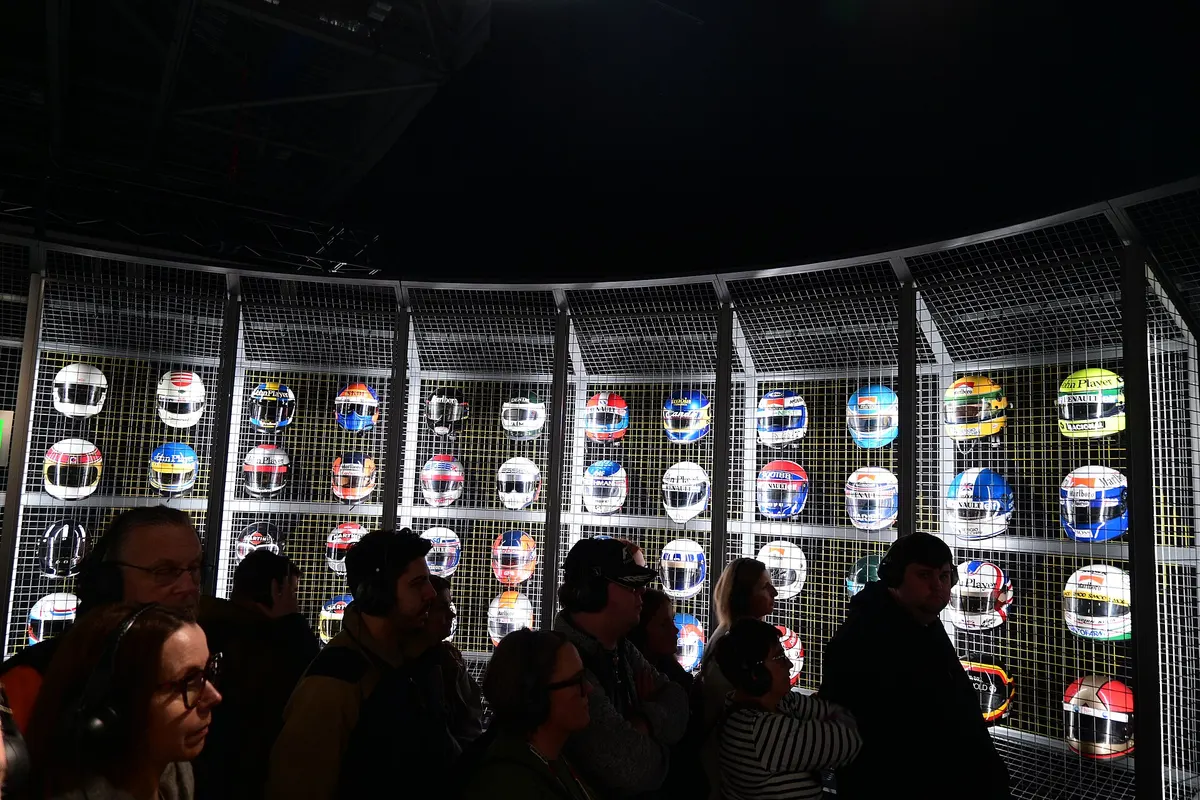
Inside a temperature-controlled room in northern Italy known as the magic shop, technicians spend up to six hours meticulously moulding sticky carbon-fibre material for Formula 1 helmets. Working under the motto 'One man, one shell,' a team of 32 specialists at Schuberth Performance handcraft these sophisticated items to protect the world's top racing drivers. Chief executive Alberto Dall'Oglio notes that the company's philosophy is to craft the best possible product for the elite athletes who push these cars to the limit. Today's manufacturing process relies on extreme precision, blending specialized materials with rigorous safety standards forged over decades of motorsport history.
What happened
The journey of a Formula 1 helmet begins in a secure environment where carbon fibre, stored at precisely -16 degrees Celsius, is moulded layer by layer over secret forms. Once shaped, the entire unit is baked inside a vacuum bag at a set pressure and temperature of 120 degrees Celsius for three and a half hours. Every handmade helmet is custom-chosen by drivers based on specific safety features, comfort, and practical look.
While technicians like Thomaso handle the delicate construction in Italy, trackside support is managed by colleagues such as Sven. Traveling between February and December to almost every grand prix on the calendar, Sven and his trackside peers prepare helmets and visors to withstand varying conditions from heavy rain to bright floodlights. This hands-on approach ensures that the bespoke engineering masterpieces meet the exact demands of racing at speeds exceeding 300 kilometres per hour.
Why it matters
Motor racing is inherently dangerous, and a driver's helmet serves as the final line of defence against catastrophic injury or death. Modern Formula 1 helmets must endure extreme thermal environments, withstanding temperatures of 700 to 800 degrees Celsius for up to 30 seconds before self-extinguishing within 15 seconds. These stringent benchmarks directly reduce the incidence of severe burns, head trauma, and smoke inhalation during fiery crashes.
The background
Early grand prix racing offered minimal protection, with legendary drivers like Giuseppe Farina competing in simple cloth caps, goggles, leather boots, and gloves. Safety standards remained inconsistent for decades until the introduction of full-face helmets by Bell in the late 1960s, which gave drivers much-needed protection against flying debris and fire.
Dark moments in motorsport history repeatedly exposed technological limitations. Niki Lauda survived a horrific 1976 fire at the Nurburgring despite his helmet coming loose, while the tragic deaths of Roland Ratzenberger and Ayrton Senna at Imola in 1994, alongside Jules Bianchi's 2014 accident, proved that head protection needed to evolve alongside survival cells, the HANS device, and the halo. In 2004, the Fédération Internationale de l'Automobile introduced strict helmet safety standards requiring advanced carbon-fibre construction. These innovations culminated in life-saving moments like Romain Grosjean escaping a fiery wreck at Bahrain in 2020 after spending 28 seconds trapped inside burning wreckage.
What happens next
Manufacturers continue to refine their craft in pursuit of higher safety margins, though specific upcoming engineering iterations or proprietary materials remain tightly guarded secrets.
- Technicians handcraft carbon-fibre helmet shells layer by layer in a top-secret Italian workshop.
- Modern Formula 1 helmets are designed to withstand temperatures of up to 800 degrees Celsius for 30 seconds.
- Trackside service technicians travel to nearly every grand prix across the long racing calendar to support drivers.
- Decades of safety innovations, including mandatory carbon-fibre standards introduced in 2004, have dramatically reduced driver fatalities.