
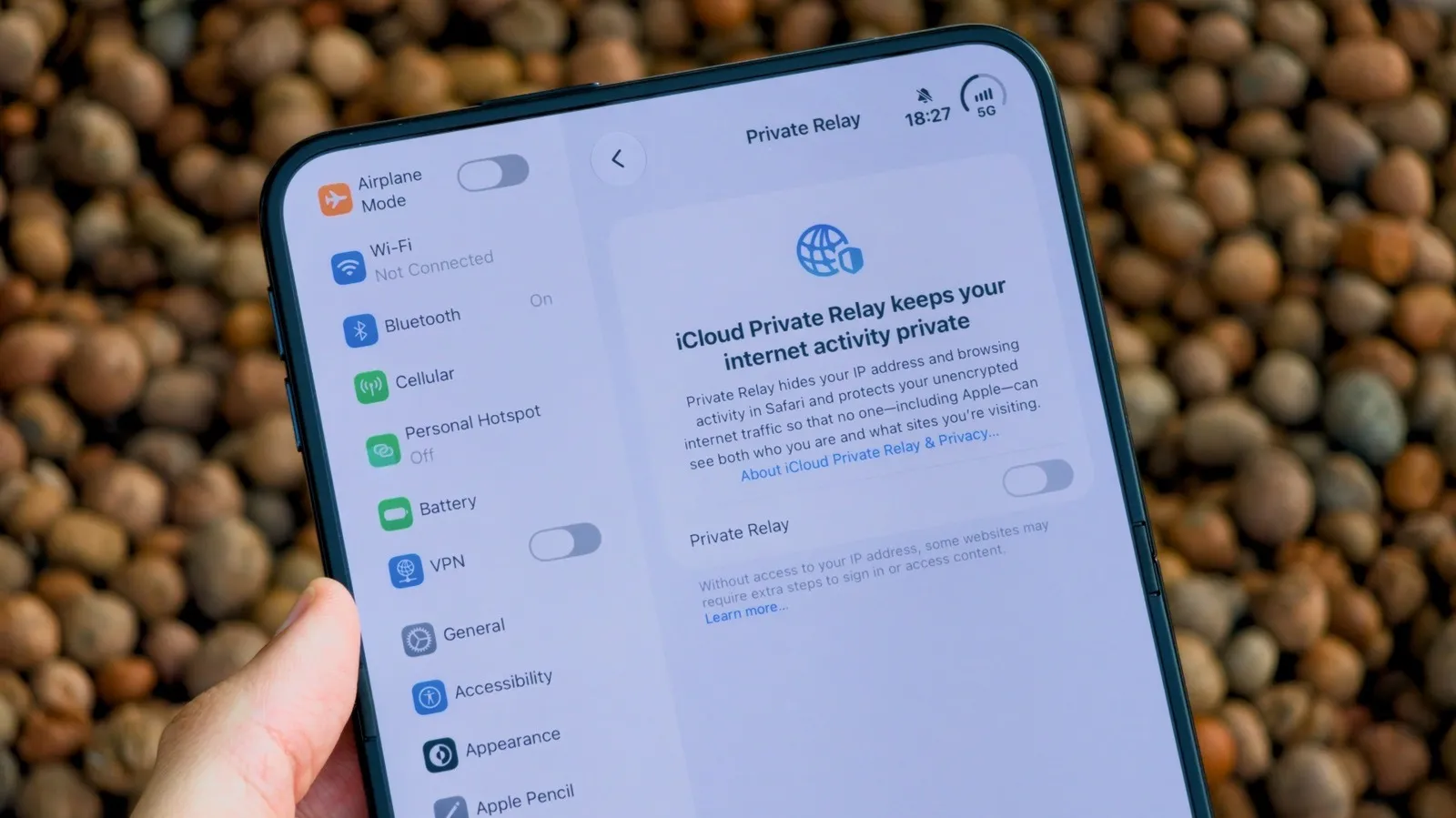
Apple's iCloud Private Relay is built into paid iCloud+ subscriptions to keep web browsing private. It functions similarly to a virtual private network by masking your internet protocol address from websites, but it has distinct limitations compared to a full VPN.
While a standard VPN encrypts all internet traffic from a device, Private Relay only secures traffic sent through the Safari web browser and unencrypted HTTP connections. Security researchers have also identified technical methods that can bypass the feature and expose real IP addresses.
What happened
iCloud Private Relay uses a two-layer security architecture. Apple operates the first layer, seeing the user's original internet protocol address but not the destination website. A partner company, such as Cloudflare or Akamai, operates the second layer, connecting to the website without knowing the user's origin. This prevents any single entity from holding a complete browsing profile.
However, security researchers Talal Haj Bakry and Tommy Mysk discovered that certain WebKit browser features can slip outside this protection. Methods involving DNS prefetching, WebAuthn features connected to passkeys, and WebTransport can bypass proxy configurations. Two of these methods can expose a user's actual internet protocol address, while another can reveal information about the device's domain name system servers.
Furthermore, Private Relay experiences connection errors caused by network restrictions, unsupported mobile carriers, active third-party virtual private networks, or temporary server outages. Users can encounter connectivity failures that require toggling the feature off and on, switching between Wi-Fi and mobile data, or resetting network settings.
Why it matters
Unlike a standard virtual private network that covers all device applications and allows users to select specific geographic locations to bypass regional content blocks, Private Relay only works inside Safari and assigns an IP address corresponding to a general region. Users cannot choose alternative locations to view geo-fenced streaming catalogs.
Private Relay also fails to function in several countries, including China, Russia, and Saudi Arabia, making it unsuitable for travelers in those regions. Additionally, using passkeys can inadvertently expose a real internet protocol address because the request occurs outside the browser. While Apple was investigating the passkey exposure issue as of August 2026, privacy-conscious users must evaluate whether Private Relay provides enough security for their specific needs or if they require a dedicated virtual private network.
The background
iCloud Private Relay is an optional feature included with paid iCloud+ plans alongside storage upgrades and the Hide My Email function. It routes Safari traffic through two separate internet relays to encrypt domain name system records and mask user locations from website operators. Despite sharing privacy goals with virtual private networks, which route all traffic through a single provider to hide data from local networks and internet service providers, Private Relay is integrated directly into Apple operating systems and operates exclusively within the Safari ecosystem.
What happens next
Apple investigates reported bypass vulnerabilities regarding WebKit features like passkeys and domain name system prefetching, though specific software patch dates have not been detailed. Users encountering connection errors must continue relying on manual troubleshooting steps such as disabling conflicting firewalls, updating their software, or switching to traditional virtual private networks.
Key takeaways
- iCloud Private Relay is included with paid iCloud+ plans and routes Safari browsing traffic through two separate servers to hide user locations.
- Security researchers discovered that specific WebKit features, including passkeys and domain name system prefetching, can bypass proxy configurations and expose real internet protocol addresses.
- Unlike standard virtual private networks that encrypt all device applications, Private Relay only secures traffic originating from Safari and unencrypted HTTP connections.
- Private Relay does not permit users to select alternative geographic locations to bypass regional content blocks or streaming restrictions.
- The privacy feature is unavailable in countries such as China, Russia, and Saudi Arabia, limiting its utility for international travelers.