
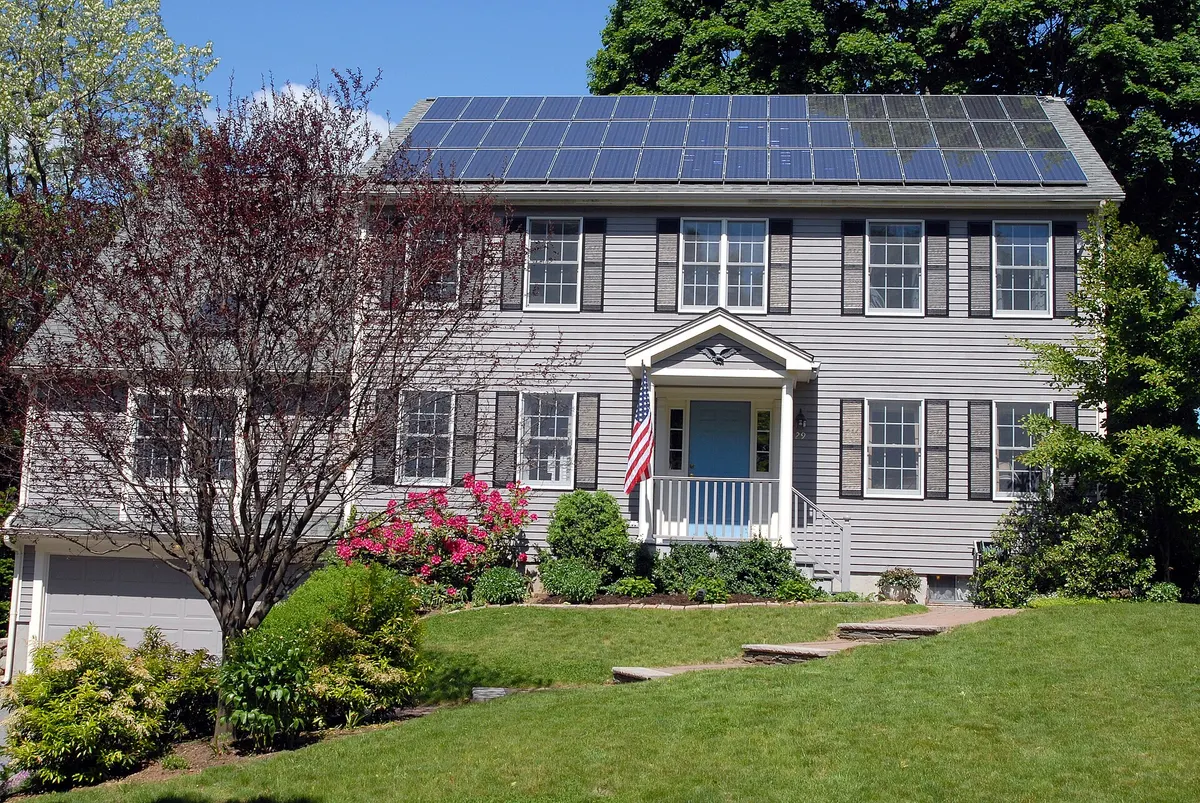
Selecting solar panels for a home involves much more than simply picking the most efficient model available on the market. Roof layout, household electricity consumption, and local climate factors all play a critical role in determining which system delivers the best value. Homeowners must weigh upfront equipment expenses against long-term energy generation and performance warranties.
While higher efficiency ratings mean a panel generates more power per square foot, external variables like shade, local utility rates, and roof obstacles dictate real-world output. Understanding how different solar technologies and installation types work helps buyers make informed decisions for their specific properties.
What happened
Solar panels rely on photovoltaic cells to convert sunlight into electricity, but the materials and manufacturing methods used inside these panels vary significantly. Monocrystalline panels, cut from single-crystal silicon, have become the standard choice for most conventional residential installations because they combine high efficiency with strong power output relative to the roof space they occupy. Older polycrystalline panels, which are cheaper where still available, take up more space to produce comparable power and are increasingly difficult to find. Thin-film panels are built from layers of photovoltaic material and are rarely used on traditional pitched roofs, though they offer flexibility for unconventional mounting.
Modern monocrystalline panels incorporate advanced cell technologies such as TOPCon, HJT, and PERC to boost performance. For example, Qcells produces an n-type module delivering 440W at 22.5 percent module efficiency, while Tesla offers a 420W residential module at least 20.5 percent efficient. In the UK and Great Britain, compliant plug-in solar panels became legal in August 2026, offering renters and homes with limited space a lower-cost option to generate power.
Laboratory tests measure panels under Standard Test Conditions, assuming ideal settings like 25 degrees Celsius cell temperature and zero shade. In reality, solar panels become less efficient as they heat up, typically losing between 0.3 percent and 0.5 percent of output for every degree above 25C. Shading, roof orientation, and local weather also alter annual output. To account for dimmer days, experts recommend sizing systems using the 20 percent rule to produce a buffer over normal household use. Installation quotes also require careful review, factoring in inverters, permits, roof repairs, and warranties. In the US, the Solar Energy Industries Association reported that the average residential installation cost $3.36 per watt in the second quarter of 2026, while individual installations can exceed $24,000 for a 5.1kW setup.
Why it matters
Homeowners invest substantial sums into rooftop solar arrays, making it essential to match equipment capabilities to real-world power needs. A household looking to reduce monthly utility bills requires a different setup than a home needing emergency backup power for kitchen appliances and Wi-Fi during an outage. Failing to account for local weather, shading, and the exact orientation of the roof can result in a system that falls short of its projected annual electricity production. Furthermore, because the federal residential clean energy tax credit ended for setups completed after December 31, 2025, buyers face higher net costs, making a detailed comparison of projected annual production and total expense critical.
The background
Photovoltaic technology has evolved from basic silicon designs into advanced monocrystalline modules with specialized cell architectures. Solar panel efficiency measures the percentage of sunlight hitting a panel that gets converted into usable electrical energy. Most modern residential panels sit between 19 and 22 percent efficiency, with premium models reaching 23 to 24 percent, and top-tier options hitting 26 percent. When permanent rooftop arrays are too costly or backup power is the primary goal, consumers frequently turn to portable power stations from brands like Anker SOLIX, Jackery, BLUETTI, and EcoFlow, which charge from compatible panels.
What happens next
Buyers must continue evaluating complex installation quotes, comparing warranties, and checking for any remaining state or local incentives following the expiration of federal tax credits. Technology will continue to advance as manufacturers refine module efficiencies and new installation formats, such as plug-in systems, expand access for renters and unconventional properties.
- Monocrystalline panels are the standard choice for conventional roofs due to their high efficiency and compact footprint.
- Real-world efficiency drops as panels heat up, with most models losing between 0.3 percent and 0.5 percent output per degree above 25C.
- The Solar Energy Industries Association reported that average US residential installations cost $3.36 per watt in the second quarter of 2026.
- Portable power stations offer an alternative backup power solution when permanent rooftop arrays are impractical.