
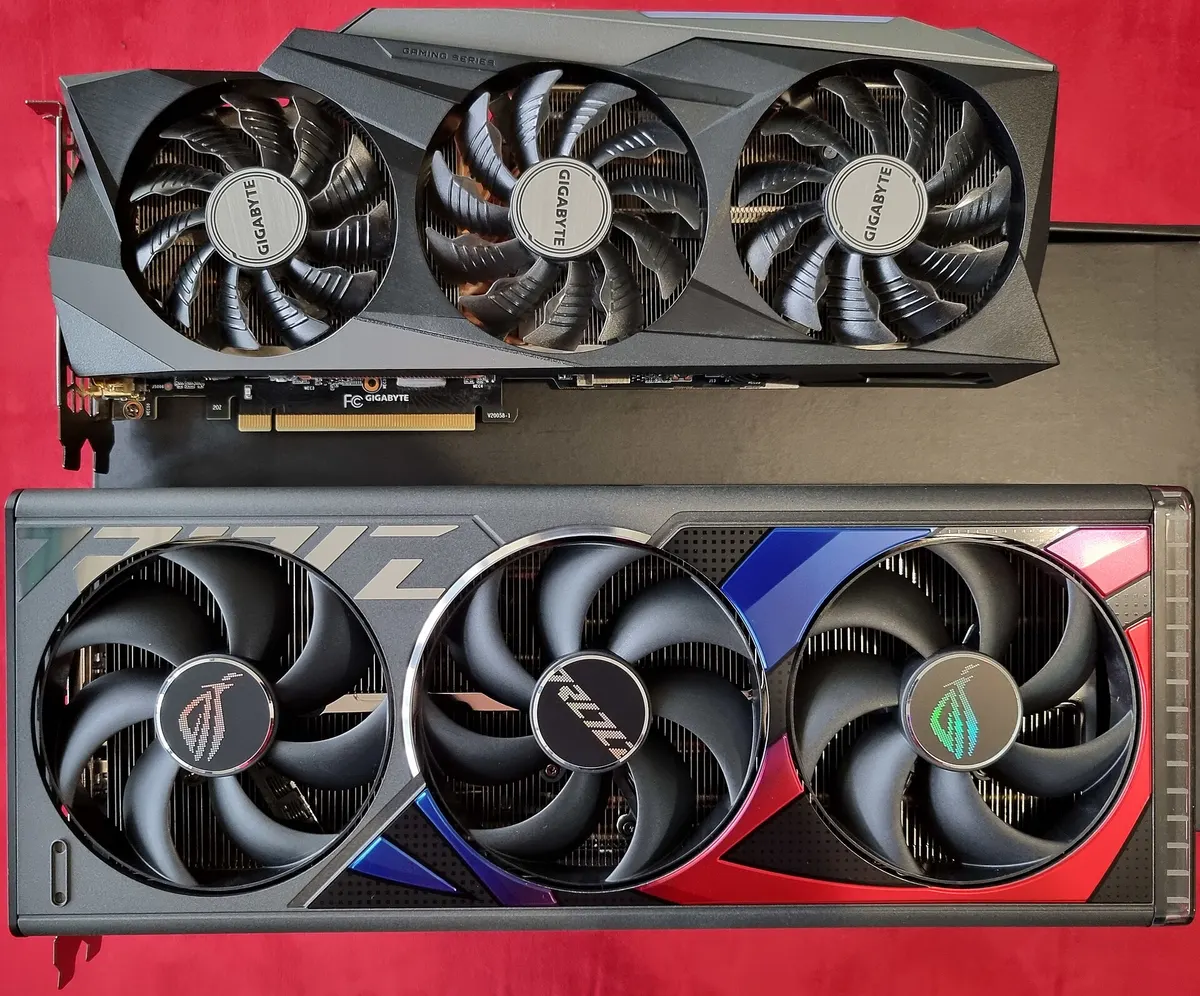
A hardware enthusiast on Reddit has detailed a significant upgrade to their custom AI server build, integrating two consumer-grade graphics cards to help run a massive artificial intelligence model locally.
By combining persistent memory with high-speed system memory and dual graphics processing units, the builder managed to run the 2.8-trillion-parameter Moonshot Kimi K3 model at a generation speed of 3.11 tokens per second.
What happened
The builder detailed the improvements in a follow-up post on Reddit, showing the addition of two Nvidia RTX 3090 graphics cards to the system. The model being run is the Moonshot Kimi K3 Q2_K, a mixture-of-experts model with 2.8 trillion parameters. Running such a vast file requires distributing the workload between central processing unit memory and graphics card video memory, because two RTX 3090s combined only provide 48 gigabytes of video memory, which accounts for about 5.5 percent of the 865-gigabyte model file.
To accommodate the hardware, the builder had to modify their computer case by cutting out metal and relocating the power supply unit. In the updated configuration, 45 out of 94 model shards, totaling 414 gigabytes, are stored on a temporary file system utilizing system memory. The remaining shards stay on Intel Optane persistent memory. The graphics cards handle tasks that run on every token, including attention mechanisms, dense feed-forward network layers, shared experts, and the conversation context storage. Transferring nearly half of the model onto a system memory drive added a 41 percent increase to generation speed and a 26 percent boost to prompt evaluation, achieving 16.8 tokens per second for prompt evaluation and 3.11 tokens per second for generation.
Why it matters
Running multi-trillion-parameter artificial intelligence models typically requires expensive, specialized enterprise data center hardware that is far out of reach for individual consumers. This enthusiast project demonstrates how advanced techniques and alternative memory solutions allow hobbyists to run massive models locally on consumer hardware, even if the processing speeds are slow compared to commercial cloud services.
The background
Mixture-of-experts is an artificial intelligence architecture where a model's parameters are split into separate groups called experts, with only a small subset activated for any given token to reduce computational load. Intel Optane was a type of persistent memory technology designed to bridge the gap between fast system memory and slower storage drives, offering non-volatile data retention combined with high speeds. Linux system memory file systems allow virtual memory to act like a fast disk drive. Consumer graphics cards like the Nvidia RTX 3090 feature high memory bandwidth, making them popular among hardware enthusiasts looking to experiment with running large language models locally.
What happens next
The reports do not outline specific future upgrades or commercial applications for this exact setup, leaving it open as an ongoing hobbyist experiment.
Key takeaways
- A hardware enthusiast upgraded a custom home server by adding two Nvidia RTX 3090 graphics cards to run a large language model.
- The system successfully executed the 2.8-trillion-parameter Moonshot Kimi K3 model at 3.11 tokens per second.
- Storing nearly half of the model file on a system memory drive increased generation speed by 41 percent.
- The computer case required physical modifications, including cutting metal and relocating the power supply, to fit the graphics cards.