
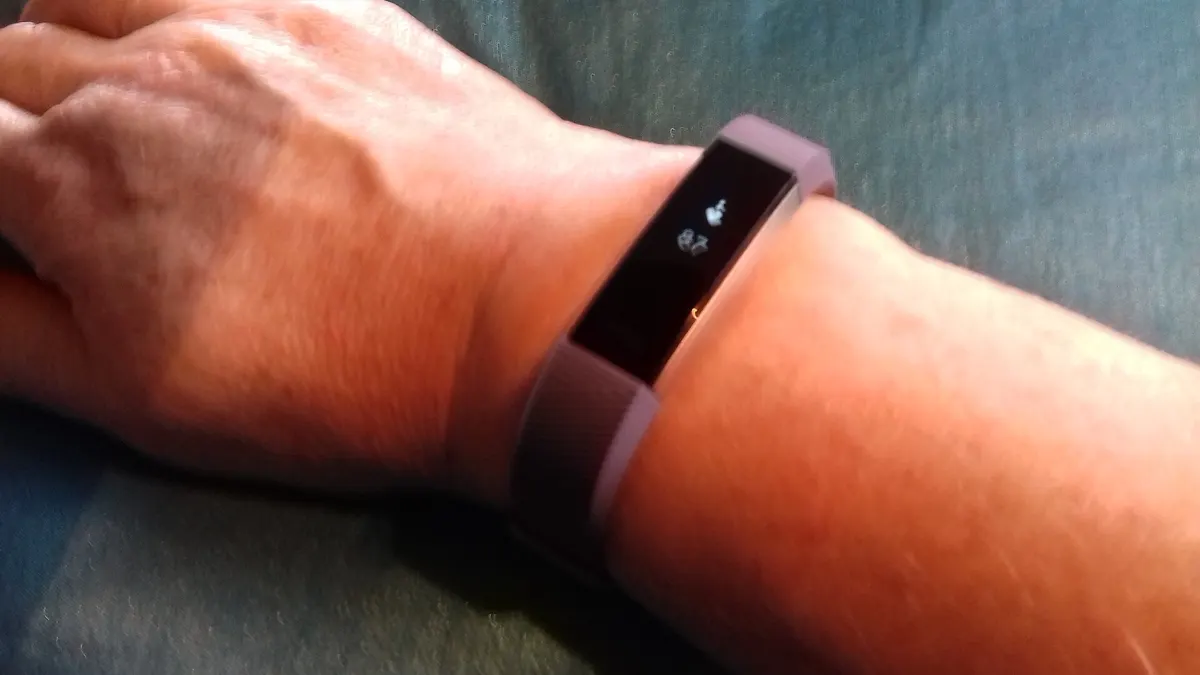
Google has expanded its wearable tech ecosystem with the introduction of the Fitbit Edge, a mid-tier fitness tracker designed to fill the space between screenless wellness bands and full-featured smartwatches. Priced at $180, the Edge joins the $99 Fitbit Air and the $400 Pixel Watch 5 as part of Google's multi-device ecosystem. For years, users were restricted to a single Google wearable per account, but recent software updates now allow people to pair multiple devices, such as wearing a smartwatch during the day and a lighter band at night.
The Fitbit Edge serves as a spiritual successor to the older Charge 6, featuring a pill-shaped 1.34-inch OLED touch display housed within an aluminum frame. It includes water and dust protection rated at IP68 and 5 ATM. Unlike the screenless Fitbit Air, which relies on a smartphone for active workout mapping and lacks manual activity triggers, the Edge features on-device GPS and a single tactile side button to wake the device or control workouts. It runs for roughly seven days on a single charge if the always-on display is disabled, though turning that feature on reduces battery life to about two days.
What happened
The Fitbit Edge was released as Google's second Fitbit tracker of 2026, positioning itself directly between the entry-level Fitbit Air and the flagship Pixel Watch 5. Reviewers testing the devices side-by-side note that while the Air excels at passive health and sleep tracking, its lack of onboard GPS and unreliable automatic activity detection make it unsuitable for dedicated athletes. The Edge solves this by including built-in GPS, allowing users to track outdoor workouts without carrying a phone.
However, the Edge makes compromises to hit its lower price point. It uses single-band GPS rather than the dual-band system found on the Pixel Watch 5, which can result in minor distance discrepancies and routing inaccuracies during runs. Furthermore, the Edge lacks advanced smart features. It has no onboard speaker, microphone, NFC chip for tap-to-pay, or cellular connectivity, and its software does not support downloadable apps or Gemini voice interactions. Notifications are mirrored from a phone, but quick replies are restricted to pre-defined options.
Why it matters
Fitness enthusiasts and consumers looking for a dedicated workout tracker now have a cheaper alternative to expensive smartwatches without sacrificing basic metrics like distance and pace. At $180, the Fitbit Edge is about half the price of the Pixel Watch 5 while offering a week of battery life and a dedicated screen—features missing from cheaper bands like the Air. For users who do not care about phone calls, voice assistants, or contactless payments on their wrist, the Edge provides essential fitness tracking at a fraction of the cost.
The background
Google acquired fitness tracker pioneer Fitbit in 2021, gradually integrating its hardware and software ecosystem with Google's own Pixel brand. Historically, Google's wearable software suffered from a major limitation: accounts could only pair one device at a time, forcing users to choose between a lifestyle smartwatch and a dedicated fitness band. The introduction of the Fitbit Air broke this restriction, allowing multi-device pairing to the same Google Health account. The Fitbit Edge continues this strategy, offering a more refined hardware aesthetic that resembles a squished Pixel Watch while maintaining the simpler, fitness-oriented software of traditional Fitbit bands.
What happens next
It remains to be seen whether software updates will improve the single-band GPS accuracy on the Fitbit Edge or if users will continue to experience minor mileage discrepancies compared to dual-band wearables. Google has not announced further additions to the 2026 Fitbit lineup, leaving consumers to choose how best to mix and match the Air, Edge, and Pixel Watch 5 depending on their personal fitness and connectivity needs.
Key takeaways
- The Fitbit Edge costs $180 and slots directly between the $99 Fitbit Air and the $400 Pixel Watch 5 in Google's wearable lineup.
- Unlike the screenless Fitbit Air, the Edge features a 1.34-inch OLED display, on-device GPS, and a physical side button for starting workouts.
- The Edge lacks smart features such as an onboard microphone, speaker, NFC chip, cellular support, and downloadable applications.
- Real-world testing reveals that the Fitbit Edge's single-band GPS can occasionally record shorter distances than dual-band alternatives like the Pixel Watch 5.