
France's economy has slipped into a technical recession after contracting for consecutive quarters, with gross domestic product falling 0.2 percent in the third quarter alone. The downturn has worsened public finances, stoked political tension, and raised borrowing costs for the eurozone's second-biggest economy. The primary takeaway is that weak growth is imperilling the government's budget plans and fueling a vicious cycle of rising debt yields and economic stagnation just months ahead of a presidential election. ## What happened France's National Institute of Statistics and Economic Studies, known as INSEE, reported that gross domestic product shrank by 0.2 percent in the third quarter. This followed a stagnating second quarter and an initial contraction earlier in the year, meeting the conventional definition of a technical recession. INSEE attributed the decline to falling exports, which dropped 1.6 percent, and a 0.9 percent drop in business investment. Manufacturing output also weakened by 1.4 percent. While consumer spending remained flat or rose only slightly by 0.3 percent depending on the specific statistical breakdown, it was not enough to offset the broader contraction in foreign trade and corporate spending. The economic slump widened France's public budget deficit to 5.6 percent of GDP in the third quarter. Finance Minister Roland Lescure warned that the economy was headed for a wall if billions of euros in spending cuts are not secured for the 2027 budget. ## Why it matters The deepening economic slowdown directly threatens President Emmanuel Macron's government as it attempts to restore order to public finances. France's deficits are far above European Union limits, triggering a surge in government bond yields to their highest level in over two decades. Analysts warn of a vicious cycle where weak growth forces markets to demand an even higher risk premium, which further suppresses consumption and investment. High interest rates are already squeezing households, with residential home sales dropping sharply as mortgage capacities diminish. Private sector employment has declined for seven consecutive months, and corporate business confidence has plunged to its lowest level in over a decade. ## The background A technical recession is formally defined as an economy recording negative growth for two successive quarters. As the second-largest economy in the eurozone, France has faced severe structural pressures, high public debt, and a widening fiscal deficit that caught the attention of credit rating agencies like Fitch Ratings, which recently lowered its outlook on France to negative. Political instability is compounding these economic troubles. France faces a presidential election next year, with hard-Right candidate Marine Le Pen leading in recent opinion polls. The minority government is struggling to push its deficit-reduction budget through a deeply divided parliament amid ongoing public protests over the cost of living and public services. ## What happens next The immediate battleground is the passage of the 2027 budget, with Finance Minister Lescure demanding a non-negotiable deficit target of 5 percent. Economists remain skeptical, noting that full-year growth for 2026 will likely limp in around 0.1 percent, well below official government targets. While the Bank of France and the European Commission maintain cautious expectations of modest positive growth in the fourth quarter driven by sectors like aerospace and power, the broader political and budgetary crisis remains unresolved ahead of next year's elections. - France has entered a technical recession after its economy contracted by 0.2 percent in the third quarter. - Falling exports and business investment drove the downturn, widening the public budget deficit. - Surging government bond yields and political uncertainty are compounding economic pressures ahead of upcoming presidential elections.
Business
France Slips Into Recession as Exports and Investment Fall
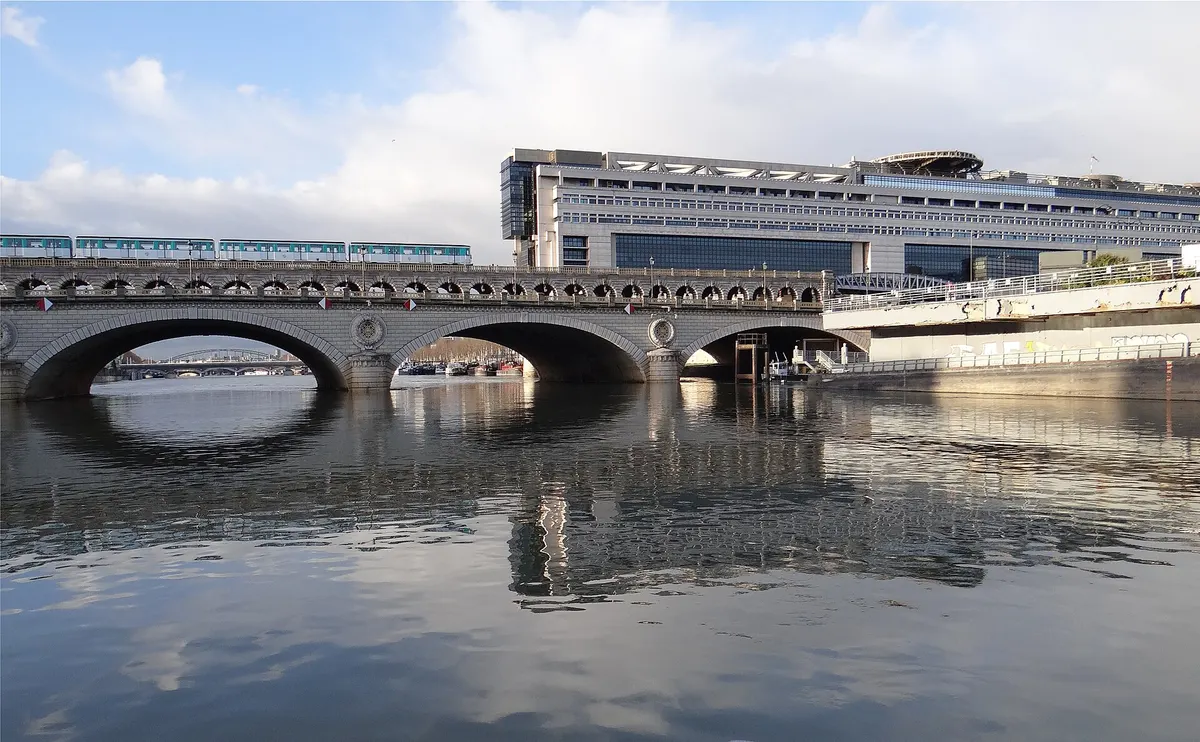
Photo: Wayne77, CC BY-SA 3.0 / Wikimedia Commons
France has entered a technical recession after its economy contracted by 0.2 percent in the third quarter. The downturn threatens government deficit targets and intensifies political strain.
Go deeper
Want more on this story? Our research assistant searches the latest reports across the web and explains what it finds, so you get the fuller picture in one place.