
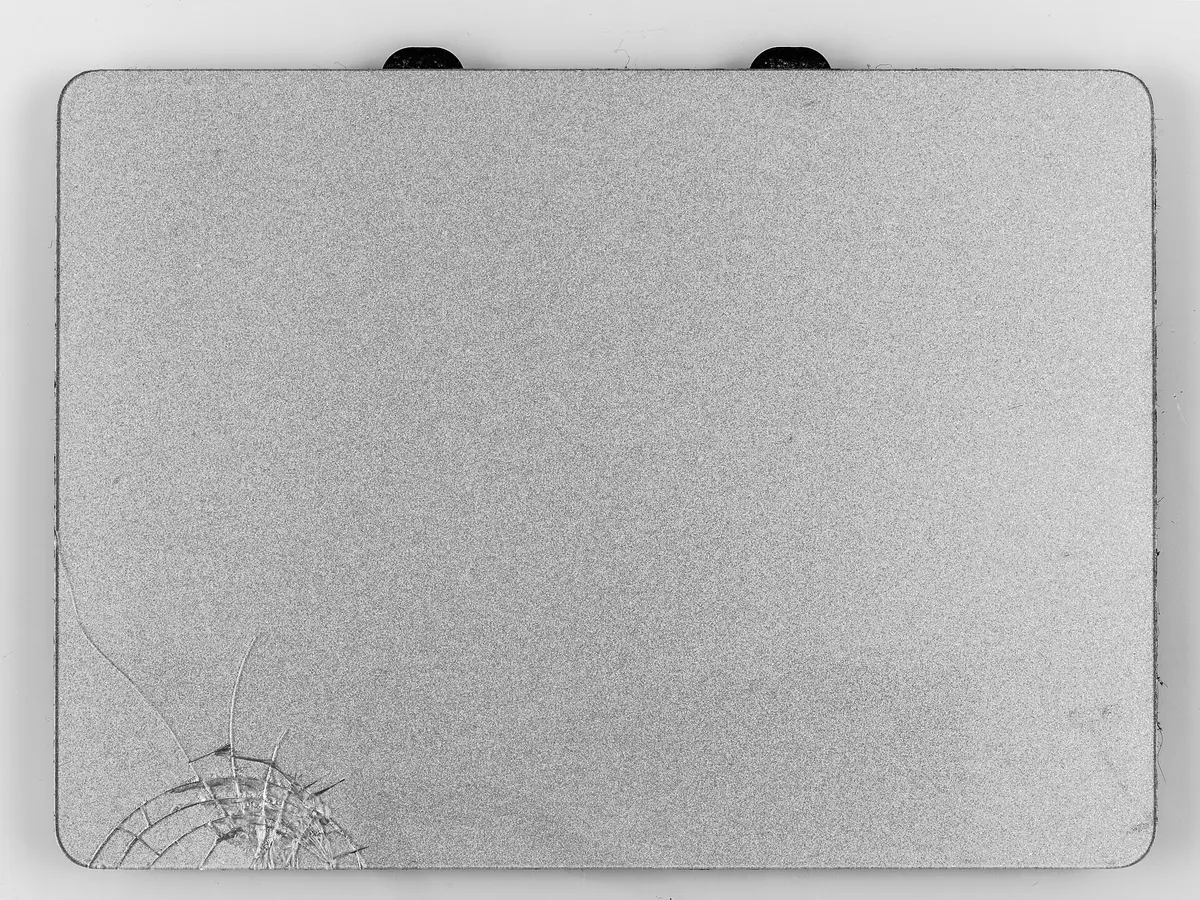
Software developer Cody Collier, known online as os6, has created an application called No Speaker that turns the Force Touch trackpad on Apple MacBooks into an audio speaker. The software repurposes the trackpad's internal haptic motor to emit sound waves instead of just physical click feedback.
By driving the trackpad's vibration frequencies into the human hearing range, the software allows the glass surface to generate synthesized speech, play musical notes, and act as a basic drum machine. While the sound quality is rudimentary, the project demonstrates how internal hardware can be manipulated beyond its designed function.
What happened
Collier published the No Speaker project on GitHub, releasing code and command-line tools that manipulate the trackpad's haptic motor. Apple's Force Touch trackpads do not contain physical speakers; instead, they rely on a small haptic engine beneath the glass to simulate the feel of a mechanical click when pressed.
No Speaker drives this haptic motor up to 4,000 times a second. At these high frequencies, the vibrations translate into audible sound waves capable of speech, singing, rapping, and musical tone generation. A demonstration video created by Collier shows the trackpad playing melodies and acting as a 16-step grid drum machine featuring kick, snare, and high-hat sounds.
The software includes a command-line utility named nospeaker that accepts text strings for spoken output, allows voice adjustments, plays test tones, and switches between user interface modes. The project has been tested on a MacBook Pro with an M5 Max chip running macOS 27.2.1. System requirements specify macOS 12 or later on Apple Silicon systems, or macOS 13 or later on Intel-based MacBooks, alongside a built-in Force Touch trackpad.
Why it matters
The project highlights how modern hardware components controlled by software can be repurposed for entirely unexpected uses. While the audio output quality is intentionally described as very low—resembling an old electronic toy with a damaged speaker—it provides an intriguing proof of concept for hardware modders and software developers.
It also demonstrates the flexibility of Apple's haptic technology. Rather than relying on traditional mechanical switches that physically press down, modern Mac trackpads rely entirely on solid-state glass and precise motor impulses. No Speaker shows that these fine-grained motor controls can be commanded directly to produce audio output without hardware modifications.
The background
Apple introduced the Force Touch trackpad to MacBook lineups starting in 2015, replacing traditional mechanical diving board trackpads. Because mechanical trackpads hinged at the top edge and required physical travel to register clicks, tactile feedback was inconsistent across the surface. The Force Touch design solved this by placing a solid sheet of glass over electro-magnets and haptic feedback motors, using software to deliver uniform click sensations across the entire pad.
Modding hardware components to produce unintended audio has a long history among technology enthusiasts. Tinkers have previously programmed floppy disk drive motors and hard drive actuators to play musical compositions. Similar software experiments on Mac hardware include utilizing internal sensor interfaces, such as using the laptop's hidden lid angle sensor to trigger custom door-creaking sound effects when the display screen is moved.
What happens next
The No Speaker project remains available on GitHub for users interested in experimenting with their own laptops. The app includes built-in detection to warn users if their specific Mac model lacks a compatible Force Touch trackpad before attempting to run the code.
Because the tool is an informal open-source experiment, no official features or updates from Apple are anticipated. The project serves primarily as an open-source demonstration for the developer community and hardware enthusiasts who want to test custom parameters, voice settings, and audio playback on compatible Apple Silicon and Intel MacBooks.
Key takeaways
- Developer Cody Collier created No Speaker, software that transforms Apple Force Touch trackpads into basic sound speakers.
- The program drives the trackpad's internal haptic motor up to 4,000 vibrations per second to emit audible sound.
- Output capabilities include text-to-speech, tone generation, and a simple 16-step drum machine interface.
- Compatible hardware requires a Mac laptop with a Force Touch trackpad running macOS 12 or later on Apple Silicon, or macOS 13 or later on Intel processors.