
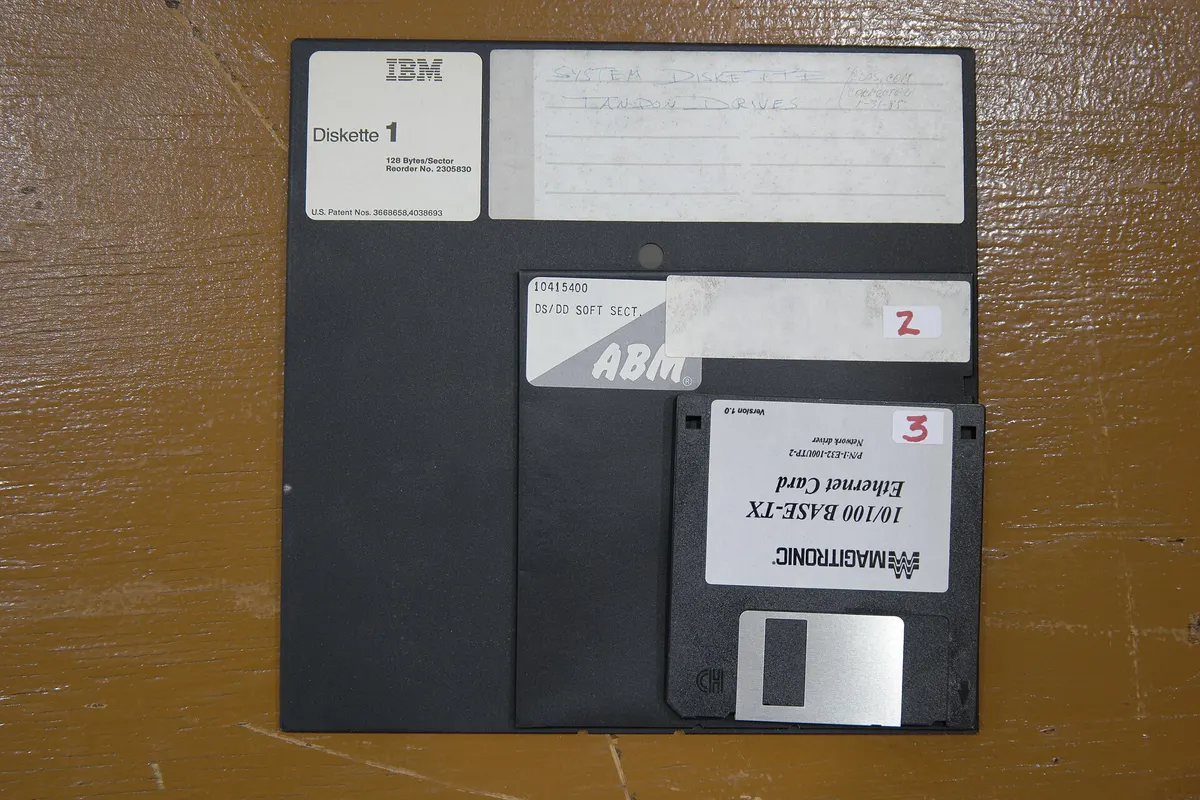
A developer known as WollyMonjac has successfully squeezed an artificial intelligence language model onto a single floppy disk designed specifically for vintage personal computers running DOS. The project bridges decades of computing history by bringing modern transformer architecture to machines from the 486DX and Pentium era. While massive AI models require vast data centers and powerful GPUs, this retro-focused project achieves the feat by scaling down dramatically.
What happened
Referred to as a tiny question-answering transformer, the program is named Tiny 2.1 and was written in Turbo C 2.0. Because a typical floppy disk from the 486 era holds just under 1,475,000 bytes of data, the software had to fit within strict storage limits. It also requires about 540 kilobytes of free conventional memory to run on legacy hardware.
The program features a user interface complete with a conversation history pane, a neural monitor panel, and an Ask Tiny prompt window, alongside standard F-key shortcuts. It even includes a retro-futuristic PC-speaker robot voice to speak its responses aloud. According to its GitHub repository, the program was written by Fable 5.2 and trained by Opus 5.5, with the developer wryly noting that the model tends to make things up confidently. Users who want to expand its knowledge base can access a training folder included in the MIT-licensed distribution to build a custom question-answer transformer tailored to specific topics.
Why it matters
This project represents a growing trend among hobbyists and developers who attempt to run modern applications and generative artificial intelligence tools on vintage or severely constrained hardware. While mainstream tech focuses on massive computing power, retro-computing projects demonstrate how foundational software concepts can be scaled down into tiny footprints. It also highlights the ongoing cultural crossover between modern machine learning capabilities and historical computing platforms.
What to know
Running modern software on retro hardware is part of an emerging development trend that has recently produced projects like DOS-based ChatGPT clients, Minecraft running on a Game Boy, generative AI image creation on the Commodore 64, and Doom running on an Atari ST. Developers continue to test the limits of what older systems can achieve when paired with modern programming ingenuity.
Key takeaways
- A developer named WollyMonjac created Tiny 2.1, a question-answering AI model that fits onto a single retro floppy disk.
- The program is written in Turbo C 2.0 and requires approximately 540 kilobytes of free conventional memory to run on DOS.
- The retro software features a clean user interface, F-key shortcuts, and a PC-speaker robot voice to read responses aloud.
- The project includes a training folder allowing users to build a custom transformer tailored to their favorite topics.