
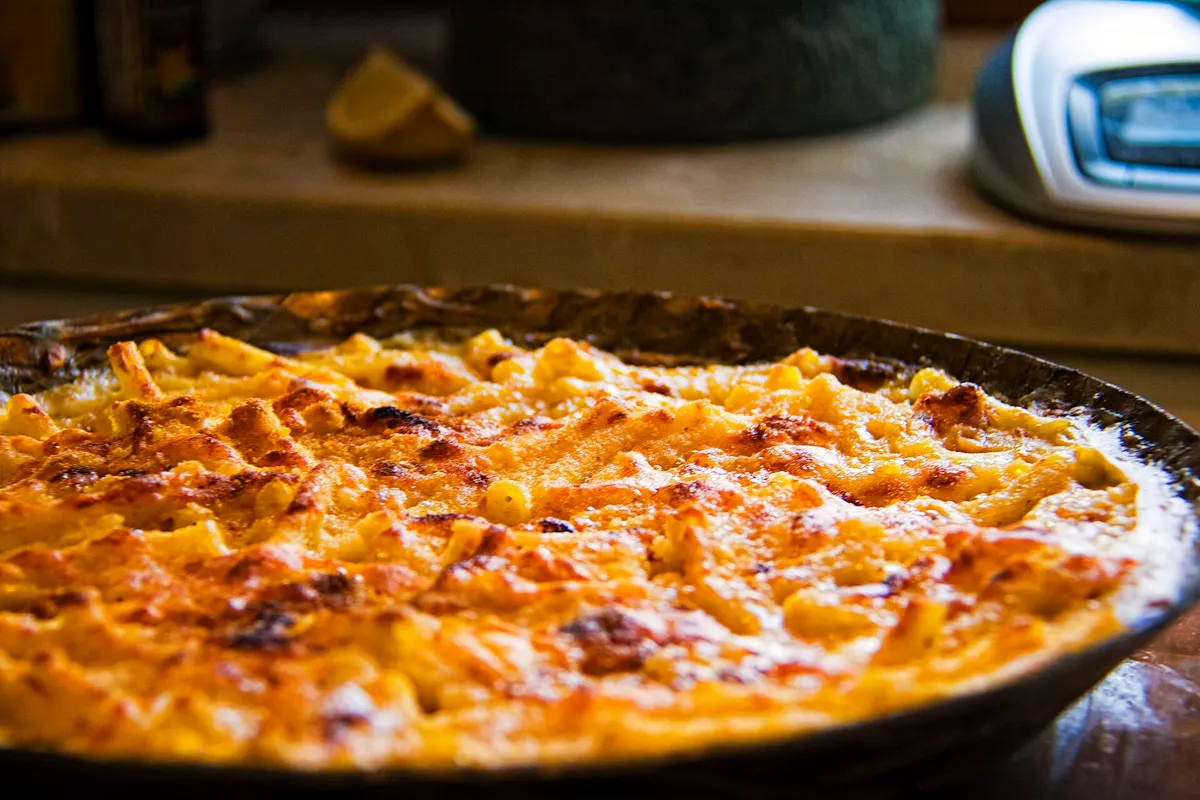
Macaroni and cheese remains a staple of holiday tables and comfort food recipe collections. Different culinary sources offer distinct interpretations of a dish dubbed 'million-dollar' mac and cheese, varying from ultra-gourmet adaptations to classic, crowd-pleasing versions.
The main debate centers on which cheeses create the ultimate texture and flavor profile. While one recipe champions an expensive, aromatic blend of French raclette, fontina, and Pecorino Romano topped with optional gold leaf, another relies on an accessible combination of Velveeta, sharp cheddar, and Monterey Jack.
What happened
Recipes featuring a 'million-dollar' designation have gained attention for elevating standard comfort food into an impressive dish. One published variation uses a trifecta of fontina, French raclette, and Pecorino Romano, citing the melting qualities and distinct funk of the cheeses. This version incorporates pre-toasted panko breadcrumbs cooked in higher butter-fat European-style butter, and playfully suggests topping the dish with gold leaf to match its lofty name.
Another widely shared recipe, attributed to reader Beth Jacobson of Milwaukee, Wisconsin, takes a different approach to achieving a velvety, rich sauce. This version relies on a roux made from all-purpose flour, milk, and half-and-half, combined with Velveeta for smoothness, alongside sharp cheddar and Monterey Jack. It also incorporates finely chopped sautéed onion, mustard, cayenne, and Worcestershire sauce for added depth, topped with homemade breadcrumbs and grated Parmesan.
Why it matters
Food trends that elevate everyday comfort foods reflect changing consumer interests in home cooking, holiday entertaining, and recipe experimentation. Whether cooks choose imported cheeses or accessible pantry staples, the focus remains on achieving a balance of creaminess, structural integrity in the sauce, and textural contrast from a crispy topping.
The background
Macaroni and cheese has a long history as a comforting staple across North America, commonly featured at holiday meals, church potlucks, and weeknight dinners. Recipes frequently utilize a base melting cheese combined with sharper accent cheeses to create complex flavors. Culinary traditions often involve binding the pasta with a cream or roux-based cheese sauce before baking it with a breadcrumb topping.
What happens next
Home cooks can choose between elaborate, gourmet interpretations or traditional, accessible methods depending on their budgets and ingredient availability. Recipes suggest storing leftovers in airtight containers in the refrigerator for up to three days, with instructions to reheat them gently in the microwave or oven.
Key takeaways
- Different culinary sources define million-dollar mac and cheese through distinct approaches, ranging from imported French raclette and fontina to accessible ingredients like Velveeta and sharp cheddar.
- A successful cheese sauce requires a balance of a base melting cheese, a tangy cheese, and a sharper accent cheese, often thickened with a flour roux or enriched with half-and-half.
- Crispy toppings such as pre-toasted panko breadcrumbs or buttery Parmesan crumbs provide an essential textural contrast to the rich and creamy pasta underneath.
- Leftover macaroni and cheese can be stored safely in an airtight refrigerator container for up to three days and reheated in the microwave or oven.