
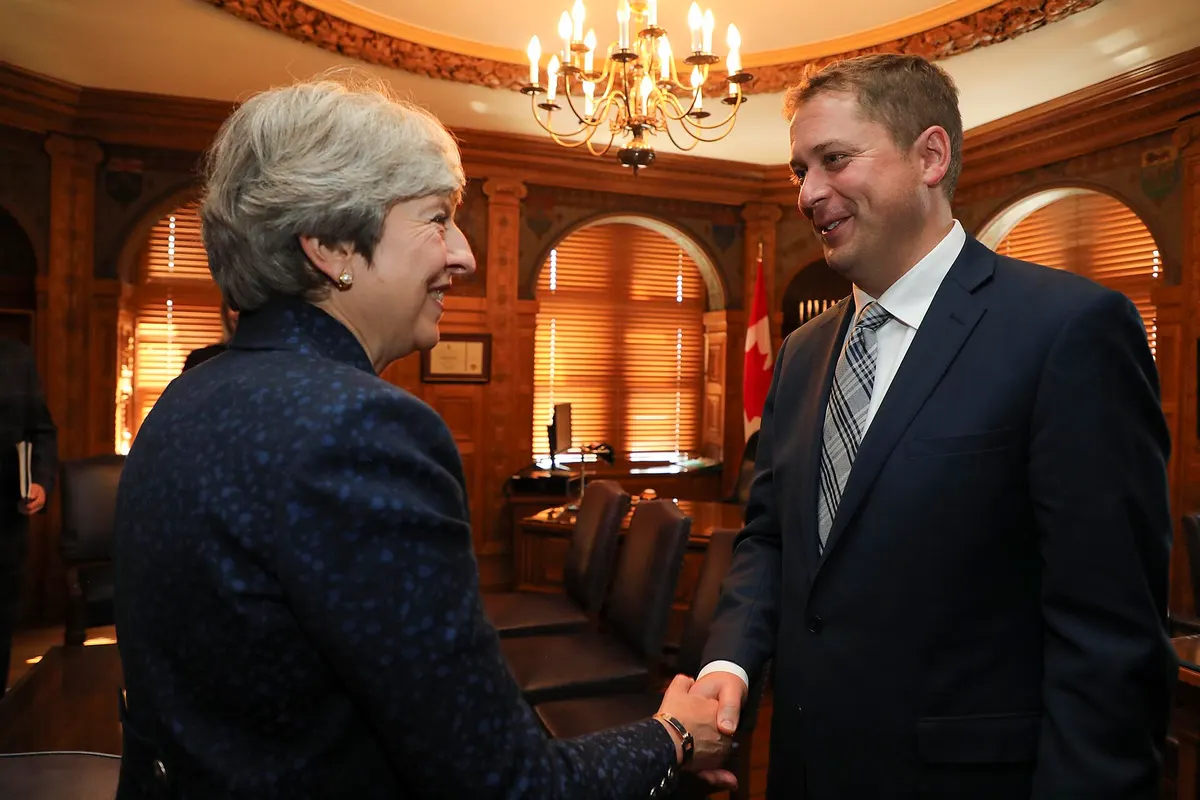
Former Prime Minister Theresa May recently appeared on television to discuss the merits of Brexit, a move that highlighted the internal tensions remaining within the Conservative Party. While the party has historically defined itself through its stance on Europe, current leadership is attempting to shift the focus toward other domestic issues.
What happened
During a recent television interview, Theresa May spoke on the current state of Brexit. Rather than claiming the departure from the European Union was an objective success, she suggested that external factors like the Covid-19 pandemic and the war in Ukraine make it difficult to assess the long-term outcomes of the move. She argued that the current state of the United Kingdom is not solely defined by the decision to leave the European Union. This intervention comes as the Labour government prepares to present a new deal concerning relations with the EU. The Conservative leadership, under Kemi Badenoch, has signaled its intent to challenge this deal in parliament and has promised that a future Conservative government would seek to unpick any new arrangements made with the bloc.
Why it matters
For the Conservative Party, these discussions risk reviving the deep internal divisions that defined its political identity for years. During her time as Prime Minister, May faced significant parliamentary opposition, including the heaviest ever parliamentary defeat for a British PM when her own Brexit plan was rejected. The party is currently attempting to move past the era of "banging on about Europe" to prioritize policy areas like the economy and social security. However, the political landscape has shifted significantly since the 2019 general election. Public opinion has moved, with polling suggesting that a clear majority of Britons now view Brexit as a mistake and support rejoining the European Union. This shift is partly attributed to demographic changes, as older voters who supported leaving are being replaced by younger cohorts who generally hold more positive views of the EU.
What to know
A recent constituency-level analysis illustrates the scale of this sentiment shift. Out of 632 parliamentary seats across England, Scotland, and Wales, voters in 512 areas now support rejoining the European Union. Only 73 areas still express a desire to remain outside the bloc. While the Conservative Party remains instinctively opposed to closer ties with Europe, it faces the reality that its previous, defining political thread is losing resonance with the wider electorate. As the government prepares to unveil its new EU policy, the Conservatives must decide whether to continue fighting the battles of the past or to focus on the economic and social challenges that the current leadership has identified as its new priority.
Key takeaways
- The heaviest ever parliamentary defeat for a British PM occurred when the Commons rejected May's plan by a majority of 230.
- Polling suggests that a clear majority of Britons now view Brexit as both a failure and a mistake in the first place.
- A constituency-level poll found that voters in 512 out of 632 seats now support rejoining the European Union.