
A network linked to China has deployed more than 500 artificial intelligence-generated videos over the past year to target Taiwan's ruling Democratic Progressive Party. The campaign aims to influence upcoming local elections by spreading false claims and deepfakes about key political figures. The activity involves sophisticated manipulation designed to undermine trust in democratic processes. Researchers and investigators have traced the spread of these clips across multiple social media platforms, where they have amassed tens of millions of views. ## What happened Over the past year, investigators found that a network pumped out more than 500 fake videos targeting the Democratic Progressive Party, known as the DPP. The videos have been viewed tens of millions of times across several social media platforms since May 2025. More than half of those views were tracked in the four months leading up to the local elections as the activity ramped up. Many accounts involved in spreading the disinformation listed their locations on mainland China and Hong Kong. A number of the clips carried labels showing they were generated with artificial intelligence, while many were shared from an account called noxparable or carried a watermark with that name. The videos have targeted prominent politicians with specific falsehoods. President Lai Ching-te has been targeted by claims that he holds a United States green card and would abandon Taiwan if war broke out with China, which the presidential office stated is completely false. Puma Shen, who is running to be mayor of the capital Taipei, has been the target of deepfakes appearing to show him using drugs. One widely shared video superimposed Shen's face onto a man holding a lighter and exhaling smoke. Shen denied the claims and took legal action against people sharing the deepfakes. His campaign office described the AI videos as a classic tactic used by China to smear specific targets. Other debunked claims included allegations that Lai's predecessor, Tsai Ing-wen, fraudulently obtained her PhD from the London School of Economics. Social media accounts sharing the disinformation were identified as being linked to a Chinese firm named Borderless, which produces websites blending apolitical content with pro-China messaging. The network was investigated by journalists at Taiwanese independent media outlet The Reporter, who shared their findings alongside experts. Borderless has previously been accused of carrying out cognitive warfare against Taiwan by Taipei's National Security Bureau. ## Why it matters The disinformation campaign threatens to undermine trust in Taiwan's democratic institutions and electoral outcomes. Experts in cognitive warfare explain that the account operators are trying to make people distrust DPP politicians so that voters will not believe whatever the candidates say. When voters lose trust in a candidate, they stop listening to their message entirely. The Taipei mayoralty has traditionally served as a springboard to the presidency, making candidates like Shen obvious targets for foreign interference. ## The background Taiwan is a self-governing island that China claims as part of its territory. Beijing and Taipei have long observed an uneasy status quo where Taiwan, backed by the United States, neither formally declares independence nor unites with China. Tensions have steadily risen since the DPP came to power in 2016. Beijing has repeatedly accused the party of pursuing formal independence, while Chinese leader Xi Jinping has stated that reunification with Taiwan is a key goal, stepping up military activity around the island. The Kuomintang, or KMT, is Taiwan's main opposition party and traditionally favors closer ties with China. ## What happens next It remains to be seen how platforms and authorities will curb the rising tide of deepfakes ahead of the elections. Officials and targeted politicians continue to push back against the false narratives through legal action and public clarifications, while investigations into the underlying networks continue. ## Key takeaways - A China-linked network pumped out more than 500 fake videos targeting Taiwan's ruling Democratic Progressive Party. - Deepfakes falsely targeted political figures including President Lai Ching-te and mayoral candidate Puma Shen with fabricated scandals. - Social media accounts sharing the disinformation were linked to a Chinese firm called Borderless. - The disinformation activity has been viewed tens of millions of times across several platforms since May 2025.
World
China-linked network uses AI fakes to target Taiwan ruling party
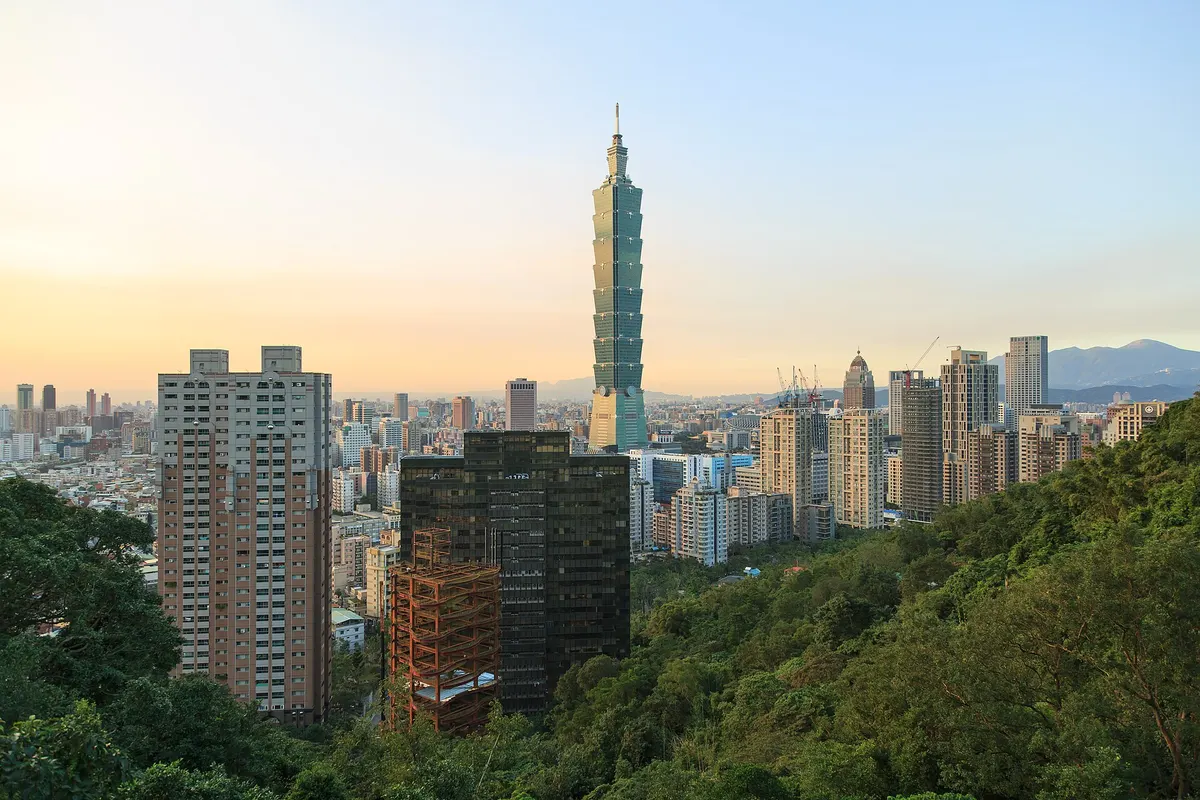
Photo: CEphoto, Uwe Aranas, CC BY-SA 3.0 / Wikimedia Commons
An investigation has revealed a China-linked network pumping out hundreds of AI-generated fake videos to smear Taiwan's ruling party and its leaders ahead of local elections.
Go deeper
Want more on this story? Our research assistant searches the latest reports across the web and explains what it finds, so you get the fuller picture in one place.