
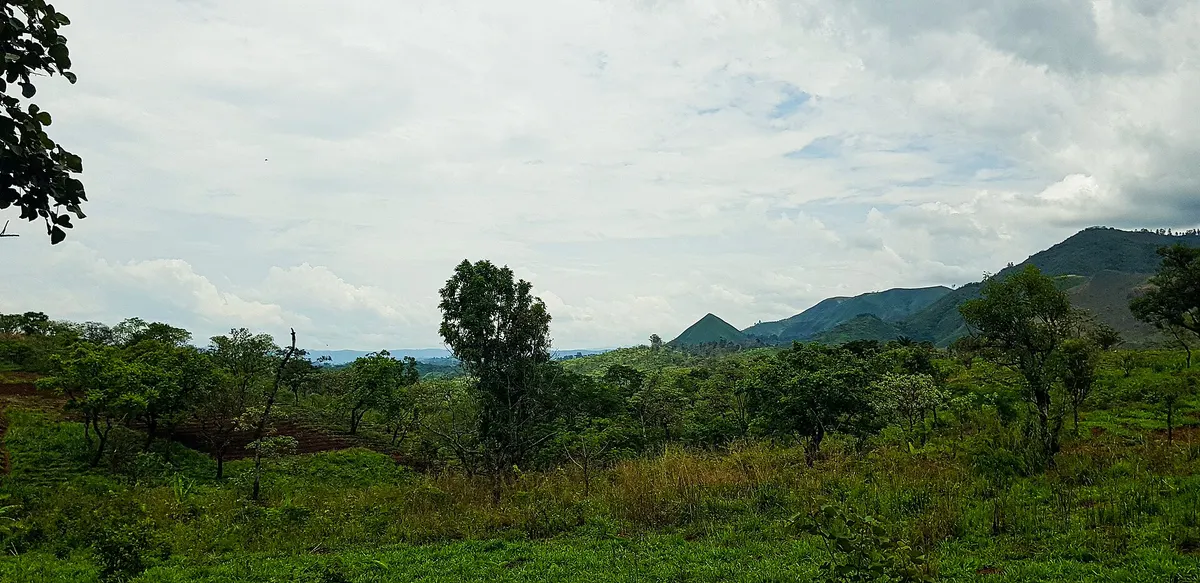
Nearly a decade of fighting in Cameroon's English-speaking regions has left countless civilian lives shattered. The ongoing crisis has forced hundreds of thousands from their homes and resulted in thousands of deaths.
Civilians caught in the middle of the violence face severe abuses, displacement, and life-altering injuries. The conflict stems from long-standing political and linguistic divisions within the Central African nation.
What happened
On 7 April 2018, Median Bah was a 15-year-old student lying ill in bed when armed men stormed her family's compound in Cameroon's Southwest region. Awakened by her brother to the sound of indiscriminate gunfire, Median was too weak to escape through a window and attempted to flee via the door.
She encountered two attackers in the backyard who opened fire, shooting her first in the thigh and then in the face. The attack severely damaged her jawbone, destroyed most of her teeth, and severely injured her mouth.
Over the past eight years, Median has undergone at least four reconstructive surgeries across Cameroon, Ghana, and India, with more procedures planned. She required a tracheostomy—a surgical procedure creating an opening in the neck for breathing—and relied on a breathing tube for eight years before it was recently removed.
Other civilians have faced different forms of devastation. Glory Akom, a 44-year-old mother of two, was forced to flee her home and now lives in a refugee camp in Ogoja, Nigeria, where thousands of displaced Cameroonians have sought safety.
Why it matters
The crisis has displaced half a million people internally, according to United Nations data, while the UNHCR reports that more than 70,000 Cameroonians have sought refuge in neighboring Nigeria. Human Rights Watch estimates that at least 6,000 people have been killed since the conflict began.
Communities have been torn apart, and essential institutions like education have been severely disrupted. Refugees in camps face deep uncertainty regarding whether and when they will ever be able to return to their homes and former livelihoods.
The background
The crisis began in October 2016 when lawyers and teachers in Cameroon's Northwest and Southwest regions—the country's two English-speaking areas—went on strike. They protested the alleged marginalization of Anglophone communities by the Francophone-dominated government, specifically pointing to the appointment of French-speaking judges and teachers.
What started as peaceful protests demanding greater recognition for the English-speaking minority met with a harsh crackdown by security forces. Human rights groups state that this excessive force helped fuel an armed separatist movement.
By 2017, a dozen armed groups had emerged seeking independence for the two regions under the breakaway state name of Ambazonia. Since then, separatist fighters and government forces have engaged in a prolonged, brutal conflict, with human rights organizations documenting severe abuses by both sides.
What happens next
Median Bah expects to undergo more reconstructive surgeries next year to continue repairing the severe facial damage she suffered during the 2018 attack. Meanwhile, the broader conflict in Cameroon shows little sign of resolution, leaving hundreds of thousands of displaced individuals facing ongoing uncertainty about their future and safety.
Key takeaways
- Nearly a decade of separatist fighting in Cameroon's English-speaking regions has displaced half a million people internally and killed at least 6,000.
- Median Bah was just 15 years old when she was shot in the face by armed men during a raid on her family's compound in April 2018.
- Median underwent at least four reconstructive surgeries and a tracheostomy that required her to use a breathing tube for eight years.
- More than 70,000 Cameroonian refugees have fled across the border to neighboring Nigeria, residing in settlements managed with the help of the UNHCR.