
Researcher Tommy He, working with Tufa Labs, has compressed one gigabyte of Wikipedia text down to 105.39 megabytes using a self-learning neural network. The method is entirely lossless, meaning zero data is lost during the compression and decompression process.
While the technical feat marks a significant entry on the Large Text Compression Benchmark, it remains strictly an experimental research project. Running the system requires heavy enterprise hardware and takes more than a week to complete.
What happened
The compression tool, named tufazip, uses a 163-million-parameter Transformer model as a predictor rather than relying on traditional, hand-built compression algorithms. The final compressed package of 105.39MB includes a small, 4.33MB pre-trained starter model stored at low precision to save space, which is required to unpack the file. The core architecture relies on a 12-layer Transformer, meaning each prediction goes through 12 stages.
The system trains in two distinct phases. First, a smaller 34-million-parameter starter model is trained offline before any compression starts. Then, the full model begins learning online by predicting each token and training on it as it goes. The unpacking side mirrors these exact steps, rebuilding the model alongside the text. Because updates must be fully deterministic to avoid data loss, the model learns on the fly without relying on external cloud artificial intelligence or traditional chatbot frameworks.
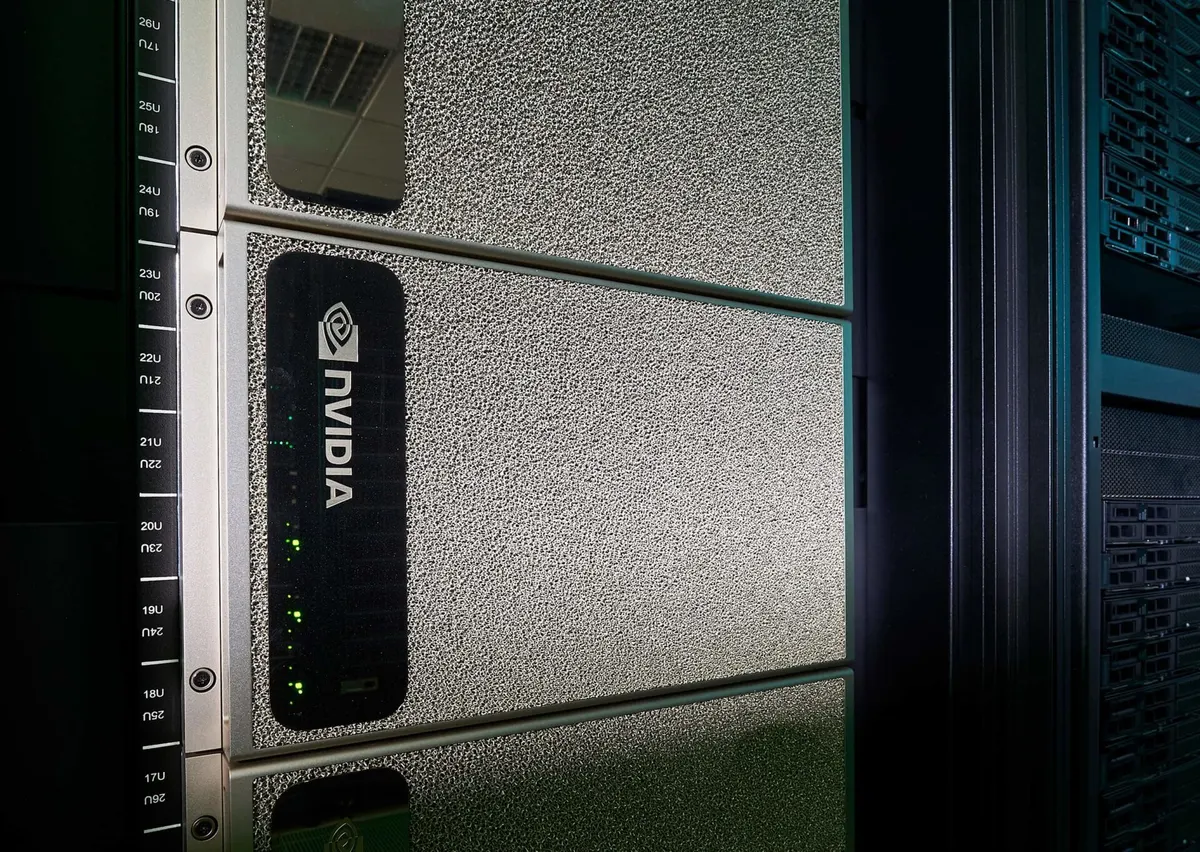
Running the process is computationally intense. Using two Nvidia B200 graphics processing units and two Intel Xeon Platinum 8570 central processing units, the system required roughly 631,548 seconds to compress the file and 645,748 seconds to decompress it, amounting to about 7.3 and 7.5 days respectively. During the run, the hardware peaked at 43.37 gigabytes of video memory and used roughly 73,748 megabytes of total memory during decompression.
Why it matters
Tufazip achieved the smallest result on the Large Text Compression Benchmark from any entry that uses a neural network as its sole predictor. Its online-only version initially ranked second when submitted in early September, while the 105.39MB version ranked 13th following an update in November.
The experiment yields valuable insights into neural network efficiency. The research demonstrated that a smaller vocabulary can actually improve performance, as a 4,000-word tokenizer outperformed both 8,000 and 16,000-word alternatives. Furthermore, giving Wikipedia's XML markup dedicated tokens worsened the compression. The project also proved that bigger models are not always better, noting that a 267-million-parameter model performed slightly worse than a 188-million-parameter model.
The background
Compression algorithms are standard computing tools designed to reduce file sizes for storage and transmission, ranging from common utilities like WinRAR to specialized database compressors. The Large Text Compression Benchmark is a standard academic test suite using a file known as enwik9, which contains a large XML dump of Wikipedia articles. While most top-ranking entries on the benchmark combine neural networks with traditional, hand-built compression models, Tufa Labs' approach is notable for using a neural network as its exclusive predictor.
What happens next
The project is designed strictly for research purposes rather than commercial use. Because of the massive hardware requirements and week-long processing times, tufazip will not be deployed as an everyday consumer utility.
Key takeaways
- Researcher Tommy He compressed one gigabyte of Wikipedia into 105.39 megabytes of space without losing any data.
- The tool uses a 163-million-parameter Transformer model as a predictor instead of relying on traditional, hand-built compression models.
- Compressing and decompressing the file takes two Nvidia B200 GPUs about a week to manage.
- The experiment demonstrated that smaller vocabularies and moderate model sizes can outperform larger alternatives on this specific text-only benchmark.