
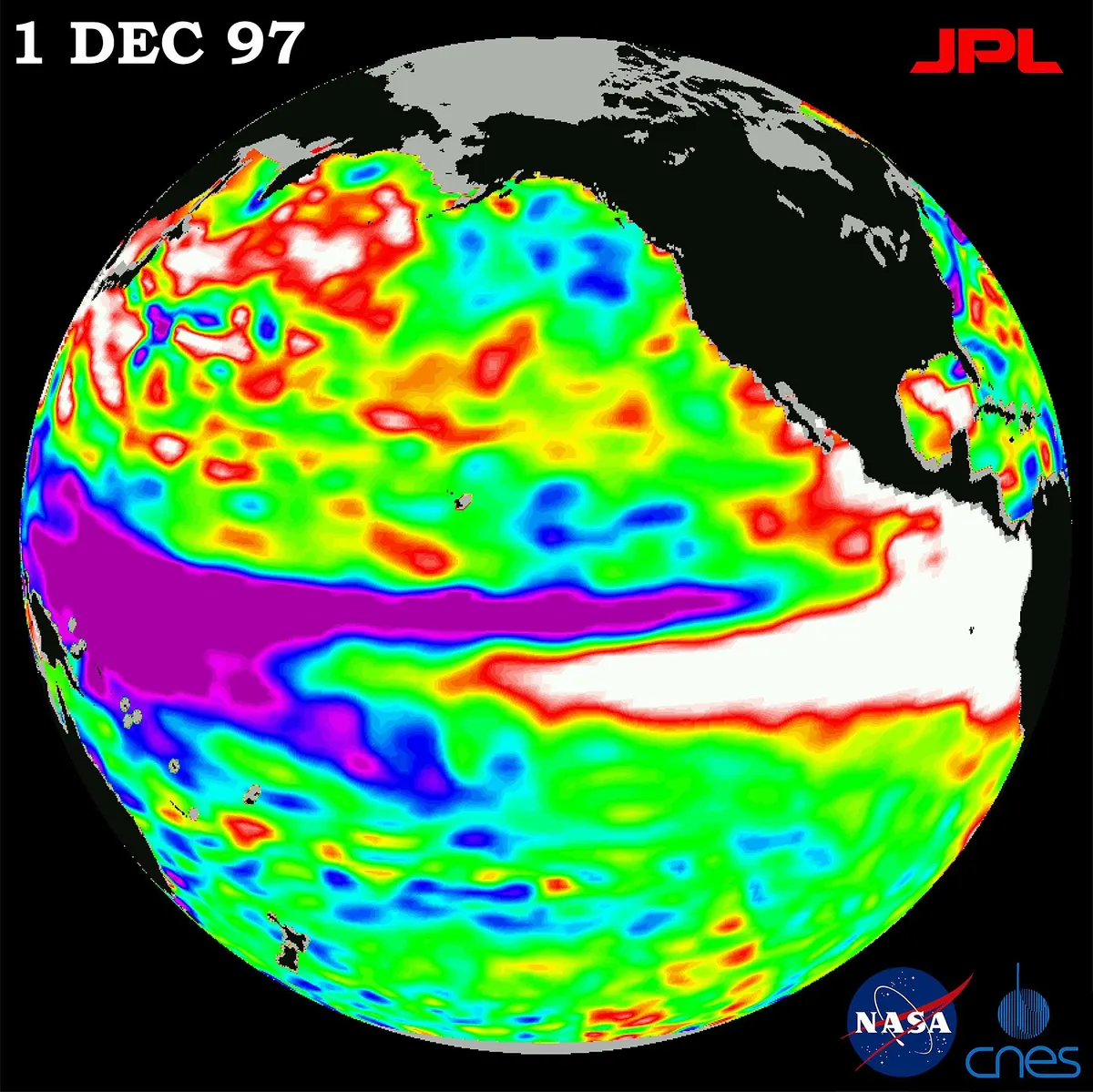
The world has entered a super El Niño climate pattern that is already shriveling rivers, upending aquaculture, and flattening crops with severe drought. Global organizations keeping watch on food security warn that tougher times are ahead as this natural phenomenon continues to grow in strength.
By the time the current El Niño peaks, sea-surface warming in the tropical Pacific could surpass anything seen in a millennium. Experts note that this climate blow arrives alongside pinched global aid budgets and ongoing conflicts that severely strain international food systems and fertilizer supplies.
What happened
This year's El Niño has already topped previous record holders in strength by certain measures. As of October, the warming in the mid-tropical Pacific used to measure the event's strength reached 3.5 degrees Celsius, with predictions suggesting sea surface temperatures could rise 3.8 degrees Celsius above average between November and January.
Countries such as Panama and Indonesia are experiencing low rainfall, Brazil is bracing for wildfires, and regions across Asia, Africa, and the Americas face dry conditions. The phenomenon also intersects with regional weather systems, such as the Indo-Gangetic plain in India, where lower wind speeds and reduced western disturbances could trap pollutants and worsen winter air quality.
Why it matters
The World Food Programme warned that this super El Niño might push an additional 49 million people into acute food insecurity by the end of 2027, bringing the total number to 274 million. Historical data underscores these risks: past very strong events caused global income losses in the trillions of dollars, lowered life expectancy in Pacific Rim countries, and resulted in childhood undernutrition.
Agricultural yields are heavily impacted. While global soybean production may increase slightly, staple crops like maize, rice, and wheat can suffer suppression of up to 4 percent globally, with localized drops being far more severe. These agricultural shocks build upon twenty years of upward-trending food prices and high energy and fertilizer costs driven by geopolitical conflicts.
The background
El Niño is one phase of the El Niño–Southern Oscillation, a natural climate pattern marked by unusually warm waters in the tropical Pacific that alter global rainfall and air pressure. The planet swings irregularly between El Niño, neutral periods, and La Niña, which features cooler ocean temperatures.
During past strong El Niños, such as those in the late 19th century and in 2015, severe droughts crippled agricultural output globally, leading to massive famines or deep drops in cereal yields. These weather patterns interact with tight global markets and ongoing economic strains to magnify food security crises.
What happens next
The phenomenon is expected to peak in early winter between November and January. The full extent of its long-term effects on global health, economies, and food security will depend on the resilience of local food, agriculture, and health systems.
- The World Food Programme warned that this El Niño might push an additional 49 million people into acute food insecurity by the end of 2027.
- Sea-surface warming in the tropical Pacific could be higher than anything seen in a millennium by the time the phenomenon peaks in early winter.
- An El Niño tends to improve global soybean production by up to 5 percent but suppresses maize, rice, and wheat by up to 4 percent.
- The current climate cycle is shaping up to be one of the strongest in more than a century, with sea surface temperatures exceeding previous records from the past 50 years.