
US Army Safely Detonates Unstable Explosives Stockpile in Iowa
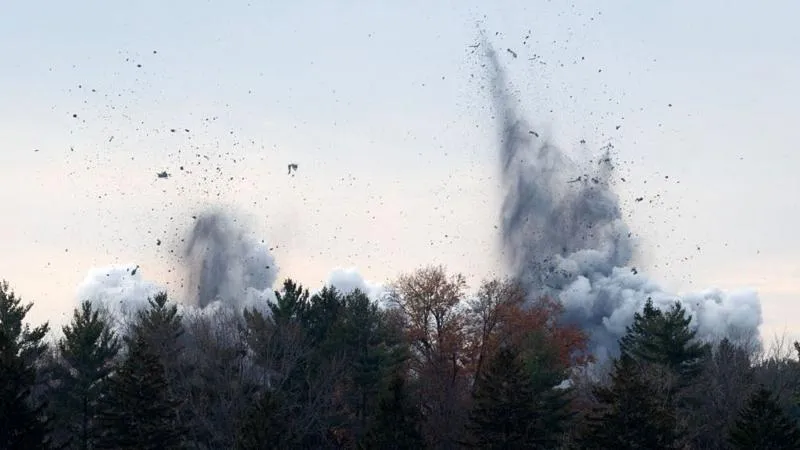
The US army executed a controlled detonation of the nation's entire 5-ton stockpile of degrading lead azide at the Iowa army ammunition plant in Middletown on Wednesday. Initial air monitoring and containment measures showed no immediate spread of toxic dust, though extensive multi-week environmental testing remains underway.
- WhenWednesday around 9am local time
- WhereIowa Army Ammunition Plant in Middletown, Iowa
- WhatControlled detonation of 5 tons (approx. 4,500kg) of lead azide stored across 68 barrels in two bunkers
- StatusAll-clear issued, initial air monitoring shows no lead, and comprehensive environmental testing is continuing
Photos
16 photosWhat happened
The United States Army successfully carried out a controlled detonation of the nation’s entire stockpile of lead azide, a highly sensitive chemical compound used in the production of explosives. The operation destroyed all 68 barrels containing the material, which were housed in a pair of bunkers at the Iowa army ammunition plant located in Middletown, Iowa.
To prevent a catastrophic and uncontrolled dispersal of toxic heavy metal dust, the military surrounded the bunkers with two-story-high earthen barriers, concrete and sand walls, wire-mesh containers, and poured massive amounts of ballistic gels, suppression foam, and water onto the structures. Officials reported that these extensive protective measures successfully absorbed the brunt of the blast and suppressed hazardous airborne particles.
How it unfolded
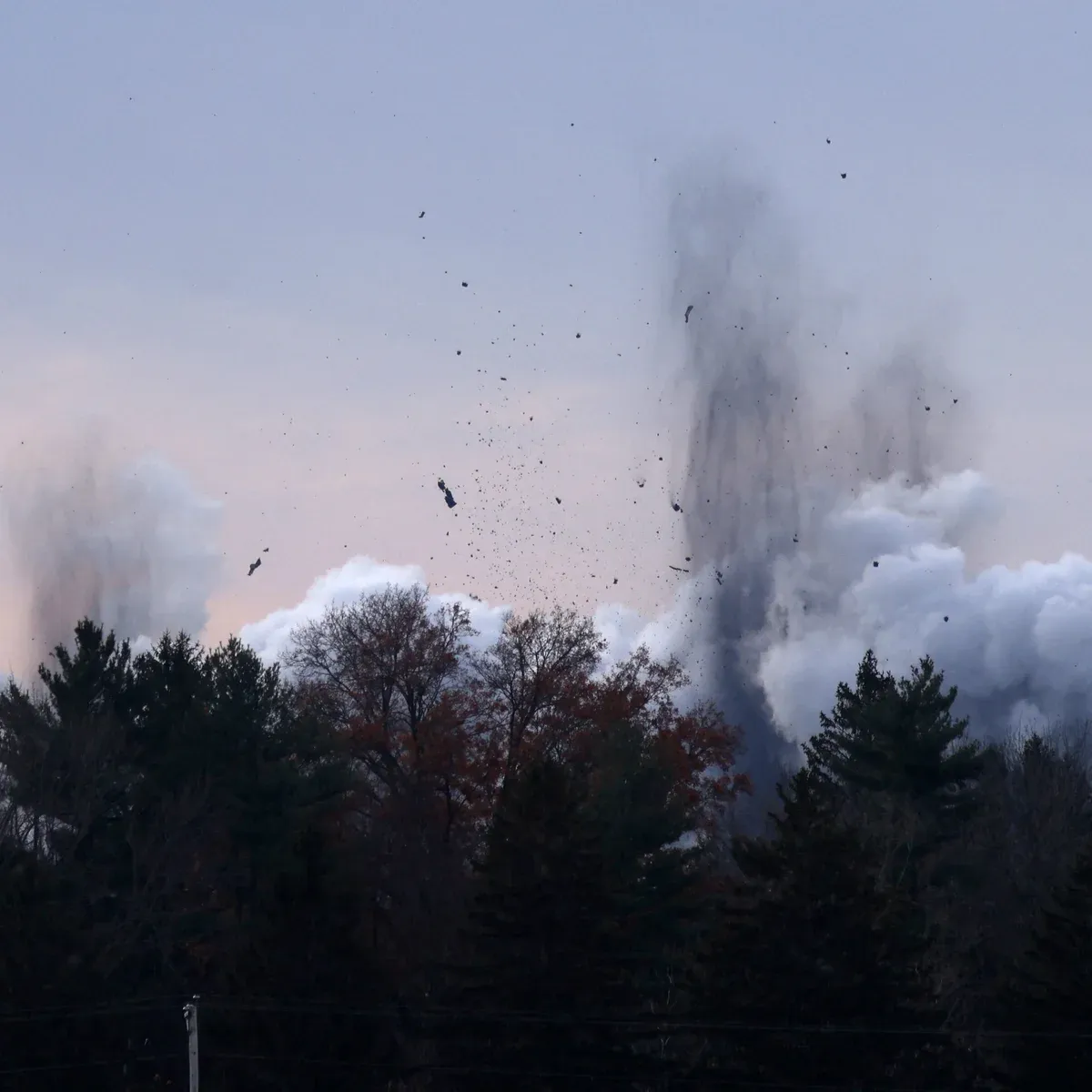
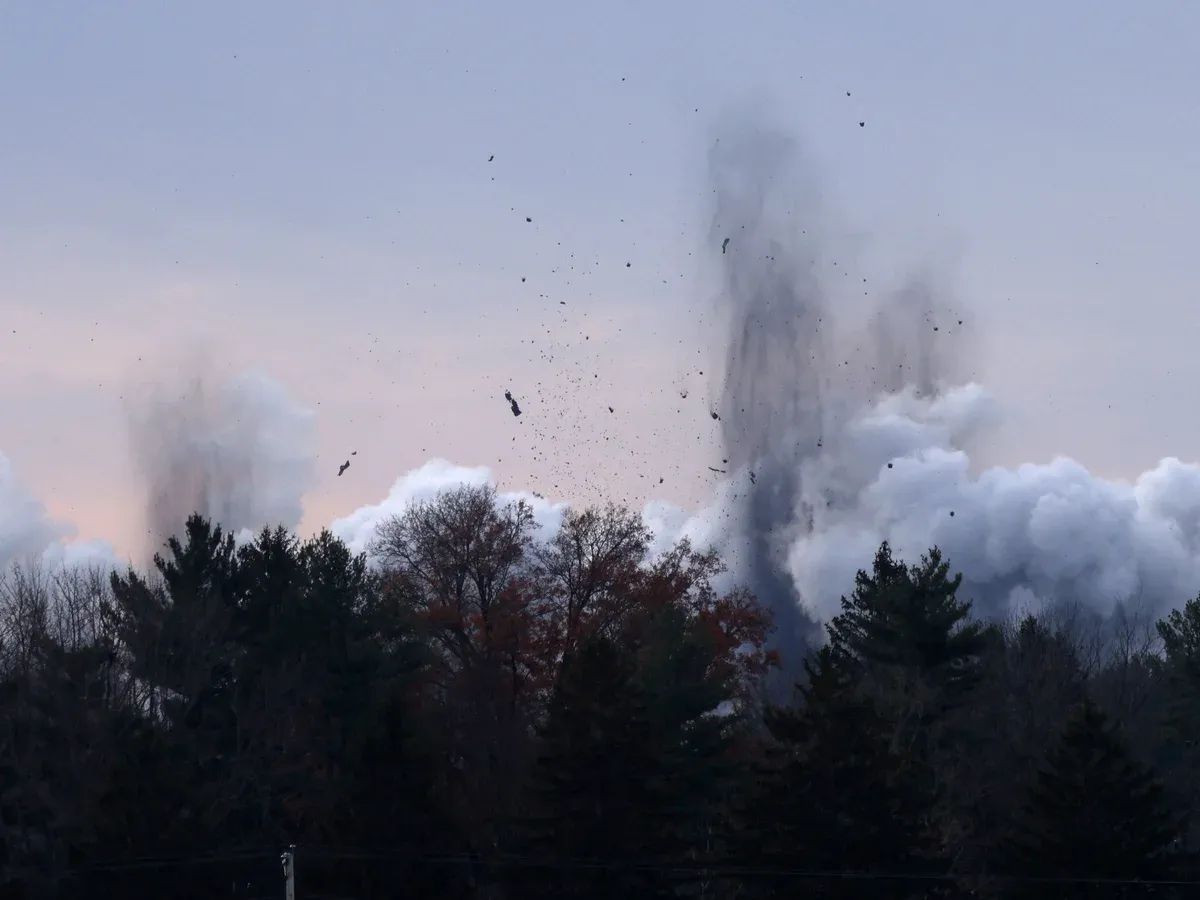
The controlled explosions occurred around 9am local time on Wednesday, generating a pair of loud booms and white smoke plumes that quickly dissipated. The timing was intentionally chosen because regional wind patterns blew toward the southwest, directing potential smoke safely away from heavily populated areas such as Burlington, a nearby city along the Mississippi River.
In the lead-up to the event, local schools canceled classes, many area businesses closed, and residents were encouraged to shelter indoors or evacuate if they lived closest to the site. Following the twin blasts, local emergency management authorities and the US Army issued an all-clear alert to cellphones, permitting normal community activities to resume.
What the reports confirm
Both reports confirm that the US Army detonated roughly 5 tons, or approximately 4,500 kilograms, of lead azide stored in 68 barrels at the Middletown facility after weeks of public anxiety and legal delays. Both accounts verify that initial air monitoring by the US Environmental Protection Agency detected zero airborne lead following the operation, prompting federal and military leaders to declare the mission a success.
While Report A focuses more heavily on the local eyewitness reactions and political commentary from figures like Donald Trump and state governors, Report B includes specific figures from EPA Administrator Lee Zeldin noting that more than 1,000 post-detonation samples had been collected from residential homes, parks, farms, and water taps.
The people involved
Major General Eric Shirley led the high-stakes military operation, stating that the risk to surrounding communities had been reduced as close to zero as humanly possible. Civilian leadership, including Acting Secretary of the Army Adam Telle and the governors of Iowa and Missouri, praised the operation's containment success.
Local residents, farmers, and municipal leaders also played a prominent role in the narrative, having voiced intense anxiety regarding potential health risks. Middletown Mayor Rodney Johnson expressed relief after monitoring the situation remotely, while livestock farmers like David Vandenberg and Doug Seyb voiced lingering concerns over the long-term safety of pregnant cattle and local soil and water tables.
Why it matters
Lead is a toxic heavy metal that poses severe neurological and developmental risks, particularly to pregnant women and young children. Because the explosive stockpile was degrading and at high risk of spontaneous detonation due to friction or dropping temperatures, the army faced a severe dilemma between letting the chemicals destabilize naturally or destroying them via a controlled blast.
The proximity of the facility to agricultural lands, animal populations, water treatment plants along the Mississippi and Missouri rivers, and densely populated communities means that any oversight in containment could have triggered widespread environmental contamination.
The background
The stockpiled lead azide had been transported to the Iowa army ammunition plant from military installations across the country in 2009 to be kept in reserve. During a routine staff inspection in March, officials discovered that the chemical compound had begun to partially crystallize through a process called recrystallization.
This chemical degradation made the material exceptionally sensitive to cold temperatures and mechanical friction, raising fears that winter weather could trigger an uncontrolled explosion. Plans for the detonation faced significant public pushback, environmental lawsuits, and scheduling shifts before an appeals court cleared the operation to proceed.
Response and aftermath
President Donald Trump took to social media to praise the military for executing a job well done and exceeding expectations. State officials, including Illinois Governor JB Pritzker, noted that neighboring states saw little to no immediate impact, though state agencies remained on standby.
Environmental groups and independent researchers acknowledged that public pressure and legal actions successfully forced the army to adopt much more rigorous safety and containment protocols than originally planned. However, advocacy groups continue to demand full accountability regarding how the hazardous storage situation was permitted to reach a crisis point.
What happens next
Extensive environmental testing will continue over the coming days and weeks. Independent researchers, government agencies, and university experts plan to collect and analyze comprehensive laboratory samples from local water sources, residential homes, playgrounds, and agricultural farms.
Water treatment facilities along major regional rivers will conduct periodic testing to detect any potential chemical spikes, and environmental protection teams plan to finish remaining soil and surface remediation work if any trace contamination is discovered.
What we still don't know
It remains unverified whether laboratory results from the thousands of collected environmental samples will eventually reveal low-level lead dispersion once detailed testing is completed in the coming days and weeks. Furthermore, the reports do not specify the exact long-term protocols the military will implement to prevent similar dangerous degradation issues at other ammunition storage sites nationwide.
Want more on this story? Our research assistant searches the latest reports across the web and explains what it finds, so you get the fuller picture in one place.