
Six Family Members Lost in Gulf Coast Plane Crash Returning From Fishing Trip
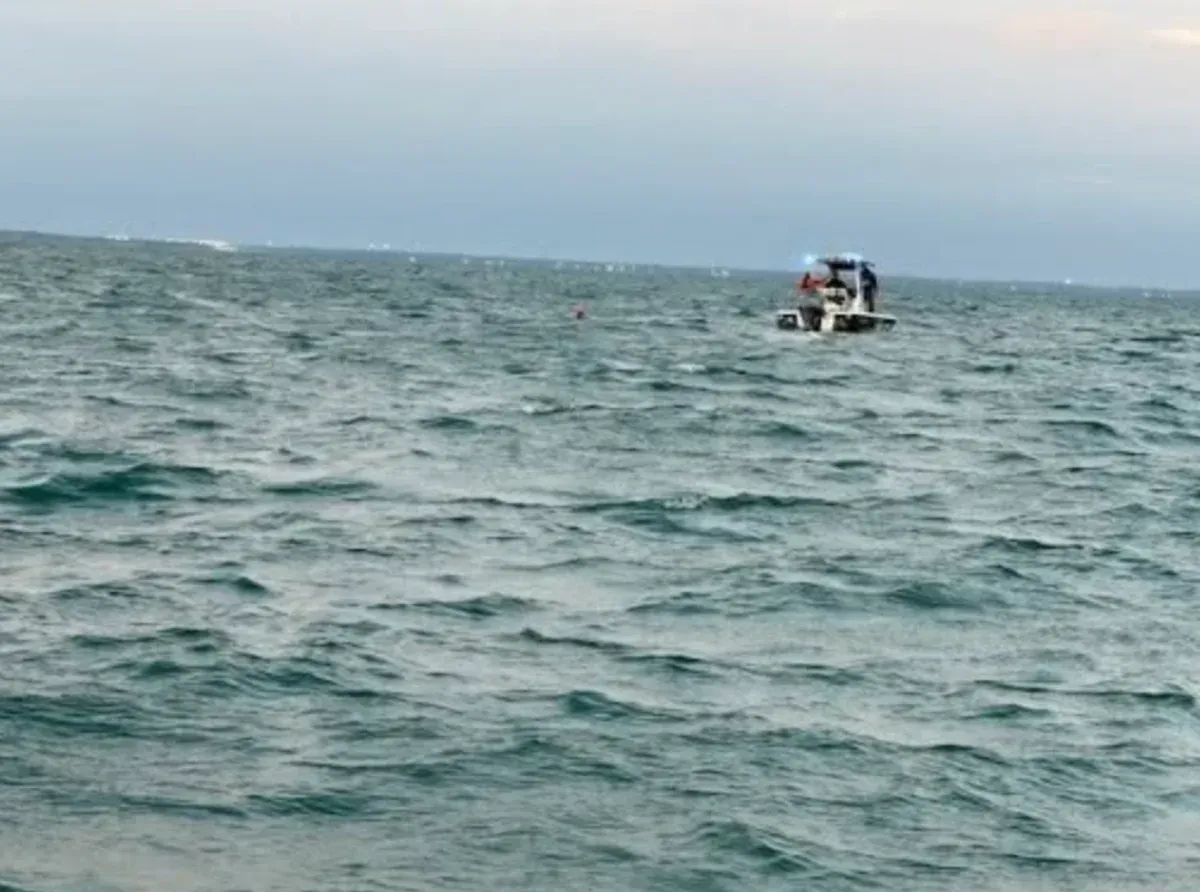
A Coast Guard vessel patrols the water near the search area off the coast of Mississippi.
A Cessna 210 carrying six members of the Stokes and Knox families crashed off the Mississippi coast on Tuesday while flying from New Orleans to Fort Myers, Florida. First responders and Coast Guard divers located the victims inside the aircraft fuselage after a four-hour search. Federal aviation authorities are currently investigating the circumstances surrounding the rapid descent.
- WhenTuesday afternoon
- WhereOff the coast of Mississippi near Horn Island
- VictimsSix family members, including three children
- AircraftCessna 210
- AgenciesU.S. Coast Guard, FAA, and NTSB
Photos
6 photosWhat happened
A private aircraft carrying six members of an extended Florida family crashed into the waters off the Mississippi coast on Tuesday afternoon. The victims included three adults and three children who were traveling together following a holiday fishing excursion.
Search and rescue operations were launched after air traffic control lost contact with the flight. Coast Guard divers eventually located the wreckage and recovered the remains of all six individuals inside the cabin fuselage.
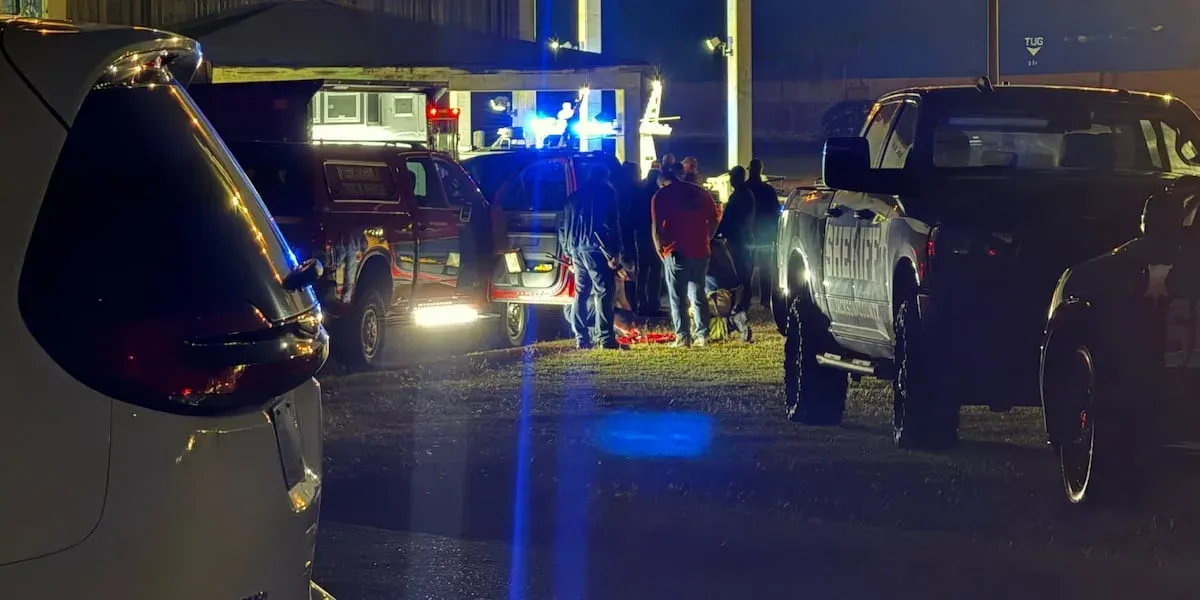
Emergency vehicles and first responders gather near the shore following the recovery operation.
How it unfolded
The flight originated in New Orleans without any reported mechanical problems or distress calls. As the Cessna 210 aircraft progressed along its route toward Fort Myers, Florida, air traffic controllers in Mobile, Alabama, maintained contact until approximately 3:45 p.m. on Tuesday.
According to reports, an air traffic controller near Gulfport-Biloxi International Airport warned the pilot about adverse weather and precipitation in the area. Shortly after reaching an altitude of roughly 9,000 feet, the aircraft began a rapid descent in a right-hand turn before dropping from radar.
What the reports confirm
All published accounts verify that the aircraft went down near Horn Island, Mississippi, carrying six occupants: Brent Stokes, Hunter Stokes, Arlyn Knox, Michael Knox, Charles Holden Knox, and Truett Knox. They also confirm that federal investigators from the Federal Aviation Administration and the National Transportation Safety Board have opened an inquiry.
Minor variances exist between the accounts regarding the precise descent metrics and warnings issued by air traffic controllers. While one source notes a rapid descent rate of 10,000 feet per minute, another details the aircraft's movement following a warning about local weather patterns from air traffic personnel.
The people involved
The pilot was identified as Brent Stokes, the 50-year-old president of Stokes Marine, a marine contracting company based in Fort Myers. He was joined by his 16-year-old son, Hunter Stokes, who served as president of the Fort Myers High School Club America chapter for the conservative youth organization Turning Point USA.
Other victims included Brent Stokes' sister, Arlyn Knox, 43; her husband, Michael Knox, 43; and their two sons, Charles Holden Knox, 12, and Truett Knox, 10. Arlyn and Michael Knox operated Knox Technologies, an information technology company founded in 2012.
Why it matters
The sudden loss devastates two prominent business and community-connected families in Fort Myers during the start of the holiday season. The tragedy leaves mourning relatives, business colleagues, and student groups searching for answers following an abrupt end to a family holiday gathering.
Beyond the immediate grief of the families, accidents involving private general aviation aircraft prompt renewed scrutiny of flight safety in marginal weather conditions and underscore the vital coordination required among coastal rescue agencies.
The background
The flight path spanned from Louisiana across the Gulf Coast toward southwest Florida, a route frequently navigated by private pilots traveling between Gulf Coast destinations. Horn Island, where the aircraft went down, is a barrier island situated within the Gulf Islands National Seashore.
General aviation flights often face localized weather challenges along coastal corridors, where sudden cloud layers and convective activity can develop rapidly. Federal safety boards maintain jurisdiction over such incidents to evaluate pilot actions, aircraft performance, and environmental factors.
Response and aftermath
The U.S. Coast Guard, alongside federal, state, and local partner agencies, initiated an immediate search and rescue operation upon losing contact with the aircraft. Responders initially recovered floating debris, including life jackets, a life raft, and cabin pieces.
After approximately four hours, search efforts transitioned to recovery as divers located the fuselage underwater. Coast Guard officials expressed condolences to the families and commended the interagency cooperation that expedited the recovery.
What happens next
The Federal Aviation Administration and the National Transportation Safety Board will lead a thorough investigation into the mechanical, environmental, and human factors involved in the flight's final moments.
Investigators will analyze radar data, air traffic control recordings, weather observations, and aircraft wreckage to determine the sequence of events that led to the rapid descent.
What we still don't know
Official determinations regarding the exact cause of the rapid descent and subsequent crash have not been finalized. Authorities have not yet released detailed findings from the initial examination of the aircraft's recovered instrumentation or engine components.
Want more on this story? Our research assistant searches the latest reports across the web and explains what it finds, so you get the fuller picture in one place.