
Fatal Lake Scugog Floatplane Crash Investigated by Safety Board
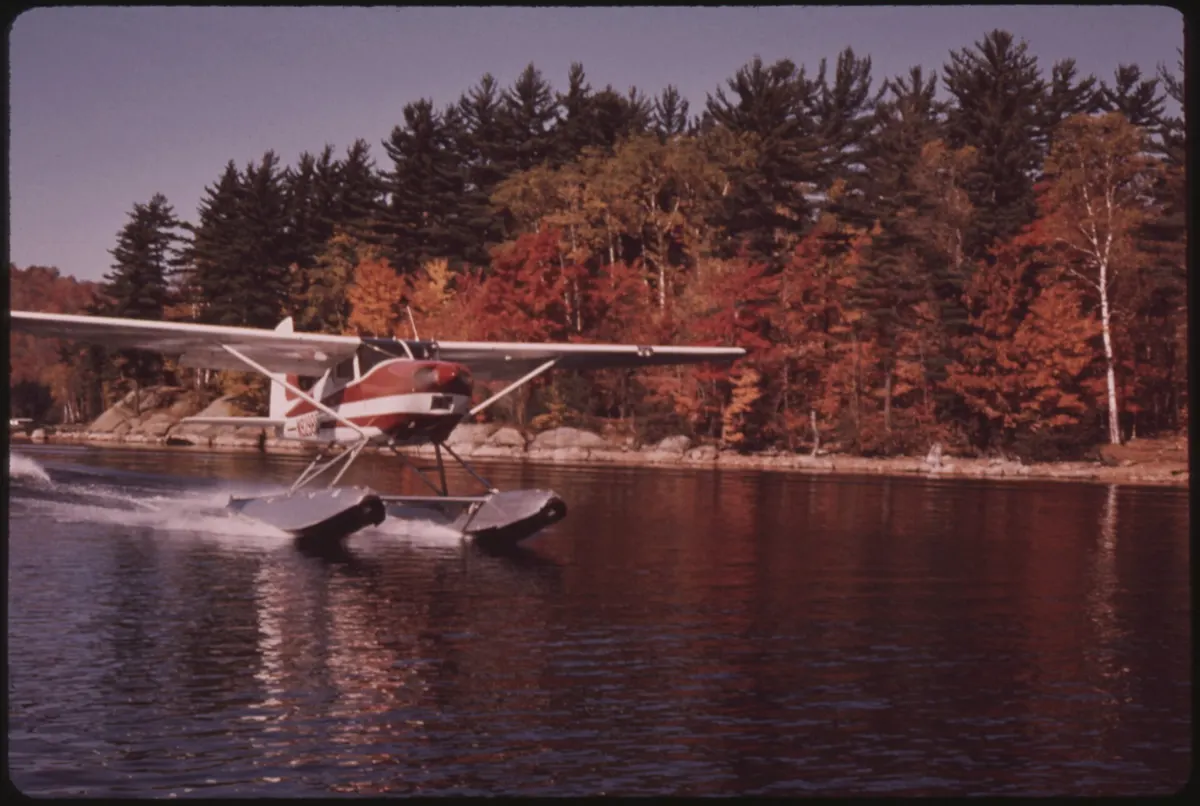
File photo: seaplane parked on water. Photo: Anne LaBastille, Public domain / Wikimedia Commons
A 16-year-old boy was killed when an amateur-built amphibious floatplane lost control during a glassy-water landing demonstration on Lake Scugog, Ontario, in July 2025. The Transportation Safety Board of Canada released its final investigation report, highlighting the hidden perils of glassy water and shoreline approaches. While the pilot and a prospective buyer survived with minor injuries, investigators were unable to determine an exact mechanical or operational cause for the sudden left swerve that led to the collision.
- DateJuly 18, 2025
- LocationLake Scugog (Scugog/Charlies Landing Water Aerodrome) near Caesarea, Ontario
- AircraftUltravia Pelican Sport 600 (amphibious float-equipped)
- Casualties1 dead (16-year-old on dock); 2 injured (pilot and passenger)
- Investigating AgencyTransportation Safety Board of Canada (TSB)
What happened
On July 18, 2025, a privately registered Ultravia Pelican Sport 600 amphibious floatplane crashed into two boat docks on Lake Scugog near Caesarea, Ontario, killing a 16-year-old boy who was standing on the shore structure. The aircraft subsequently inverted and came to rest on top of a moored pontoon boat.
The aircraft was carrying two occupants—an experienced occurrence pilot and a prospective buyer taking a demonstration flight. Both occupants sustained minor injuries and were transported to the hospital.
How it unfolded
Earlier that day, the pilot had completed two flights, during which the aircraft had taken on water in its right float after porpoising upon landing. After pumping out the float and observing it, the pilot initiated a third flight at approximately 1204 under calm wind conditions and a glassy, mirror-smooth water surface.
According to GPS data and video footage, the aircraft touched down about 202 feet from shore at 1226:11. It bounced at least twice, after which the pilot applied full engine power to execute a go-around. The aircraft suddenly deviated sharply to the left, striking the final two feet of a first dock and the last eight feet of a second dock where the teenager was standing.
What the reports confirm
All reports confirm the core timeline and tragic outcome: a demonstration flight of an Ultravia Pelican Sport 600 on Lake Scugog resulted in a bounce, a failed go-around, a sharp left turn, and a fatal collision with docks on July 18, 2025. They also agree that the Transportation Safety Board of Canada released its official findings on November 26, 2026, and that investigators could not definitively determine the exact cause of the crash.
Where the reports diverge is in their level of technical detail. The specialized aviation report provides extensive data regarding the aircraft's serial number (C-FCDB, serial number 808), precise timestamps from GPS and video, weather observations from a nearby executive airport, and subtle equipment differences between the occurrence aircraft and the pilot's personal plane—such as carbon fibre versus aluminum floats and differing throttle friction locks. The general news reports omit these granular technicalities, focusing instead on the human toll and the overarching safety warnings.
The people involved
The victim was a 16-year-old boy who was standing on a boat dock when the aircraft struck. His identity was not detailed in the reports beyond his age.
The aircraft was operated by an experienced owner-pilot holding a valid private pilot licence with single-engine land and seaplane endorsements, along with a valid Category 3 medical certificate. His personal log showed approximately 1,725 total flight hours. The passenger on board was a prospective buyer evaluating the aircraft for purchase.
Why it matters
The accident underscores the severe operational hazards associated with landing aircraft on glassy water. When water surfaces are entirely smooth and winds are calm, pilots lose visual cues, making it nearly impossible to accurately judge their height above the surface without specialized techniques.
While standard safety procedures advise pilots to approach close and parallel to a shoreline to aid depth perception, this incident highlights the dangerous trade-off: doing so brings aircraft into close proximity with shore-based obstacles, docks, boats, and people, drastically reducing safety margins if a maneuver goes wrong.
The background
The Scugog/Charlies Landing Water Aerodrome is located in Ontario's Durham Region, northeast of Toronto. Amphibious floatplanes are capable of operating on both land and water, utilizing specialized floats attached beneath the fuselage.
The aircraft involved was an amateur-built Ultravia Pelican Sport 600, a light aircraft popular among recreational pilots. The Transportation Safety Board of Canada is an independent federal agency tasked with advancing transportation safety through independent investigations, explicitly excluding the assignment of civil or criminal liability.
Response and aftermath
Emergency responders transported the surviving pilot and passenger to the hospital for treatment of minor injuries. Investigators examined the wreckage at the site, noting that flight control cables were continuous, flaps were set fully down, and high engine power was being delivered at the moment of impact.
A handheld GPS unit was recovered and sent to the TSB Engineering Laboratory in Ottawa for data extraction, alongside an emergency locator transmitter analysis.
What we still don't know
Despite recovering onboard GPS data and video footage, investigators could not establish the precise sequence of the pilot's actions immediately following the initial touchdown.
Furthermore, while the investigation cataloged various configuration differences between the occurrence aircraft and the pilot's usual aircraft—including carbon composite versus fiberglass propeller blades, a STOL wing extension, and a tightened throttle friction lock—the TSB concluded it could not determine whether these mechanical factors or equipment variations contributed to the loss of control.
Want more on this story? Our research assistant searches the latest reports across the web and explains what it finds, so you get the fuller picture in one place.