
Affordable Bi-Annual HIV Prevention Injection Reaches African Nations
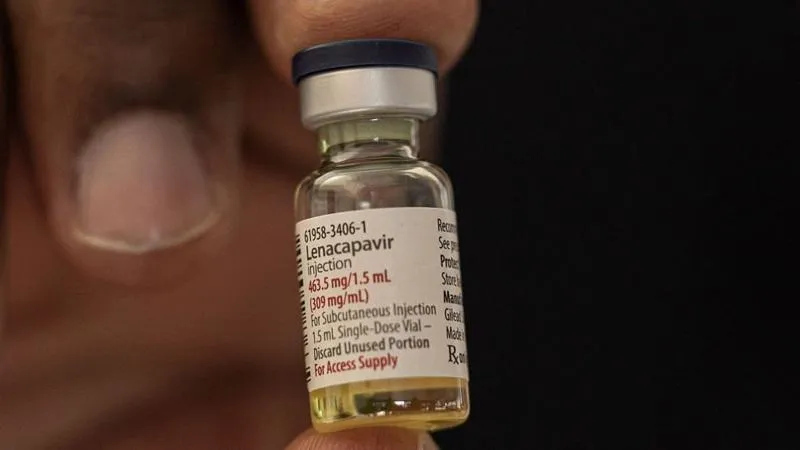
A small glass vial labeled as lenacapavir injection, designed for subcutaneous use.
Zambia has received the first global delivery of a low-cost generic version of lenacapavir, a twice-yearly injection that nearly eliminates HIV transmission risk. Priced at $40 annually rather than the $28,000 U.S. brand-name cost, the drug represents a monumental shift for sub-Saharan Africa. International health organizations plan to expand availability to dozens of countries in an effort to reach millions over the coming years.
- DrugGeneric lenacapavir
- Cost$40 per person annually
- DosingTwice a year injection
- Target3 million people by end of 2028
- First deliveryZambia on Wednesday
What happened
Zambia has taken delivery of the world's inaugural shipment of affordable generic lenacapavir, marking a pivotal moment in global healthcare access. Deliveries are scheduled to reach Uganda within days, initiating a broader continental rollout that will soon expand to Zimbabwe and South Africa.
Crafted as a twice-yearly subcutaneous injection, the medication provides an extraordinarily high degree of protection against HIV acquisition. International health coalitions view the arrival of these lower-priced vials as a crucial turning point for regions carrying the heaviest disease burdens.
How it unfolded
The path to this distribution milestone follows a landmark clinical trial conducted in 2024 across Uganda and South Africa, which tracked more than 5,000 adolescent girls and young women. Zero participants who received the injection contracted the virus, establishing its exceptional efficacy.
Following a recommendation by the World Health Organization in July 2025, international organizations mobilized to scale up production. The Global Fund organized the initial shipment to Zambia, which arrived on Wednesday, setting the stage for wider distribution across 24 countries before the year concludes.
The people involved
Adolescent girls and young women across sub-Saharan Africa are the primary demographic targeted by this rollout, as they face disproportionate risks of infection. Health experts, international administrators at the Global Fund, and researchers who oversaw the initial clinical trials have championed the drug's deployment.
Pharmaceutical giant Gilead Sciences originally developed the medication, which carried a prohibitive price tag in wealthy nations. Subsequent generic licensing agreements paved the way for low- and middle-income countries to access affordable alternatives through pooled procurement strategies.
Why it matters
Sub-Saharan Africa accounts for nearly two-thirds of all individuals living with HIV globally, with South Africa alone housing roughly eight million positive residents. Until now, preventative measures relied heavily on daily oral pre-exposure prophylaxis pills, which present adherence challenges and social stigma.
A biannual injection removes the burden of daily pill-taking while offering nearly complete protection at a fraction of the cost. By lowering the annual price per person to $40, health agencies can contemplate mass distribution schemes that were previously financially impossible.
The background
The original branded version of lenacapavir entered the sub-Saharan African market a year prior to the generic arrival but remained out of reach for most patients due to its $28,000 annual U.S. price tag. The transition to generic manufacturing mirrors historical efforts to make life-saving medications accessible in developing regions.
Global health initiatives have spent decades building infrastructure to combat the epidemic, aiming to eliminate AIDS as a public health threat by 2030. However, these programs face new uncertainties amid potential policy shifts and foreign aid reductions from donor nations.
Response and aftermath
The Global Fund hailed the initial deliveries as an unprecedented acceleration in making quality-assured preventative medicines available in lower-income settings. Representatives emphasized that the collaborative framework aims to supply 120 nations over time.
Despite the optimism surrounding the drug's technical success, public health officials have expressed anxiety over potential funding freezes and foreign aid cuts under the administration of U.S. President Donald Trump. Because many African healthcare systems depend on external financing, budgetary shifts could complicate long-term distribution goals.
What happens next
Shipments are slated to arrive in Uganda imminently, followed by Zimbabwe early next year and expansions into several other nations. The Global Fund, in partnership with the U.S. government, has set a concrete target to protect at least three million individuals by the end of 2028.
Logistical networks will need to scale rapidly to absorb the influx of doses and administer them to populations in remote or underserved areas. Monitoring groups will also track adherence rates and real-world efficacy as the recipient count climbs well past the initial 189,000 individuals across ten countries.
What we still don't know
The exact timeline for when all 120 designated low- and middle-income countries will receive their initial supplies has not been fully detailed. It remains unconfirmed how local healthcare infrastructures will absorb the distribution costs outside of international grants.
Additionally, the precise impact of potential international funding cuts on the broader three-million-person rollout target is yet to be determined.
Want more on this story? Our research assistant searches the latest reports across the web and explains what it finds, so you get the fuller picture in one place.