
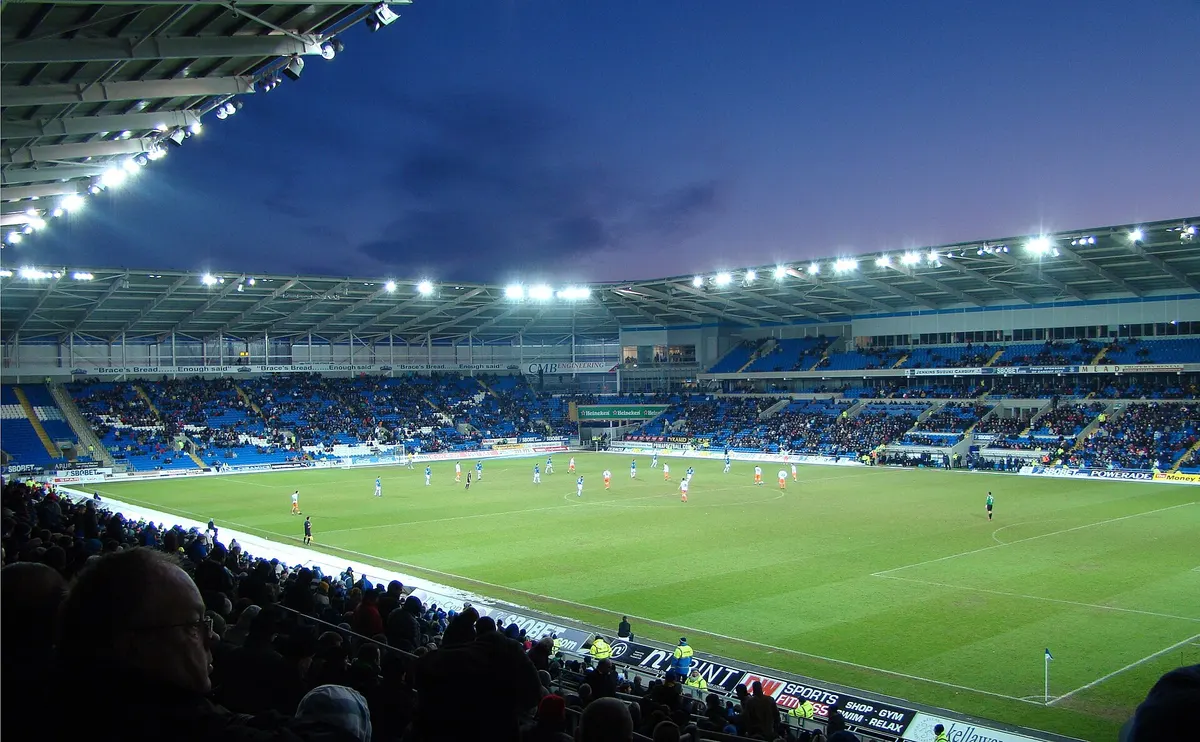
Wales will face Slovenia in a two-leg play-off next March to maintain their top-flight status in the UEFA Nations League. Craig Bellamy's side enter the relegation play-off after finishing bottom of Group A4, while Slovenia secured their spot by finishing as runners-up in Group B1.
The first leg of the tie will take place in Slovenia on Saturday, 27 March, with the return fixture hosted in Wales on Tuesday, 30 March. The winner of the two-legged contest will play in League A for the next edition of the competition, while the loser will drop down to League B.
What happened
Wales finished at the bottom of Group A4 following a difficult campaign where their only victory was a 2-1 win at home against Norway in October. They suffered defeats in both home and away fixtures against Portugal and Denmark, as well as a loss in Oslo. Despite the struggles, the campaign has reportedly bolstered manager Craig Bellamy's belief in the squad.
In contrast, Slovenia enjoyed a strong campaign under manager Bostjan Cesar, losing only once across their six matches—a 2-1 defeat away against group winners Switzerland. Slovenia took four points from Scotland after drawing 0-0 at home and securing a 2-1 victory in Glasgow. They also recorded 2-0 home and 3-0 away wins against North Macedonia.
Historically, the two national teams have only played each other once before. That previous encounter was a goalless friendly match played in Swansea in 2005. Just eight places separate the two nations in the FIFA world rankings, with Wales positioned 41st and Slovenia 49th.
Why it matters
The outcome of the March play-off determines which tier both nations occupy in the subsequent Nations League cycle. For Wales, staying in League A keeps them competing against Europe's strongest international teams, whereas relegation drops them into League B.
Furthermore, finishing bottom of their Nations League group impacts Wales' seeding for the upcoming qualification draw for Euro 2028. Because they finished last in their group, Wales will not be among the top seeds for the tournament draw held on 6 December in Belfast, raising the possibility of being drawn alongside European heavyweights like Spain, France, Italy, the Netherlands, or Portugal.
The background
The UEFA Nations League is a biennial international football competition featuring the men's national teams of member associations. Teams are divided into leagues—League A being the top tier—with promotion and relegation between them based on group performance.
While Wales are co-hosts for Euro 2028 alongside England, Scotland, and the Republic of Ireland, automatic qualification spots are primarily distributed through standard qualification groups. The 12 group winners and eight best-ranked runners-up qualify directly, while co-hosts have fallback options including automatic spots and play-off safety nets based on Nations League rankings.
What happens next
The first leg will be played in Slovenia on 27 March, followed by the second leg in Wales on 30 March during the international break. In addition to Wales' match, other international fixtures include England facing Norway in the Nations League quarter-finals and the Republic of Ireland playing Croatia in their own A/B play-offs.
- Wales will face Slovenia in a two-leg play-off to maintain their top-flight status in the Nations League.
- The first leg will be played in Slovenia on Saturday, 27 March, with the return fixture in Wales on Tuesday, 30 March.
- Finishing bottom of their group means Wales will not be among the top seeds in qualifying for Euro 2028.
- Just eight places separate Wales in 41st and Slovenia in 49th in the FIFA world rankings.