
The United States has proposed a 17% tariff rate for Indian exports conditional on New Delhi agreeing to a long-pending bilateral trade deal. This move provides India with a distinct competitive advantage over major regional manufacturing rivals such as China, Vietnam, Bangladesh, Thailand, and Cambodia.
What happened
The Office of the United States Trade Representative announced the proposed tariff structure on Wednesday. Under the plan, India could secure a 17% rate by reaching an Agreement on Reciprocal Trade with Washington. Without a finalized deal, Indian exports could face tariffs of up to 25% under Section 301 investigations regarding excess production capacity that harms United States interests. Meanwhile, the United States proposed 18% tariffs for Bangladesh, Cambodia, and Thailand, and 20% for China and Vietnam, subject to their own respective trade agreements.
Experts note that the competitive edge gives India a better bargain than its main manufacturing competitors. This may provide enough political cover for the Indian government to declare victory and secure domestic backing for the pact. However, analysts point out that the Modi government remains particularly sensitive to any public perception that it is conceding to American pressure. India's commerce ministry denied having structural excess capacity in any sector while affirming its commitment to working toward an early conclusion of the bilateral trade agreement.
Why it matters
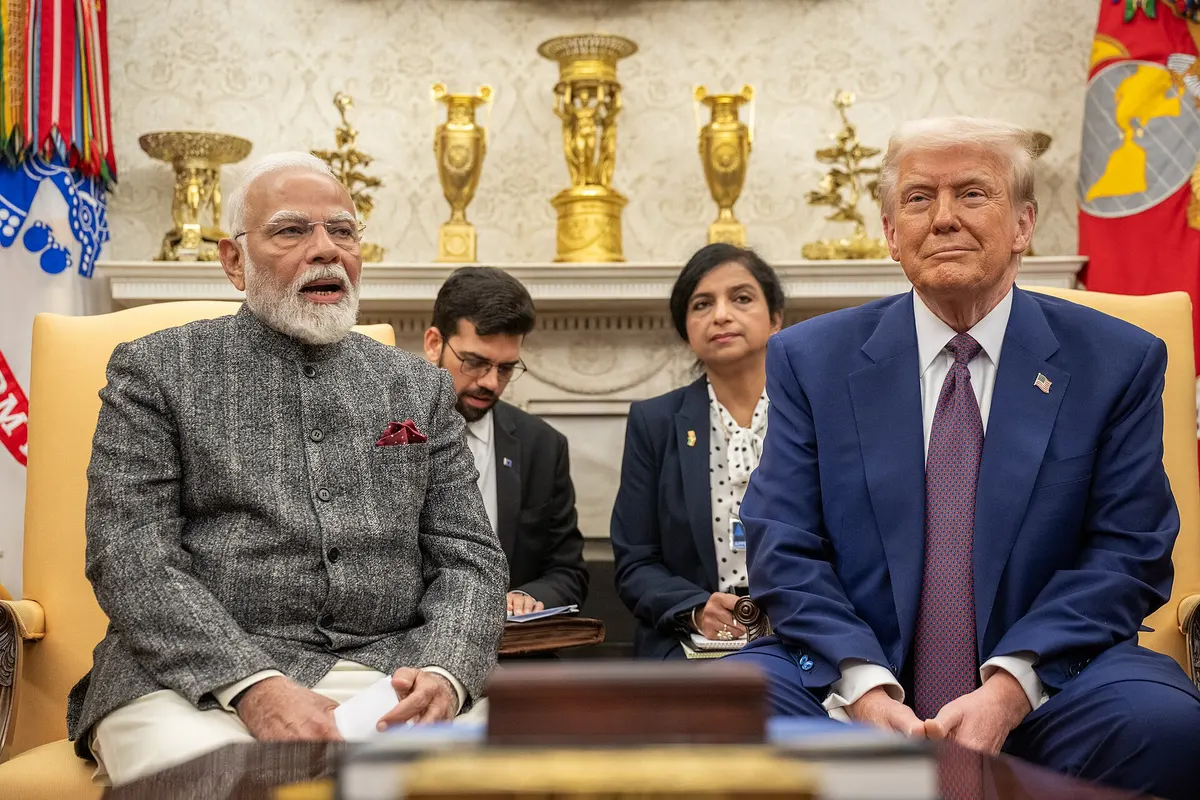
The tariff differential is designed to incentivize New Delhi to finalize the trade agreement before a potential meeting between Indian Prime Minister Narendra Modi and United States President Donald Trump in December for the G20 leaders' meeting in Florida. Despite India previously facing steep tariffs that reached 50%, New Delhi's trade surplus with the United States actually grew from $45.2 billion in 2024 to $57.3 billion in 2025.
What happens next
Negotiators from both nations are working toward the early conclusion of the India-United States Bilateral Trade Agreement. Leaders are expected to potentially seal the deal on the sidelines of the G20 summit in Florida.
Key takeaways
- The United States proposed a 17% tariff on Indian exports if New Delhi finalizes a reciprocal trade deal.
- Without a finalized agreement, Indian goods could face tariffs of up to 25% under Section 301 investigations.
- Regional rivals face higher proposed tariffs, with China and Vietnam facing 20% and Bangladesh, Cambodia, and Thailand facing 18%.
- India's commerce ministry denied findings of structural excess capacity while confirming its commitment to concluding the bilateral trade agreement.