
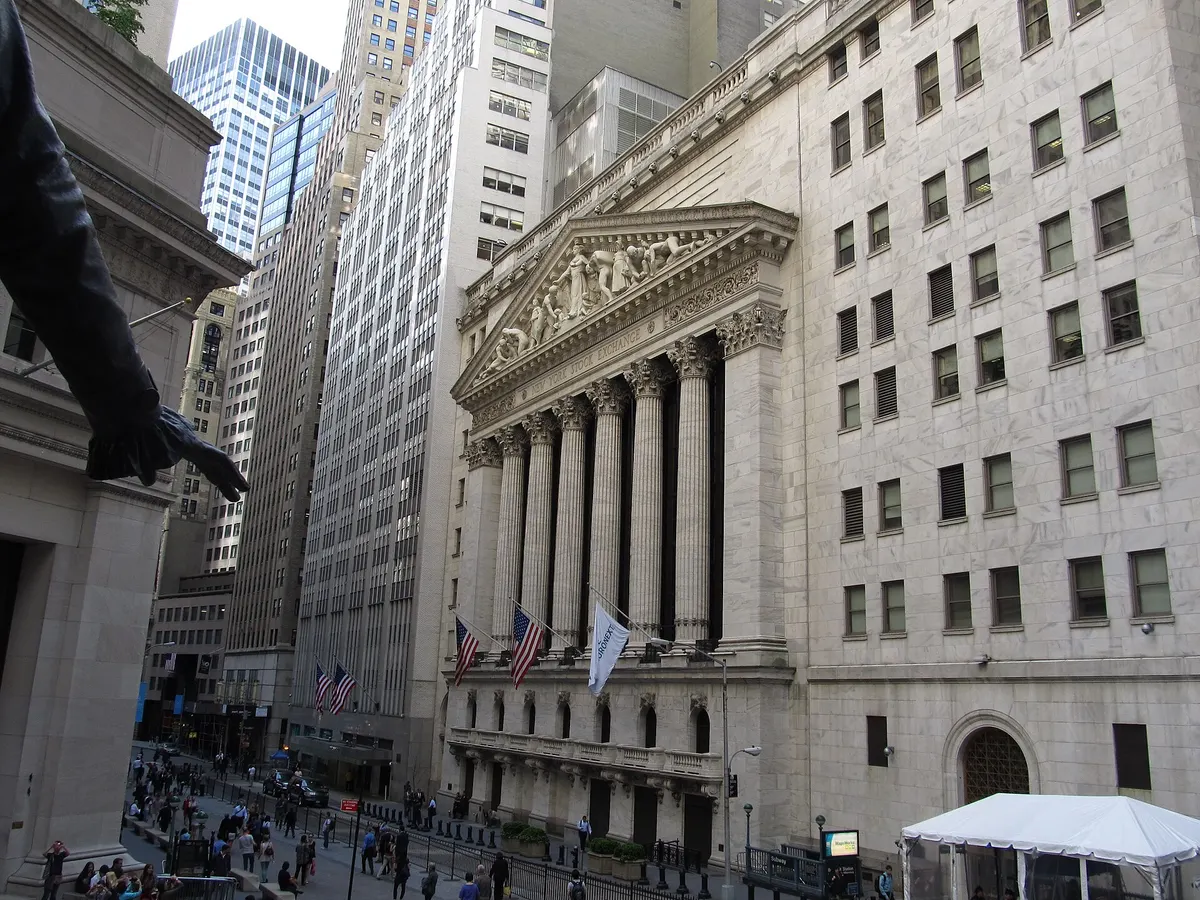
U.S. stock markets closed out a turbulent holiday-shortened trading week on a high note, with all three major indexes posting substantial weekly gains. Technology stocks and artificial intelligence firms led the rebound during Friday's shortened trading session, helping the market recover from earlier volatility.
The rally followed a volatile month for equities, with markets navigating fluctuating sentiment around artificial intelligence investments, inflation concerns, and shifting interest rate expectations. Despite earlier mid-week pressure, major benchmarks finished the week firmly in positive territory.
What happened
On Friday, the Dow Jones Industrial Average rose 591.99 points, or 1.18%, to close at 50,774.94. The S&P 500 added 1.6% to finish at 7,297.49, while the Nasdaq Composite advanced 2.31% to settle at 24,129.50. Markets were closed on Thursday for Thanksgiving and closed early at 1 p.m. ET on Friday.
The day's gains were supported by major technology companies. Meta Platforms rose more than 3%, Amazon climbed about 4%, and chipmaker Broadcom increased nearly 4%. Artificial intelligence lab Anthropic saw its shares add roughly 11%. For the week, the Dow and S&P 500 both posted gains of more than 5%, while the Nasdaq surged over 6%, notching its largest weekly advance since April.
The week had kicked off with a massive rally on Monday after Jensen Huang was reinstated as CEO of Nvidia, driving the S&P 500 and Nasdaq higher. However, mid-week trading saw erratic swings and sharp pullbacks as investors took profits on AI-related stocks and reacted to sticky inflation data.
Why it matters
The performance of major technology companies directly dictates the direction of the broader stock market due to their massive valuations. The intense volatility highlights ongoing investor anxiety over whether astronomical capital expenditures in artificial intelligence infrastructure will generate sufficient financial returns.
At the same time, persistent inflation and expectations of future interest rate hikes by the Federal Reserve continue to create borrowing cost pressures. These macroeconomic factors directly affect companies relying on debt financing to fund heavy data center development and technological expansion.
The background
Technology stocks, particularly those tied to artificial intelligence, have been the primary engine of Wall Street's momentum throughout 2026. However, that heavy concentration leaves indexes vulnerable to sudden shifts in investor sentiment.
Earlier in November, the market faced downward pressure due to concerns over high debt financing costs, slowing capital expenditures, and broader political developments. Additionally, international tensions involving crude oil infrastructure added further strain, with Brent crude tracking weekly gains following attacks on energy facilities in the Middle East.
What happens next
Investors will closely monitor incoming economic data to gauge the Federal Reserve's next steps regarding monetary policy and potential interest rate hikes at its upcoming meeting. Continued confidence in artificial intelligence sector spending and corporate earnings reports will remain critical factors determining whether market momentum can be sustained.
- The Dow Jones Industrial Average closed Friday up 591.99 points to finish the week at 50,774.94.
- Technology stocks, including Meta, Amazon, and Broadcom, led Friday's market recovery.
- Major benchmarks posted their strongest weekly gains in months despite earlier mid-week volatility and inflation concerns.