
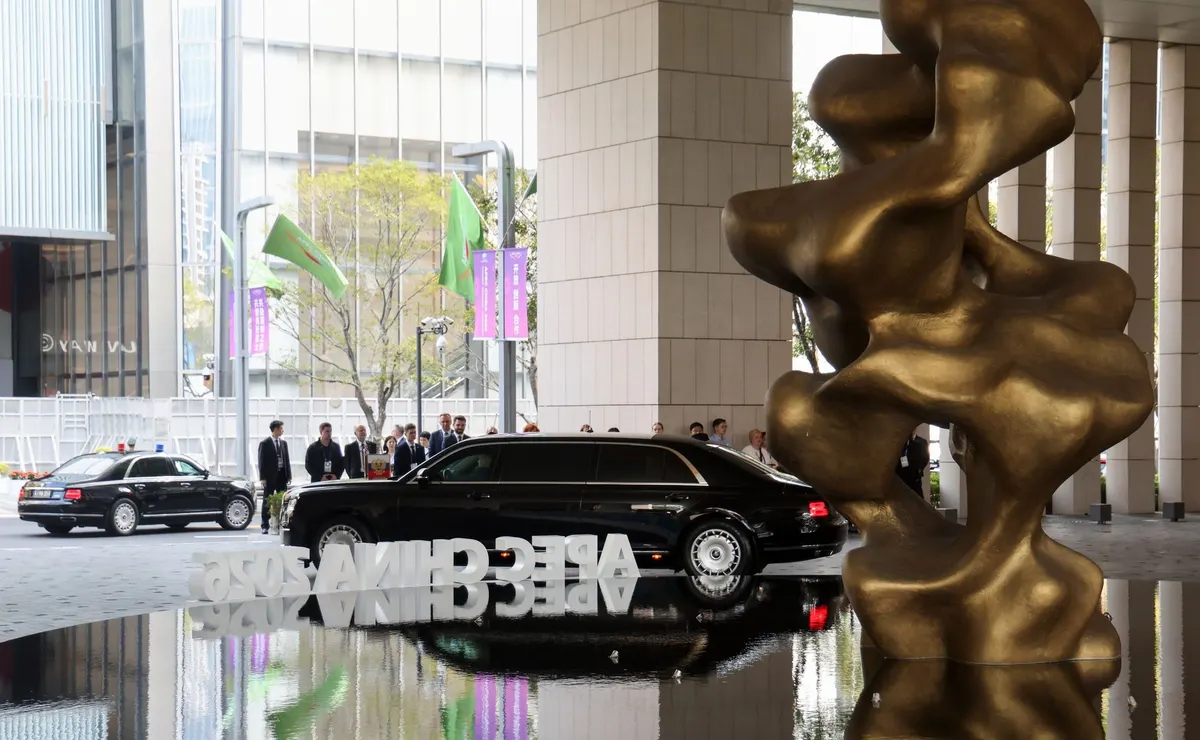
President Donald Trump has concluded a diplomatic tour of Asia that included stops for regional summits in Shenzhen, China, and the Philippines. While the trip featured high-profile gatherings with world leaders, major structural disputes between Washington and Beijing were left unaddressed.
Observers noted that despite impressive diplomatic staging, the visit failed to deliver durable resolutions on crucial issues like trade, rare earth mineral supply chains, and technology competition. Analysts pointed out that the core disagreements driving friction between the two superpowers remain entirely intact.
What happened
The centerpiece of the week was the Asia-Pacific Economic Cooperation (APEC) summit in Shenzhen. During the event, Trump held his third bilateral meeting of the year with Chinese President Xi Jinping. Little public information was shared regarding whether the two sides agreed to reduce tariffs, extend rare earth mineral flows past a January deadline, or resolve ongoing technology competition. Trump indicated that Nvidia came up briefly in his talks with Xi, following recent reports tying former CEO Jensen Huang to an alleged Chinese spy that prompted his resignation and raised congressional questions over advanced chip export controls. Alongside the U.S.-China talks, Trump, Xi and Russian President Vladimir Putin held a trilateral meeting where they reaffirmed interests in reducing nuclear risks and increasing oil production, an optical display that analysts like Ian Bremmer described as lacking substantive policy outcomes. Meanwhile, Tesla and SpaceX CEO Elon Musk, who accompanied the U.S. delegation, did not appear at major APEC events, instead flying to Shanghai to visit Tesla's factory and appearing in a social media video with trade officials. Before arriving in Shenzhen, Trump briefly visited the Philippines for meetings with the Quad grouping of Australia, India and Japan on the sidelines of the Association of Southeast Asian Nations (ASEAN) Summit, discussing regional cooperation, trade and critical minerals.
Why it matters
Global markets and multinational corporations rely heavily on predictability in U.S.-China relations to plan long-term investments and manufacturing supply chains. With key policy questions left unresolved—particularly regarding technology restrictions, tariffs, and access to advanced artificial intelligence components—businesses face continued strategic uncertainty. Furthermore, self-governed Taiwan, which Beijing claims as its territory, was completely sidelined during the high-level diplomatic events despite being a member economy facing critical upcoming local elections. The exclusion of Southeast Asia's growing manufacturing footprint from major-power focus also leaves a vital economic region navigating broader geopolitical currents without clear frameworks.
The background
Asia-Pacific Economic Cooperation is a forum for 21 member economies designed to promote free trade throughout the Asia-Pacific region. The recent summits brought together key global figures, including U.S. President Donald Trump and Chinese President Xi Jinping, continuing a series of diplomatic engagements aimed at managing intense bilateral competition. Tensions between Washington and Beijing have persisted for years over trade deficits, industrial policy, and national security restrictions on advanced technologies such as artificial intelligence chips. Regional groupings like the Quad—comprising the United States, Australia, India, and Japan—and ASEAN play pivotal roles in countering or balancing major-power influence across the Indo-Pacific, where critical supply chains and emerging manufacturing hubs are increasingly concentrated.
What happens next
Observers note that several critical deadlines and milestones loom over the bilateral relationship, including a January deadline concerning the flow of rare earth minerals. It remains unknown whether additional negotiations will take place to formally address tariffs or technology export rules. Taiwan is scheduled to hold key elections for Taipei mayor and other posts on November 28, which will test local political dynamics amid ongoing strategic pressures from Beijing. White House and corporate representatives have not provided immediate comments on several aspects of the diplomatic outcomes.
Key takeaways
- President Donald Trump concluded a diplomatic tour that included stops at regional summits in Shenzhen, China, and the Philippines.
- Trump and Chinese President Xi Jinping held their third bilateral summit of the year, but little was shared publicly on trade or tech competition resolutions.
- A trilateral meeting between Trump, Xi, and Russian President Vladimir Putin focused on nuclear risks and oil production but yielded limited substantive policy changes.
- Tesla CEO Elon Musk traveled separately to visit the company's factory in Shanghai rather than appearing alongside Trump at major APEC events.
- Taiwan was largely sidelined during the Shenzhen summit ahead of its upcoming local elections scheduled for November 28.