
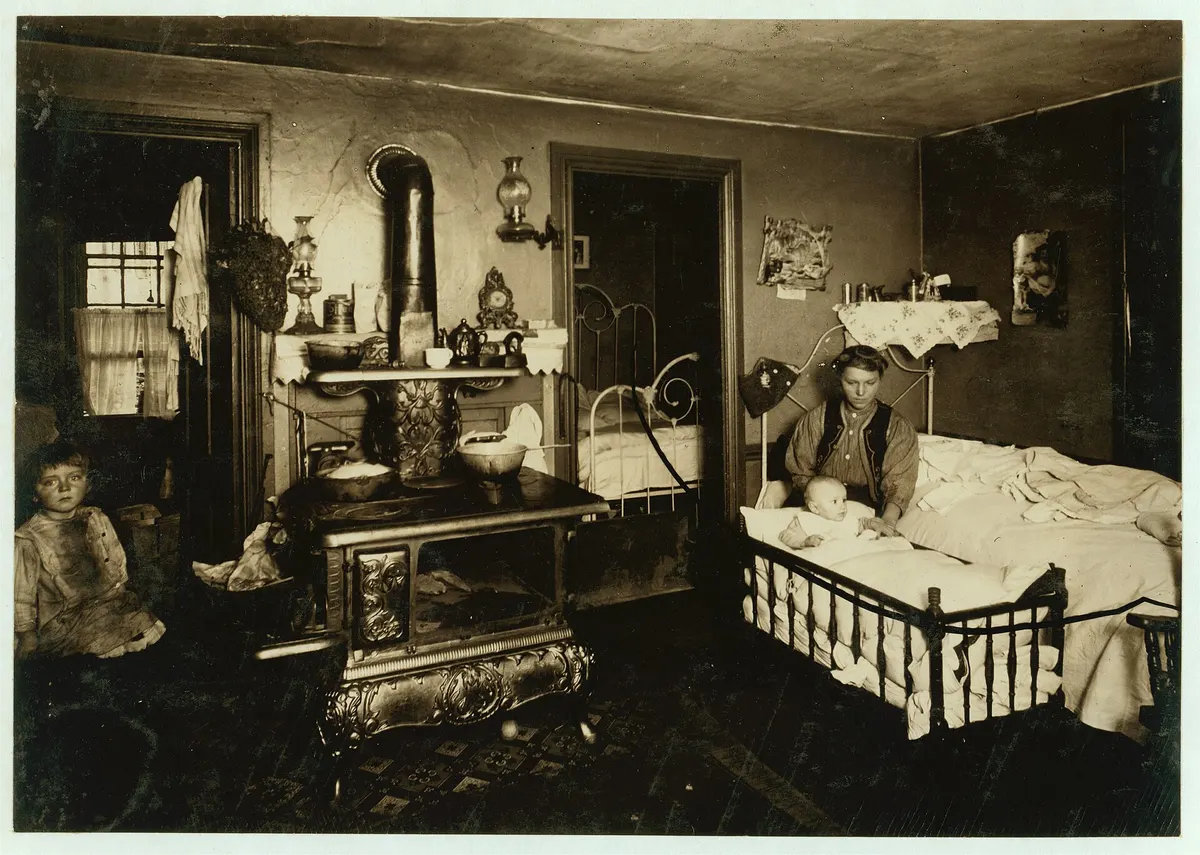
A major new study reveals that children who live in overcrowded housing and lack a quiet place to study achieve significantly worse GCSE and A-level results than their peers. Researchers from University College London, writing for the social mobility charity the Sutton Trust, warn that the country's housing crisis is actively damaging the educational prospects of an entire generation.
The findings highlight a stark divide in living conditions across the UK. While children from wealthy backgrounds almost always have their own room and a dedicated desk, more than half of children in the poorest families share a bedroom, leaving them to fall behind in academic performance despite being level with wealthier students at the end of primary school.
What happened
The research, conducted by leading academics including professor of economics Gill Wyness at University College London, evaluated the physical home learning environment for children. Unlike previous studies focusing solely on learning materials, this report examined whether young people had their own bedroom, a quiet place to work, and a home free from severe noise or overcrowding.
The results show a dramatic disparity based on family income. At age 11, 52 percent of young people in the poorest fifth of families shared a bedroom, compared with just 7 percent in the richest fifth. Children lacking a suitable study area fell behind academically by age 18.
The report also focused heavily on the impact of homelessness. With a record number of children living in temporary accommodation in England currently standing at more than 170,000, researchers found that those who had experienced homelessness by age 14 were 18 percentage points less likely to achieve five good GCSEs.
Why it matters
Educational attainment directly influences long-term life outcomes. The study established that poor housing conditions in childhood are linked to worse long-term employment, lower life satisfaction, and declining mental and physical health extending into a person's mid-30s.
Every additional housing problem experienced by children aged 11 to 15 leaves them three percentage points less likely to hold a university degree and three percentage points less likely to be in work as adults. Academics argue that holding children to the same national exam standards while forcing them to learn in vastly unequal conditions is profoundly unfair.
The background
The Sutton Trust is a prominent UK social mobility charity that investigates educational inequality and advocates for disadvantaged young people. GCSEs, or General Certificate of Secondary Education, are academic qualifications taken by school students in England, Wales, and Northern Ireland at the age of 15 or 16, typically determining their path toward A-levels and higher education.
Decent homes standards serve as a UK government benchmark for basic quality, safety, and repair in rented properties. The intersection of housing scarcity and educational performance has intensified as affordable housing shortages push record numbers of families into temporary shelters.
What happens next
The Sutton Trust has urged UK ministers to ensure that all young people living in rented accommodation have a bedroom with space for a desk under the decent homes standard. Researchers also suggested that schools and local authorities could provide alternative quiet study spaces through extended library hours and homework clubs.
Additionally, the trust called for a cross-departmental policy review requiring the Department for Education and the Ministry of Housing to collaborate more closely. Housing secretary Angela Rayner responded by stating the government is committed to ending the use of bed and breakfasts for families and implementing new council duties to support homeless children in school.
Key takeaways
- Researchers at University College London found that children in overcrowded homes and lacking quiet study spaces achieve worse GCSE and A-level results.
- More than half of young people in the poorest fifth of families share a bedroom at age 11, compared to just 7 percent in the richest fifth.
- Children who experienced homelessness by age 14 are 18 percentage points less likely to achieve five good GCSEs.
- Each additional housing problem experienced in childhood reduces the likelihood of holding a degree and being employed in adulthood by three percentage points.