
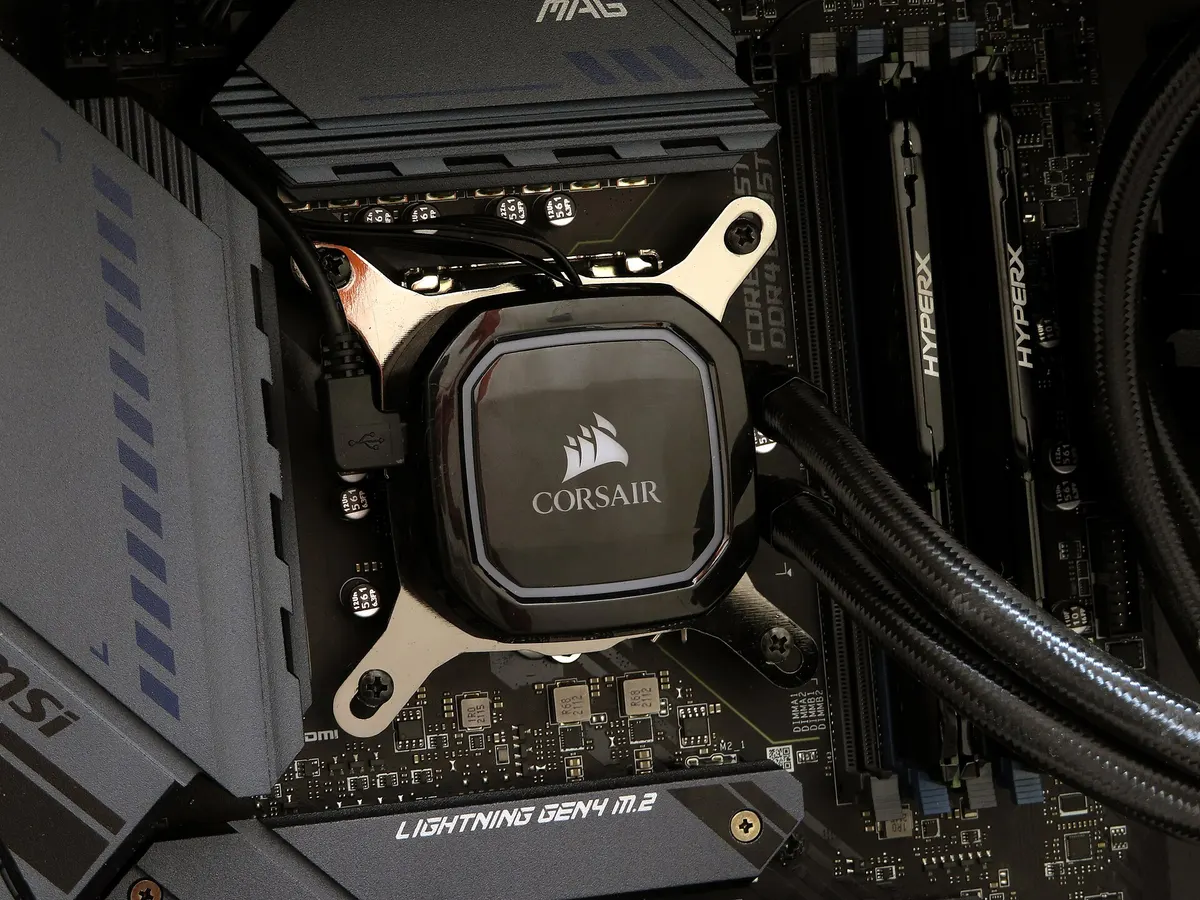
A computer enthusiast has turned a broken liquid CPU cooler into a custom desktop monitor by salvaging its built-in display screen and writing new software with the assistance of artificial intelligence.
The Reddit user, known as BodeeHav, dismantled a failed cooling unit to extract its screen, designed a 3D-printed stand, and built a standalone Windows application to display real-time computer hardware statistics.
What happened
When the pump on BodeeHav's liquid cooler failed about a month ago, the entire cooling mechanism became useless for regulating processor temperatures. Instead of throwing the unit away, the builder extracted the circular liquid crystal display screen and main circuit board from the pump block. Retaining the original black outer housing, they designed and 3D printed a dedicated desktop stand to hold the component upright.
To supply power and data to the detached screen, the builder modified the wiring harness down to its essential serial advanced technology attachment power connections and universal serial bus pins. The modified unit connects directly to a motherboard header, with future plans to adapt it for external USB ports.
Operating the screen independently presented a software hurdle. Using the manufacturer's official companion software led to repeated glitches whenever the host computer entered standby or sleep modes. To resolve this, BodeeHav used artificial intelligence tools to code a light custom Windows application called DesktopKraken. The builder then released both the application source code and the 3D printer design files publicly on GitHub for free download.
Why it matters
All-in-one liquid CPU coolers are widely known in the personal computer community for having limited lifespans because mechanical pumps eventually fail or develop fluid leaks. When a pump stops working, owners are generally forced to replace the entire assembly, discarding functional secondary parts like integrated display screens.
This project demonstrates how hardware components can be salvaged and reused beyond their intended lifecycle. By releasing open-source control software and downloadable hardware models, the developer provides a working blueprint for other PC builders seeking to turn broken liquid cooling units into functional hardware monitoring displays.
The background
All-in-one liquid coolers combine a water block, pump, radiator, and tubing into a single closed loop designed to draw heat away from a computer's central processing unit. Higher-end models, such as the NZXT Kraken series, include integrated digital displays on top of the CPU block to show system metrics or custom graphics inside a computer case.
Official control software programs, such as NZXT CAM, are designed to manage these displays while connected to active cooling hardware. However, proprietary software often relies on background services that can struggle to manage detached hardware modules, particularly when recovering from system power states like sleep mode. The practice of using artificial intelligence models to rapidly write software code, sometimes described as vibecoding, allowed the builder to create lightweight alternative software without relying on the manufacturer's original software stack.
What happens next
The open-source DesktopKraken application currently supports specific hardware models, specifically the 2023 Kraken Elite and 2024 Kraken Elite V2 units, which feature circular displays with a resolution of 640 by 640 pixels.
The developer plans to refine the physical setup by adapting the unit to connect via external USB ports rather than internal motherboard headers. Future software updates and community modifications remain open on GitHub, where users can access sensor logging, thermal gauges, custom GIF animations, and automatic recovery features following system disconnects.
Key takeaways
- A PC builder salvaged the screen from a broken liquid CPU cooler and turned it into a standalone hardware display.
- The project relies on custom software created with artificial intelligence tools to replace proprietary control utilities.
- Both the software application and 3D-printable stand files have been published open-source on GitHub.
- The software supports specific 640 by 640 resolution circular displays from 2023 and 2024 cooler models.