
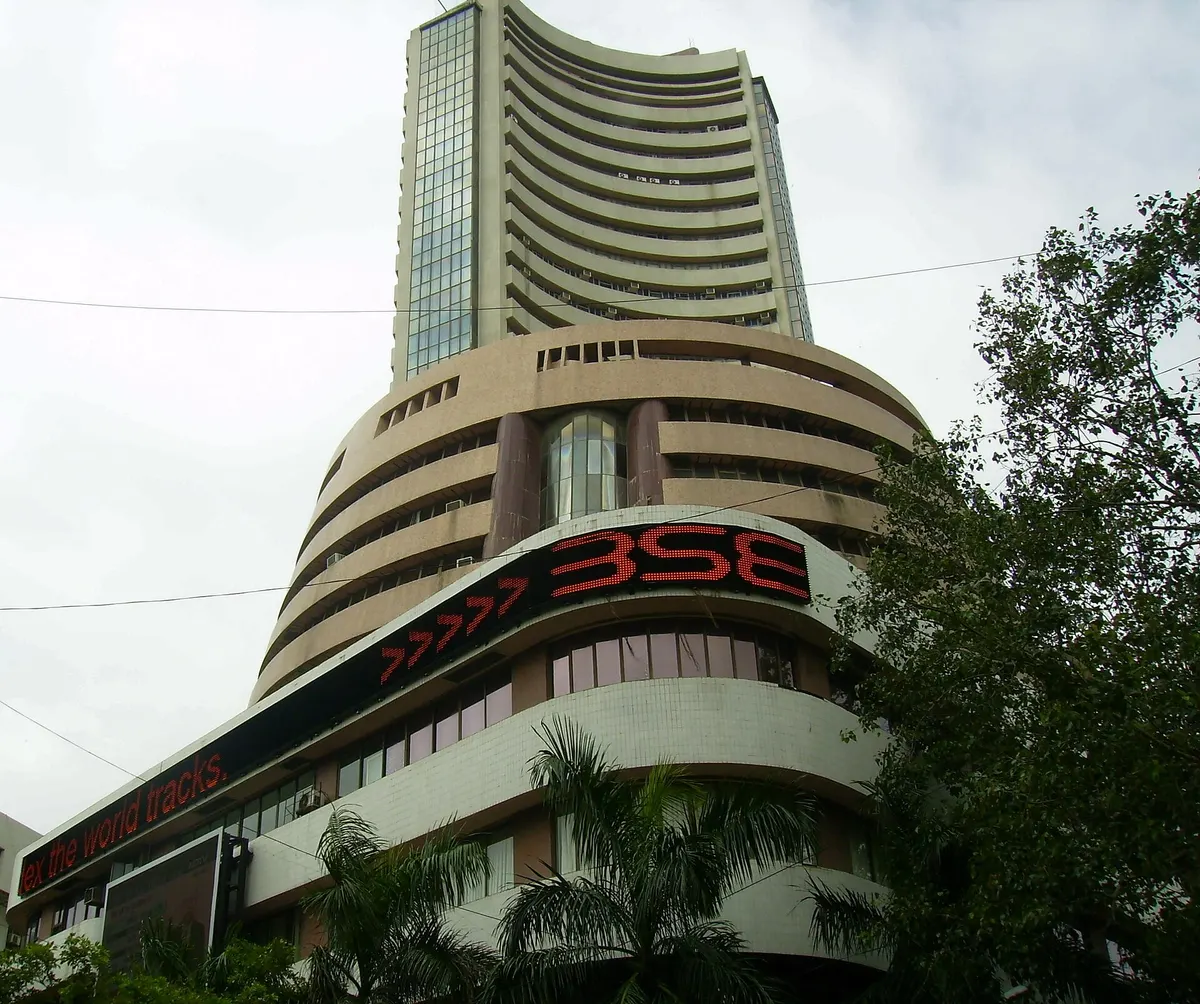
Indian benchmark equity indices shifted downward in early trading sessions on Friday, November 27, 2026. The initial pullback interrupted a preceding two-day market rally as investors engaged in profit-taking across major technology counters and financial institutions.
TheBombay Stock Exchange's 30-share Sensex dropped 339 points to open at 83,958.53, while the National Stock Exchange's 50-share Nifty declined by 73.10 points down to 25,812.35. The primary takeaway is that short-term market momentum slowed as investors locked in recent gains.
What happened
The early session downturn was heavily influenced by losses in several blue-chip companies. Major laggards on the Sensex included prominent technology firms such as Tata Consultancy Services, HCL Tech, and Infosys, alongside financial heavyweight HDFC Bank, Reliance Industries, and Bajaj Finserv. Conversely, some stocks managed to record gains during the same early trade window, led by Titan, Tata Steel, Bharat Electronics, and Power Grid.
Simultaneously, broader macroeconomic factors drew attention from market participants. Brent crude, the international benchmark for oil, was trading at $96.50 per barrel. WTI crude also extended its advance toward $85 a barrel, fueled by renewed geopolitical tensions in the Middle East that amplified ongoing supply concerns. Foreign Institutional Investors had recorded substantial equity purchases worth Rs 5,843.33 crore on the preceding Thursday, providing strong institutional backing prior to the session's dip.
Why it matters
Market corrections directly impact retail and institutional investors holding positions in heavily weighted index components. Because blue-chip IT firms and large private banks carry significant weight within the Sensex and Nifty, pullbacks in these specific sectors exert an outsized downward pull on the entire market index, affecting portfolio valuations across the broader financial ecosystem.
The background
The Bombay Stock Exchange, situated in Mumbai, is one of Asia's oldest stock exchanges and serves as a primary barometer for the Indian economy. Benchmark indices like the Sensex and Nifty aggregate the performance of top publicly traded corporations. Leading up to the Friday session, the domestic market had experienced a notable two-day upward rally, which naturally created conditions for investors to secure profits by selling off shares that had recently appreciated in value.
What happens next
Market watchers continue to monitor international crude oil trajectories and Middle Eastern geopolitical developments for signs of further supply disruption. Domestic market participants will also track upcoming foreign institutional trading patterns and broader Asian market trends, which maintained positive momentum during the session with indices like Japan's Nikkei 225 and South Korea's Kospi trading in positive territory.
Key takeaways
- Benchmark equity indices Sensex and Nifty drifted lower in early trade after experiencing a two-day market rally.
- The 30-share BSE Sensex dropped 339 points to open at 83,958.53, while the NSE Nifty declined 73.10 points to 25,812.35.
- Major laggards included prominent IT firms like Tata Consultancy Services, HCL Tech, and Infosys, alongside HDFC Bank.
- Global oil benchmarks remained elevated, with Brent crude trading at $96.50 per barrel amid Middle East supply concerns.