
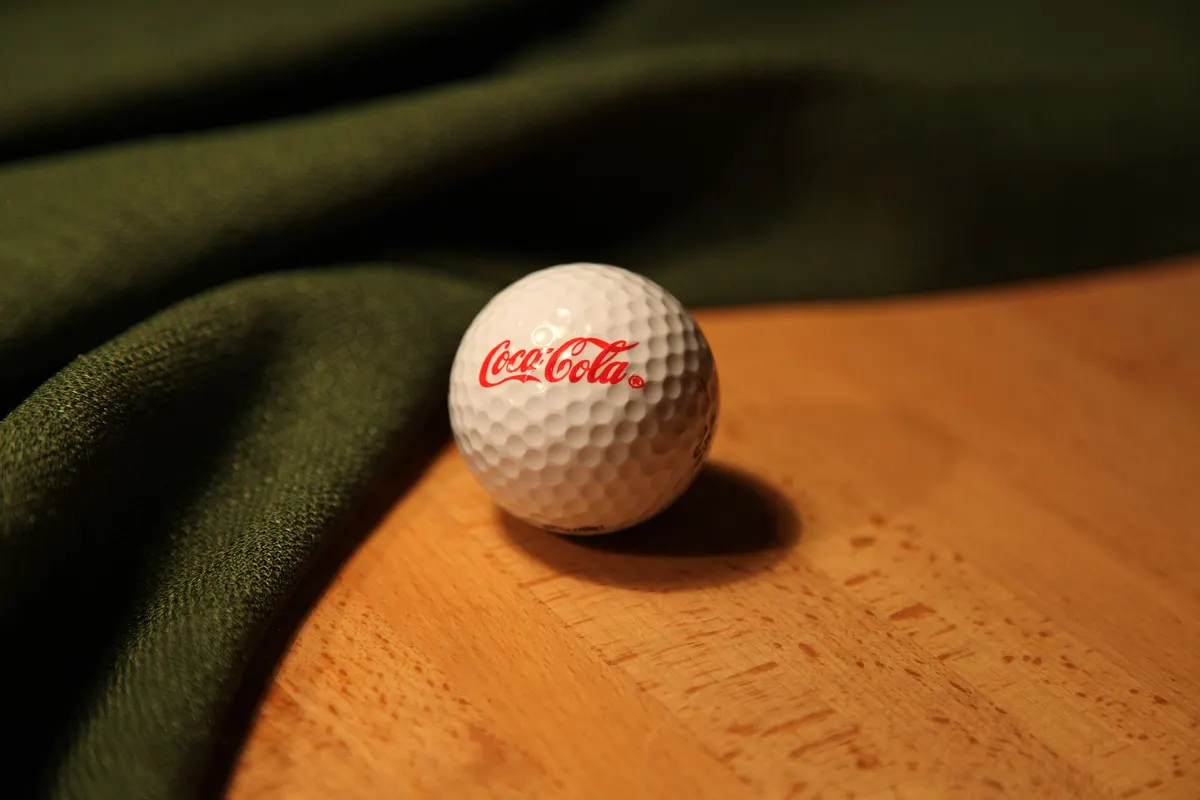
Early golf balls were entirely smooth, but players quickly noticed that balls flew straighter and further once they had picked up dents and chips from play. Some golfers even resorted to hammering grooves into the surfaces themselves to improve performance, realizing empirically that marked balls traveled better without fully understanding the underlying physics. Around the turn of the 20th century, the sport of golf experienced a massive boom in popularity, creating huge market potential for anyone who could successfully develop a superior ball.
William Taylor, an accomplished engineer and co-founder of the Leicester lens-making company Taylor Hobson, took up golf as a relaxing hobby to escape the intense demands of his career. Unable to resist an engineering challenge, Taylor decided to tackle the inconsistent flight of existing golf balls. He designed a mechanical driving machine featuring a club that swung around an inclined axis under the weight of gravity to test a wide variety of golf ball prototypes with different dimple configurations.
What happened
To test how air moved across the ball, Taylor set up a high-tech smoke chamber inside a barn at Narborough Hall. This glass-fronted test chamber allowed him to observe smoke blowing directly over differently patterned ball surfaces. His mechanical driving machine systematically measured the exact flight distance of each ball tested. After rigorous experimentation, Taylor settled on a specific dimple surface design. He subsequently patented both his mechanical driving machine and his dimpled golf ball design. The United States Patent Office received his patent application in 1906 and officially granted it in 1908. Taylor's design aimed to achieve better flight results, specifically a sustained hanging flight providing a flat trajectory with a slight rising tendency.
Why it matters
According to modern golf equipment manufacturers like Titleist, dimples reduce the drag force acting on a golf ball during flight, which directly dictates how far and straight it travels. Taylor's innovation moved golf ball manufacturing from trial-and-error guesswork to precise aerodynamic engineering. While other inventors and manufacturers were likely experimenting with ball surfaces during the same period, Taylor's scientific testing and patented design formalised the geometry that shaped modern golf equipment standards.
The background
For centuries, golf balls evolved through distinct eras. Early balls were known as featheries, made of leather sewn together and stuffed with goose feathers. From the mid-19th century onwards, balls were manufactured from gutta-percha, a natural tree sap. In 1898, Coburn Haskell introduced the Haskell ball, consisting of rubber thread wound tightly around a solid core, which marked a massive revolution in golf technology. Shortly after Haskell's innovation, William Taylor developed his improved surface cover design, featuring relatively large dimples compared to modern equivalents. Golf balls began to closely resemble contemporary designs from the 1930s onward.
What happens next
No further developments are pending, as Taylor's historical invention firmly established the standard surface design utilized across the sport of golf for more than a century.
Key takeaways
- Early 19th-century golf balls were totally smooth until players discovered that dented and chipped balls flew further and straighter.
- Engineer William Taylor used a smoke chamber and a custom mechanical driving machine at Narborough Hall to study ball aerodynamics.
- Taylor filed his patent application with the United States Patent Office in 1906, and it was officially granted in 1908.
- Taylor's dimple design aimed to create a sustained hanging flight with a flat trajectory and a slight rising tendency by reducing aerodynamic drag.