
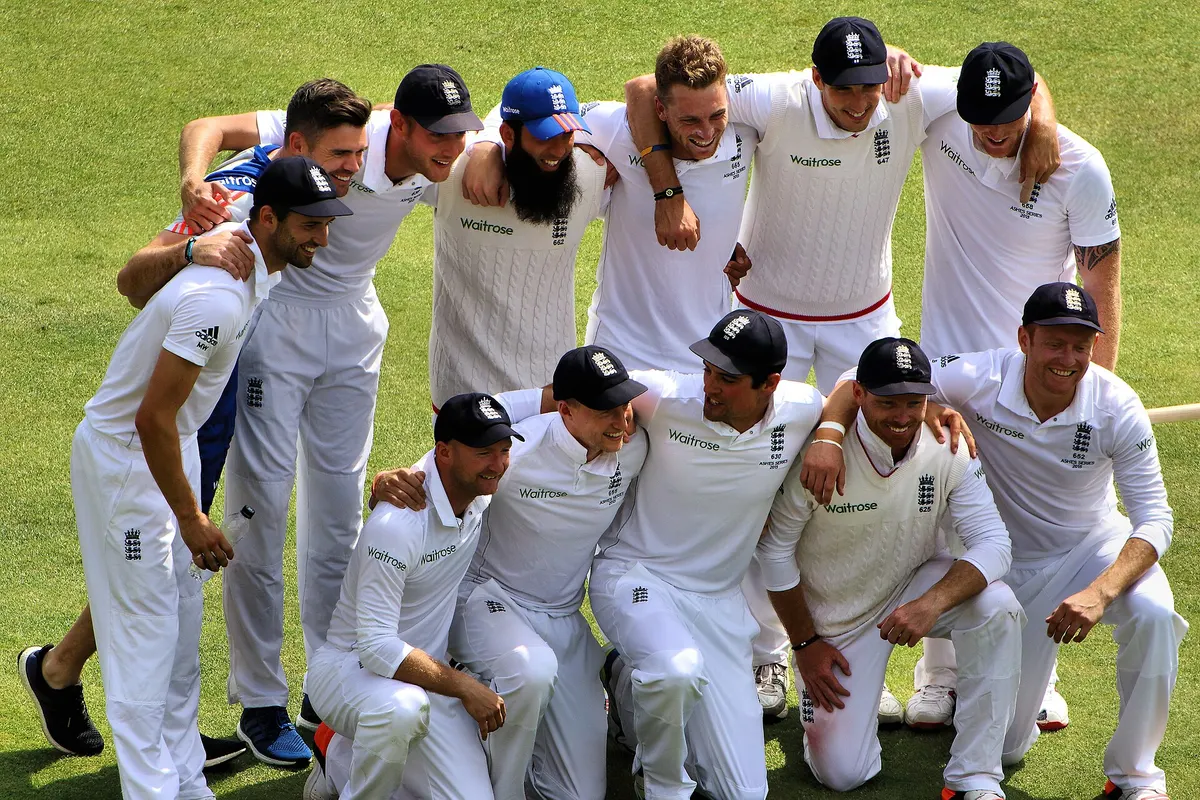
England delivered a dominant 37-12 victory against New Zealand at Allianz Stadium in front of 81,953 spectators. The performance offered a striking parallel to a famous win against the All Blacks exactly twelve months prior, though head coach Steve Borthwick's tenure has historically been defined by sharp swings between brilliant wins and sudden slumps.
Yet this latest success suggests a structural evolution in how the team plays, moves the ball, and handles high-level opponents. Rather than serving as another fleeting false dawn, this performance showcased tactical adaptations that could provide the long-term sustainability required ahead of the Rugby World Cup.
What happened
The 37-12 scoreline matched an identical attendance figure of 81,953 to a victory from twelve months earlier. Unlike last year's encounter, where New Zealand raced out to an early 12-0 lead within seventeen minutes, the visitors never threatened a quickfire start this time around and managed only three line breaks compared to nine in the previous fixture. New Zealand also arrived missing key forward players, including talismanic captain Ardie Savea alongside Luke Jacobsen and Shannon Frizell, but England capitalised by ram-raiding through the heart of the visiting pack.
Number eight Ben Earl anchored the physical dominance with thirty-three carries and 138 metres made, supported by abrasive bench contributions from Ellis Genge, Greg Fisilau, and George Martin. Tactically, England completely shifted their attacking philosophy. Twelve months prior, the team relied heavily on kicking and chasing, producing a ratio of thirty-five kicks to 104 passes. In this latest match, that strategy evolved into twenty-nine kicks and 176 passes, halving the relative use of the boot as defences adapted to aerial tactics.
Remarkably, the backline contained zero of the same starting players from the team that beat New Zealand twelve months prior, with names like Furbank, Murley, Slade, Atkinson, Joseph, Smith, and Van Poortvliet stepping in. Tries from Jack van Poortvliet and Ollie Chessum were forged through clever movement and midfield breaks orchestrated by Cadan Murley and Will Joseph. Despite leaving points on the field due to first-half errors, England completely out-manoeuvred their opponents, leaving the All Blacks with no answers.
Why it matters
For English rugby supporters scarred by a dismal Six Nations campaign following previous high points, this victory comes with a dose of caution. Steve Borthwick's four-year reign has experienced severe volatility, featuring a five-match losing streak prior to the 2023 Rugby World Cup, another five-match skid in late 2024, and a subsequent twelve-Test winning streak at the start of 2025. Breaking this boom-bust cycle is essential if England are to establish themselves as consistent world-beaters.
The tactical shift proves that England can successfully reinvent themselves when opponents figure out their previous methods. By moving away from a predictable kicking-heavy style to a more sustainable, multidimensional attacking structure, the team is building the depth and versatility needed to genuinely threaten rugby's global superpowers at the backend of next year's Rugby World Cup.
The background
Rugby union is a full-contact team sport played internationally, with New Zealand's All Blacks traditionally standing among the most dominant forces in the sport's history. England, under the leadership of head coach Steve Borthwick, has spent the last four years navigating a transitional era marked by high-profile victories and sudden troughs in form. The team has frequently used fixtures against Tier 1 nations like New Zealand as ultimate litmus tests to gauge their true development and trajectory.
What happens next
Steve Borthwick and his squad intend to build on this performance, with the head coach noting that the team left points out there and possesses enormous room for growth. The reports do not specify the exact date of England's next fixture, but the long-term focus remains fixed on developing a resilient, adaptable squad capable of sustaining peak performance toward the backend of next year's Rugby World Cup.
Key takeaways
- England secured a dominant 37-12 victory over New Zealand at Allianz Stadium in front of 81,953 spectators.
- The backline featured zero of the same starting players from the team that defeated the All Blacks twelve months prior.
- England significantly shifted their tactical approach, dropping their reliance on the boot and recording 176 passes to 29 kicks.
- Number eight Ben Earl anchored the physical advantage by making thirty-three carries and 138 metres.