
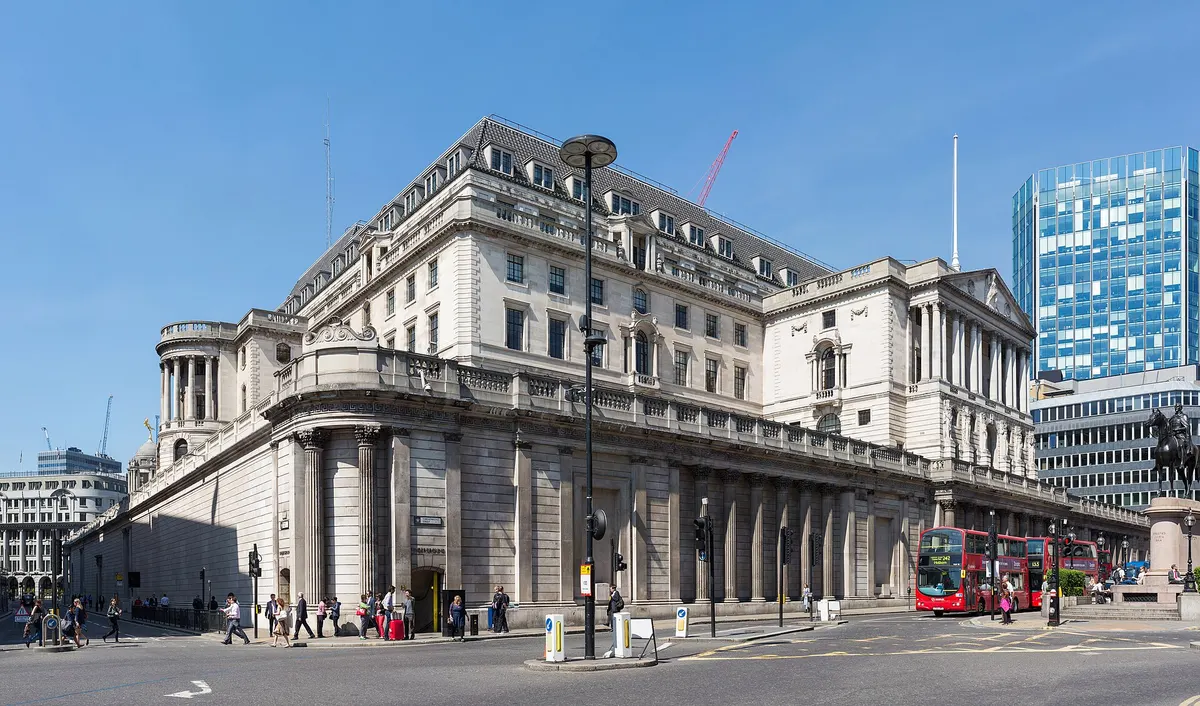
Food price inflation in the United Kingdom could climb as high as 5% by the middle of next year, according to projections shared by the Bank of England. While food inflation has remained lower than anticipated in recent months, central bank officials warn that fresh cost pressures will soon push prices higher.
Appearing before the cross-party Treasury select committee, senior central bank leaders outlined a complex economic outlook driven by household energy caps and global weather patterns. The warning comes as the monetary policy committee continues to debate the appropriate path for interest rates.
What happened
Deputy Governor Clare Lombardelli told members of parliament that food price inflation had consistently tracked below expectations set by both the central bank and the wider grocery industry. Food inflation currently sits at approximately 1.3%, a stark contrast to the dramatic peaks seen during the global supply chain crises of recent years.
However, Lombardelli cautioned that this relative calm is temporary. The central bank anticipates that food price inflation will accelerate sharply, reaching between 3% and 5% by the middle of next year. Governor Andrew Bailey noted that officials are also closely monitoring the potential agricultural impacts of an unusually large El Niño weather event, though the exact consequences will take time to manifest fully.
During the two-hour parliamentary hearing, committee members questioned the broader economic climate. Surging global oil and gas prices have pushed the annual rate of inflation to 3.6%, driven largely by conflicts in the Middle East that have impacted maritime shipping through the Strait of Hormuz. Despite fuel and energy costs rising significantly, policymakers noted that the wider domestic economy has not experienced the same widespread cascade of price increases seen during previous geopolitical shocks.
Why it matters
For UK households, a rise in food inflation means that the cost of weekly groceries will become a heavier burden after a period of relative relief. While discount grocery strategies and intense competition among major retailers have successfully constrained prices in recent years, mounting macroeconomic pressures threaten to erode household budgets further.
At the same time, the divergence in economic forecasts has exposed deep divisions within the Bank of England's monetary policy committee. Some members argue that recent interest rate adjustments should serve as one-off insurance measures, while others warn that persistent inflation above the official 2% target risks unmooring long-term public expectations and will force the central bank to keep interest rates higher for longer.
The background
Inflation measures the rate at which the general price level for goods and services increases over time, tracked monthly by the Office for National Statistics to produce the Consumer Prices Index. The UK experienced severe inflationary shocks following the global economic recovery from the Covid-19 pandemic and Russia's invasion of Ukraine, which pushed food price inflation to a peak above 17% in 2023.
More recently, tensions in the Middle East following attacks involving the US, Israel, and Iran severely disrupted oil transport routes. Although oil prices have since pulled back from their highs, the central bank maintains that certain inflationary drivers for the coming year are already unavoidable, such as a scheduled 26% increase in the household energy price cap set for January.
What happens next
The monetary policy committee is scheduled to hold its next rate-setting meeting on December 17 to determine whether further adjustments to interest rates are necessary to anchor inflation. While falling global oil prices could mechanically lower the peak of overall inflation next year, officials emphasize that considerable uncertainty remains regarding international commodity markets and future weather patterns.
- Food price inflation in the UK is projected by the Bank of England to rise to between 3% and 5% by the middle of next year.
- Deputy Governor Clare Lombardelli told MPs that current food price inflation is tracking below expectations at approximately 1.3%.
- The central bank's monetary policy committee raised interest rates to 4% earlier this month to combat inflation that remains above the 2% target.
- Governor Andrew Bailey highlighted that officials are monitoring the agricultural impacts of an unusually large El Niño weather event on future food prices.