
Millions of UK homeowners rolling off fixed-rate mortgages face steeper monthly repayments than previously estimated. The Bank of England's latest Financial Stability Report warns that global economic pressures and higher interest rates will force households to pay significantly more as they refinance in the coming years. The rising costs arrive alongside a steep hike in household energy bills and ongoing inflation driven by the war in Iran. While officials note that household balance sheets remain generally resilient, lower-income families and those transitioning from very low fixed rates will face severe financial strain. ## What happened In its Financial Stability Report, the Bank of England revealed that about 6.5 million mortgage holders are forecast to see their monthly repayments jump by an average of £100 by the end of 2029. This figure is more than double the £45-a-month increase the central bank had estimated in its previous report published in July. In the shorter term, approximately one million homeowners currently on mortgage rates below 3% who are due to refinance by the end of next year will experience an average monthly increase of £200. The financial strain varies depending on the size of the previous loan. While about 3.4 million borrowers will see monthly increases of less than £100, another 2.7 million face hikes between £100 and £500. Furthermore, roughly 430,000 households coming off much lower interest rates will see their monthly mortgage payments surge by more than £500. These sharp increases are largely driven by homeowners coming off five-year fixed deals secured in early 2022, when the Bank of England base rate was between 0.5% and 1%. Financial data service Moneyfacts reported that average rates for two- and five-year fixed mortgages have reached around 5.99% and 6% respectively. ## Why it matters The anticipated mortgage surges threaten to squeeze household budgets significantly across the country. The Bank of England noted that affected families may need to cut back on discretionary spending or draw down accumulated savings to cover higher energy, food, and essential costs. While middle- and upper-income households generally maintain savings buffers, lower-income families and renters have far less room to adjust because essentials consume a larger share of their income. Despite these pressures, the central bank’s report found no immediate signs of an increase in borrowers defaulting on their home loans. Officials also emphasized that aggregate household debt sits at relatively low levels last observed in the early 2000s, providing a baseline of resilience against the broader financial shock. ## The background Mortgages in the United Kingdom are predominantly arranged on fixed-rate terms lasting two or five years, meaning individual borrowers are insulated from immediate market fluctuations until their current deal expires. However, economic shocks following the onset of the war in Iran have pushed global borrowing costs higher. Earlier in November, the Bank of England raised its benchmark interest rate from 3.75% to 4%—the first increase in more than three years—to combat ongoing inflationary pressures. The latest mortgage warnings coincide with a 26% regulatory cap increase on household energy bills, compounding cost-of-living pressures for consumers. ## What happens next Financial markets and economists anticipate further monetary tightening, with additional interest rate hikes possible by early 2027 to combat inflation. While the Bank of England stated that there is no predetermined rate path, the combination of rising energy costs and global geopolitical conflicts keeps the threat of higher borrowing costs active. The overall economic trajectory will ultimately depend on whether mortgage rates begin to fall or remain at their current elevated levels. ## What happens next - About 6.5 million UK homeowners will see their monthly mortgage payments increase by an average of £100 by the end of 2029. - Roughly one million households refinancing by the end of next year face an average monthly payment increase of £200. - Approximately 430,000 borrowers transitioning from low historical rates will see their monthly home loan costs surge by more than £500. - The Bank of England raised its benchmark interest rate from 3.75% to 4% in November to counter ongoing inflationary pressures.
Business
Bank of England warns millions face higher mortgage costs
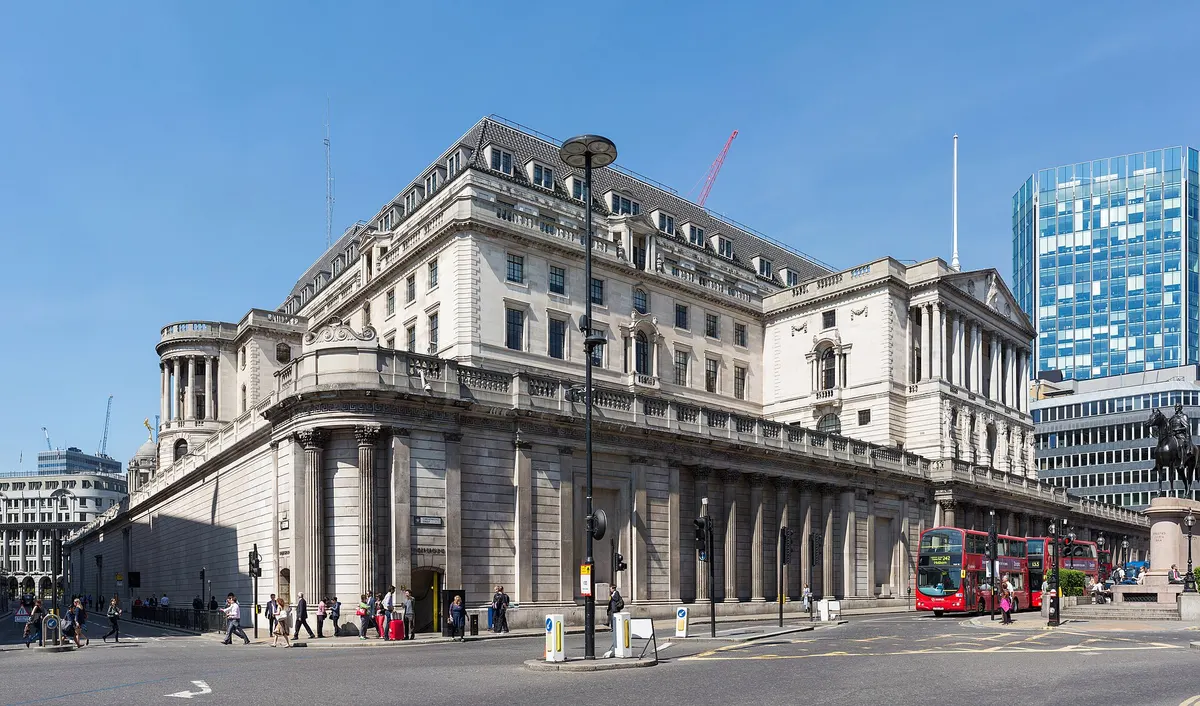
Photo: Diliff, CC BY-SA 3.0 / Wikimedia Commons
New Bank of England figures reveal that about 6.5 million UK homeowners face an average monthly mortgage payment jump of £100 when rolling off fixed-rate deals by the end of 2029.
Go deeper
Want more on this story? Our research assistant searches the latest reports across the web and explains what it finds, so you get the fuller picture in one place.