
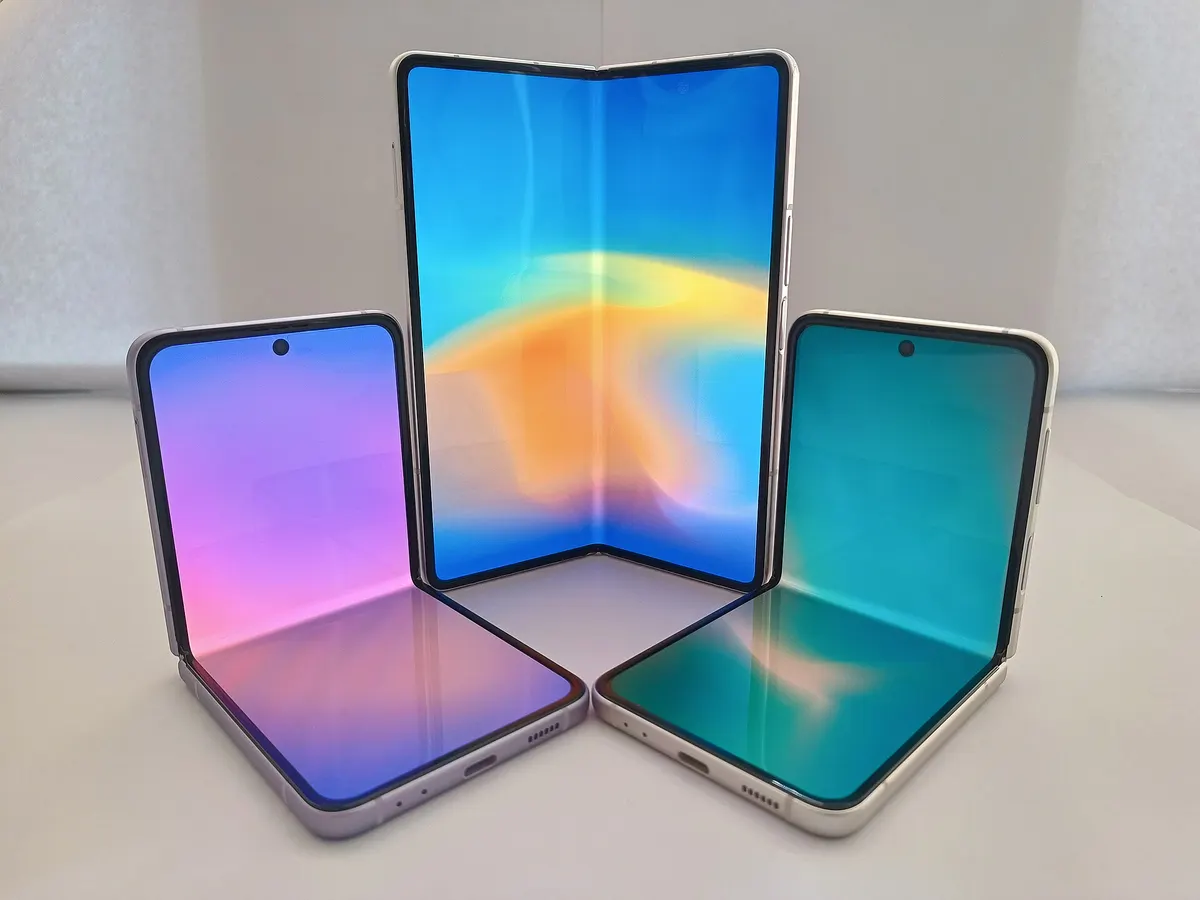
Apple has entered the foldable smartphone market with its first-ever flexible handset, the iPhone Duo. It goes head-to-head with Samsung's established Galaxy Z Fold 8, creating a high-stakes rivalry in the luxury mobile sector.
Buyers facing the choice between these two devices must weigh distinct engineering approaches, app ecosystems, and hardware features. While Apple brings its characteristic materials and longer battery claims to its debut foldable, Samsung relies on years of hardware refinement and more advanced multitasking software.
What happened
The Apple iPhone Duo and Samsung Galaxy Z Fold 8 both feature passport-style designs with outer cover screens and large inner displays measuring roughly 7.6 inches. However, they differ significantly in dimensions, weight, and materials. The Galaxy Z Fold 8 is noticeably lighter at 201 grams compared to the Duo's 254-gram heft, making Samsung's device more comfortable for extended, single-handed use and less taxing on the wrist. Samsung's phone is also thinner, measuring 9.7 millimeters folded, whereas the Duo measures 11.3 millimeters.
Build quality and materials diverge sharply. Apple employs a Grade 5 titanium frame, Ceramic Shield glass on the front and back, and smooth, rounded edges. Samsung uses an Armor Aluminum frame with a drop-resistant composite back and sharper corners. For environmental protection, the Duo boasts an IP68 dust and water resistance rating, outperforming the Galaxy Z Fold 8's IP48 rating, which leaves its hinge more vulnerable to dust ingress. Connectivity also differs: the Duo is eSIM-only, while the Galaxy Z Fold 8 includes a physical SIM slot alongside a standard USB-C port.
Internally, the devices run on competing flagship silicon, with the Duo housing Apple's A20 Pro chip and the Galaxy using the Qualcomm Snapdragon 8 Elite Gen 5. Display technologies also vary. Apple uses a matte nano-texture display for the inner screen to minimize reflections and crease visibility, whereas Samsung employs a glossier display with a standard hole-punch camera. Apple integrates an under-display front camera on the inner screen, though some users note lower image quality compared to traditional hole-punch alternatives.
Software and accessories further separate the two devices. The Duo runs iOS 27 with Apple Intelligence and supports the USB-C Apple Pencil, a feature the Galaxy Z Fold 8 lacks. Conversely, Samsung holds a strong lead in multitasking and app layout, offering a more developed three-app split screen, edge panels, and smoother adaptation for thousands of applications that have been optimized for its foldable format over successive generations. Meanwhile, many apps on the Duo still show letterboxing or fail to fully utilize the inner canvas.
Why it matters
These flagship foldables sit at the highest tier of consumer pricing, with both devices starting near the $2,000 threshold. The iPhone Duo starts at roughly €2,369, while the Galaxy Z Fold 8 is priced around €2,049. Because consumers are holding onto mobile devices longer than traditional two-year contract cycles, manufacturers are using foldable technology to justify premium upgrade costs.
Choice of ecosystem dictates the user experience. Buyers heavily invested in Apple's software suite gain a foldable running familiar iOS interfaces with extended video playback claims reaching up to 31 hours on the inner display. Conversely, productivity-focused users benefit from Samsung's mature Galaxy AI tools and robust split-screen window management. Durability concerns, such as the Duo's heavier wrist strain versus the Galaxy's lower dust resistance, directly impact daily usability for mobile professionals and multimedia consumers.
The background
Samsung pioneered the modern book-style foldable smartphone category, launching successive iterations of its Galaxy Z Fold series over several years to refine hinge durability, reduce thickness, and build a dedicated developer ecosystem for flexible screens. Until now, Apple had avoided entering the foldable hardware space, focusing instead on traditional slab phones like the standard iPhone lineup.
What happens next
App developers continue to release updates for the iPhone Duo to better support its unique inner display dimensions, closing the gap with Samsung's long-standing software optimization. Market response to Apple's debut foldable will determine whether titanium frames and matte nano-texture screens become standard across future foldable generations.
Key takeaways
- The Samsung Galaxy Z Fold 8 is significantly lighter and thinner than the Apple iPhone Duo, reducing wrist fatigue during extended use.
- The Apple iPhone Duo features an IP68 dust and water resistance rating, offering superior protection compared to the Galaxy Z Fold 8's IP48 rating.
- Samsung holds a clear advantage in multitasking software and app optimization due to years of experience in the foldable market.
- The iPhone Duo supports the USB-C Apple Pencil, whereas the Galaxy Z Fold 8 does not support stylus input.