
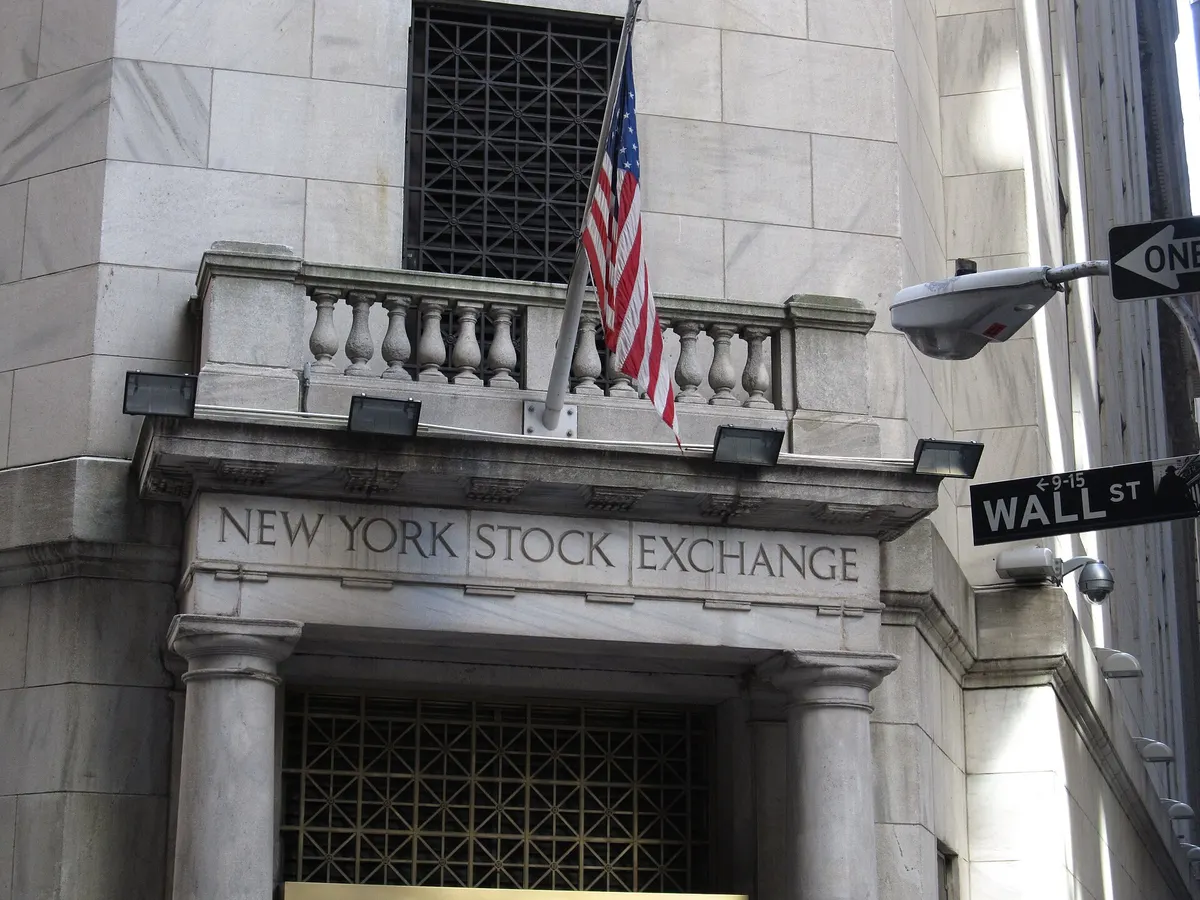
Anthropic, the prominent artificial intelligence research lab behind the Claude family of large language models, successfully completed its initial public offering on Nasdaq under the ticker symbol ANT. Despite insatiable investor demand that drove a large deal size, the new stock finished its first day of trading down 9 percent amid a broader market correction.
The debut arrived during a turbulent period for technology equities. Major indexes suffered steep declines as investors reassessed the lofty valuations assigned to artificial intelligence revenue models, sending shockwaves through the entire sector.
What happened
Anthropic's initial public offering brought intense market attention as the frontier AI lab sought to price its shares. While the deal was widely considered a success by experts because bankers managed to pull off a massive offering in a volatile market, the stock immediately faced heavy downward pressure. On Friday, Anthropic shares closed down 9 percent, amplifying investor anxiety regarding new market listings.
The broader market environment was already under severe strain. A global rout of technology stocks wiped out trillions of dollars from US markets. The VanEck Semiconductor ETF plunged over 10 percent in a single day and roughly 15 percent for the week, marking its worst performance since September 2001. Meanwhile, the technology sector of the S&P 500 suffered its worst weekly performance since the Covid crash.
Analyst reports filed ahead of the offering highlighted unusual downside risks. Seaport Research Partners analyst Jay Goldberg noted in a research note that Anthropic could develop autonomous AI systems that might wipe out humanity, potentially leading to a serious decline in earnings. Furthermore, regulatory and political shifts, including recent political outcomes, added to the unease surrounding the future pace of artificial intelligence adoption.
Why it matters
The market reaction to Anthropic's debut serves as a barometer for the entire artificial intelligence trade. Investors are actively grappling with whether current valuations reflect a sustainable business model or an unsustainable bubble. Because Anthropic is a newly public company with a rich valuation, the anxiety surrounding its stock price has become a focal point for institutional investors taking risk off the table.
The sell-off affects major market leaders, including semiconductor giants like Nvidia and Micron, whose earnings profiles have driven a significant portion of S&P 500 gains. As portfolios undergo heavy repositioning, market participants are demanding clearer signals regarding actual revenue growth and return on investment before committing fresh capital to the sector.
The background
Founded in 2021, Anthropic is a prominent artificial intelligence safety and research lab that develops large language models and enterprise tools, including the Claude model family and developer platforms like Claude Code. The lab utilizes consumption-based and subscription-based revenue models to serve individual users and large corporations.
Prior to its public offering, Anthropic's financial disclosures revealed massive capital expenditures and spending commitments heading toward $1 trillion to support data center and computing demands. Filings also showed a net loss of $104 billion in the first nine months of the year, underscoring the immense costs required to train and operate frontier artificial intelligence systems.
What happens next
Market participants are waiting for new economic signals and clarity on Federal Reserve policy, geopolitical developments, and the long-term adoption curve of artificial intelligence. Chief investment officers have adopted a wait-and-see approach, pausing major allocations until market direction stabilizes. The primary metric moving forward will be Anthropic's actual revenue performance and how quickly enterprise adoption of its AI tools translates into sustainable financial returns.
Key takeaways
- Anthropic completed its initial public offering on Nasdaq under the ticker symbol ANT, finishing its first day of trading down 9 percent.
- The semiconductor and technology sectors suffered historic weekly losses, with the VanEck Semiconductor ETF experiencing its worst week since September 2001.
- Analysts noted unprecedented downside risks in research filings, highlighting uncertainties surrounding autonomous artificial intelligence systems and future earnings.
- Investors are broadly reassessing artificial intelligence valuations and taking risk off the table amid a severe market correction.